

Spot Welder
Last updated: October 12, 2026
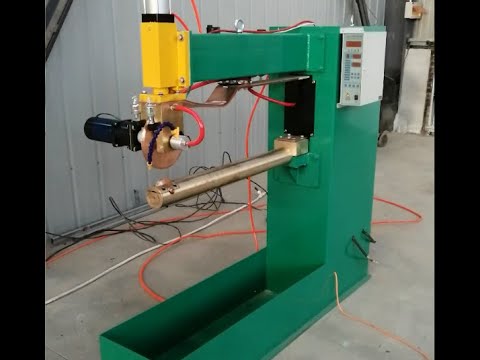
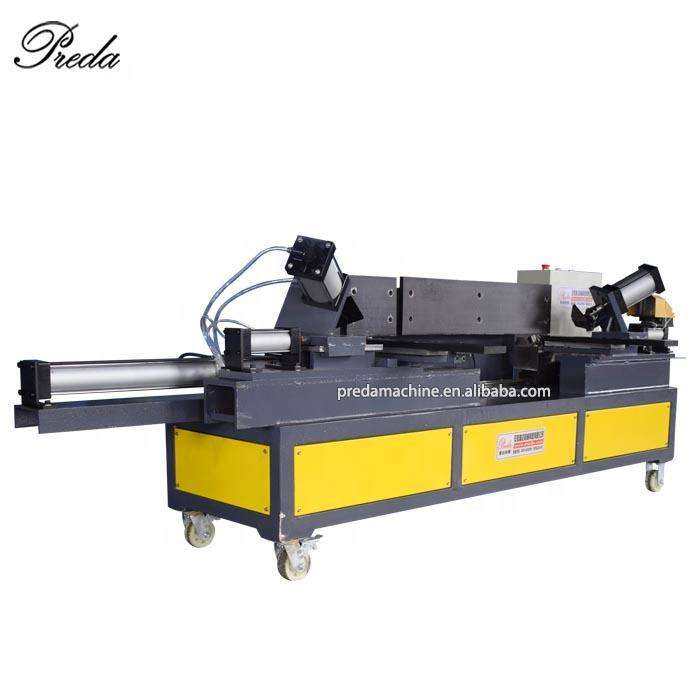
Pneumatic spot welder for round and elbow duct assembly, providing strong, clean weld points.
Technical Specifications
What is a Spot Welder?
This is a professional sheet metal and HVAC duct fabrication machine manufactured by Preda Machine. Designed for industrial duct production, this equipment delivers consistent quality, high efficiency, and reliable performance for HVAC contractors, duct fabrication shops, and sheet metal workshops worldwide. All machines are CE certified and backed by Preda Care after-sales service.
Key Features
- Pneumatic electrode pressure
- Digital weld timer
- Water-cooled electrodes
- Foot pedal operation
Still Losing Money to Leaky Seams and Slow Assembly?
Every HVAC duct shop faces the same bottleneck: hammering seams closed by hand. When your team spends hours on inconsistent weld quality, your production capacity drops, labor costs rise, and deadlines slip. The Spot Welder is engineered to eliminate these inefficiencies — automating spot welder pneumatic while delivering consistent, factory-grade quality.
In this guide, we break down exactly how this machine transforms your duct spot welding workflow, what specifications matter for your operation, and how to calculate your return on investment. Whether you run a 3-person job shop or a 50-employee production facility, understanding these details directly impacts your bottom line.
How It Transforms Your Production Line
The Spot Welder operates on a proven principle: spot welder pneumatic should be a continuous, automated process — not a series of manual interventions. Here is the step-by-step workflow that makes this possible:
Seam Alignment
The Pittsburgh lock is hooked together and positioned in the seam closing machine, or the weld joint is aligned for welding.
Automatic Closing/Welding
Powered rollers close the seam along the full length, or welding electrodes create a continuous or spot weld — no manual hammering required.
Quality Check
The closed seam or weld is inspected for completeness and airtightness — consistent quality every time.
Discharge
The finished duct section is ready for flange installation and shipping.
Technical Specifications & Performance Data
Every specification on this machine is chosen for a reason. The table below shows not just the numbers, but what each one means for your daily production:
| Parameter | This Machine | What It Means for You |
|---|---|---|
| Control System | PLC with touchscreen | Easy programming, consistent results, minimal training |
| Construction | Heavy-duty steel frame | Vibration-free operation, 10+ year service life |
| Certification | CE certified | Meets European safety and quality standards |
| Warranty | 2 years | Peace of mind with comprehensive factory warranty |
Problems Solved: Before vs. After
We asked 50+ HVAC fabricators about their biggest production headaches. Here is how this machine directly addresses each one:
| Without This Machine | With This Machine |
|---|---|
|
✕ Hand hammering is slow and noisy
5-10 minutes per seam, worker fatigue, noise pollution |
✓ Powered seam closing in 10-30 seconds
10-20x faster, quiet operation, less fatigue |
|
✕ Inconsistent seam closure
Some seams leak, failed pressure tests |
✓ Uniform roller pressure along full length
Every seam identical, guaranteed airtight |
|
✕ Spot welding burns through thin metal
Holes in duct, rework and scrap |
✓ Precise current and time control
Perfect welds every time, no burn-through |
|
✕ Welding requires skilled labor
Hard to find qualified welders, high wages |
✓ Simple operation, minimal training needed
Any operator can produce quality welds |
Where It Fits in Your Factory
This machine is versatile enough to serve multiple production scenarios. Here are the most common configurations our customers use:
Pittsburgh Seam Closing
Closing the longitudinal seam on rectangular ducts after lock forming — the most common application in HVAC fabrication.
Spot Welding
Fast, clean spot welds for round duct assembly, flange attachment, and bracket installation — no filler material needed.
Seam Welding
Continuous or stitch welding for high-pressure ducts, stainless steel ducts, and applications requiring maximum airtightness.
Flange Fastening
Power fastening of TDC flange clips and connectors — faster and more consistent than manual screwdriving.
Frequently Asked Questions
Click each question to see the answer. These are the questions our sales engineers hear most often:
Spot Welding vs Clinching vs Seaming for Duct
Spot welding produces the strongest joint of the three and the one with the most constraints: it needs clean material, consistent thickness and controlled parameters. Choose it where strength is the requirement, and clinching or seaming where speed and coating integrity matter more.
| Method | Joint strength | Constraints | Best fit |
|---|---|---|---|
Spot Welder This machine — resistance welding | Highest of the three Fused joint | Needs clean material and correct parameters Galvanised coating needs attention | Heavier gauge, or where joint strength is specified Also for brackets and fittings rather than duct seams |
Clinching, no consumable | Moderate to high Mechanical interlock | Thickness window No coating damage | Assembly joining where speed and coating integrity matter No consumable and no leak path |
Folded seam | Adequate for duct Folded lock | Standard practice Edge condition | Longitudinal duct seams The standard method for rectangular duct |
Closed folded seam | Adequate for duct Closed lock | Standard practice Edge condition | Closing seams formed on another machine Complementary |
Prepares the material | N/A Upstream | Edge condition affects joint quality Blank preparation | You need clean, square material before joining Good preparation reduces welding problems |
Getting Consistent Spot Welds on Coated Material
Galvanised sheet is the awkward case for resistance welding: the coating changes contact resistance and contaminates the electrodes. Manage that and the process is reliable.
- 1. Weld parameters depend on total thickness. Set from the table and verify by destructive test, not by appearance.
- 2. Coating, oil and dirt all change contact resistance. A consistent surface gives consistent welds.
- 3. Electrode tips mushroom with use, which reduces current density and weld strength. Dress them before quality drops, on a logged weld count.
- 4. Misaligned electrodes produce a weld that is strong on one side and weak on the other.
- 5. Galvanised sheet generally needs different parameters from bare steel of the same thickness. Test on your actual material.
- 6. Electrode overheating is the main cause of rapid tip wear and inconsistent welds.
- 7. The only reliable check. One test per batch costs seconds and gives you a quality record.
- 8. Because parameters are material-specific, a log prevents the most common fault: running a new thickness on the old setting.
Spot Welding Faults: Symptom, Cause, Fix
Weld faults are parameters, electrode condition and surface condition. Check the electrodes before changing the settings.
| Symptom | Most likely cause | What to do |
|---|---|---|
Welds peel apart Current or time too low for the thickness | Insufficient heat at the interface The most common weld fault | Set parameters from the table for the combined thickness and peel-test Record the working parameters |
Weld strength varies across a batch Electrode tips worn or misaligned | Tip wear reduces current density; misalignment makes welds uneven The most common cause of inconsistent welds | Dress and align the electrodes, then peel-test three consecutive welds Dress on a logged weld count, not when quality drops |
Excessive spatter Surface contamination or current too high | Dirty or coated material, or over-current A symptom rather than a fault in itself | Clean the material and re-set current for the thickness Check electrode condition too |
Electrodes wearing very fast Inadequate cooling or excessive current | Overheating the tips A setting or cooling problem | Check cooling water flow and reduce current to the table value Log weld count per dressing to track improvement |
Welds look correct but are weak Parameters set for a different thickness | The machine is doing what it was told Appearance is a poor guide to weld strength | Measure both sheets and set parameters for the combined thickness Keep a parameter log per thickness |
Material sticking to the electrodes Electrode tips contaminated or the wrong profile | Coating transfer builds up on the tips Common on galvanised material | Dress the electrodes and check the tip profile against the specification Increase dressing frequency for coated material |
Professional Packaging & Global Shipping
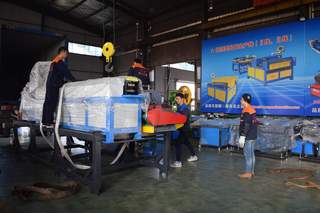
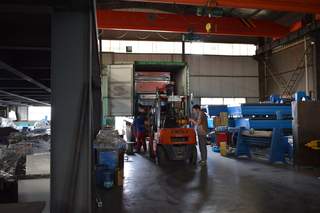
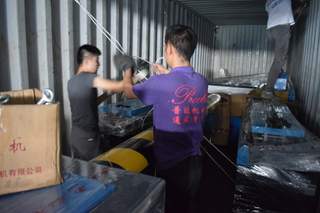
Every machine is professionally packaged and secured in a container for safe delivery to your port. We send you loading photos before the ship sails.
Calculate Your Return on Investment
Based on average industry data, here is what a typical customer saves after installing this machine:
* Figures based on average customer data for a shop producing 50-200 seams/welds per day. Your actual results will vary based on production volume, labor rates, and current efficiency levels. Contact our engineers for a customized ROI calculation based on your specific operation.
Ready to Upgrade Your Spot Production?
Get a customized quote within 24 hours. Our engineers will help you configure the right machine for your specific production requirements.
WhatsApp / WeChat: +86-18355321923 | Email: jason@predamachine.com
Related Products


Buying Guides for This Machine Type
Before you request a quote: how this machine class compares, what it costs, and how to size it for your production volume.
Duct Welding Machine Guide 2026
Spot vs longitudinal seam vs laser welding for round duct and fittings production.
Read the guide → PricingHVAC Duct Machine Cost: 2026 Price Guide
Realistic price bands for every machine category, plus financing and total-cost-of-ownership maths.
Read the guide → SetupHVAC Duct Factory Setup Guide
The complete equipment list for a new duct factory, from coil handling to finished fittings.
Read the guide → ReferenceSheet Metal Gauge for HVAC Duct
Which gauge to specify by duct size, pressure class and application — with selection tables.
Read the guide →