Planning spiral duct output is rarely a question of buying the largest machine on the market. It is a question of matching a tubeformer to the diameter range, material gauge and piece mix your projects actually repeat. A shop that over-specifies for large diameters pays for rigidity it never uses; a shop that under-specifies hits the ceiling on thickness or diameter the first time a commercial tender asks for a heavier run. This guide walks through how to read an order book, translate it into machine specifications, and plan the round-duct throughput that feeds the rest of the fabrication floor.
What Your Order Book Tells You Before You Size Anything
Before comparing diameter ranges or line speeds, sit down with the last twelve months of quotations and completed jobs. Three numbers decide most of the decision: the smallest and largest duct diameter you were asked to produce, the galvanized gauge those jobs call for most often, and the ratio of small-diameter high-count work to large-diameter low-frequency work. Spiral and round ductwork in commercial HVAC tends to cluster in predictable bands - supply and return mains, branch runs, exhaust and ventilation drops each occupy their own diameter range. The shops that match the machine to that cluster produce comfortably; the shops that buy by a single headline number fight the machine on half the orders.
It also helps to separate ductwork you sell in sections from fittings you assemble alongside it. Straight spiral pipe is fast and repeatable once the strip is loaded; elbows, transitions, reducers and oval sections depend on other stations on the floor. Output planning for a round duct shop therefore covers the tubeformer itself and the downstream equipment that turns its straight lengths into deliverable assemblies.
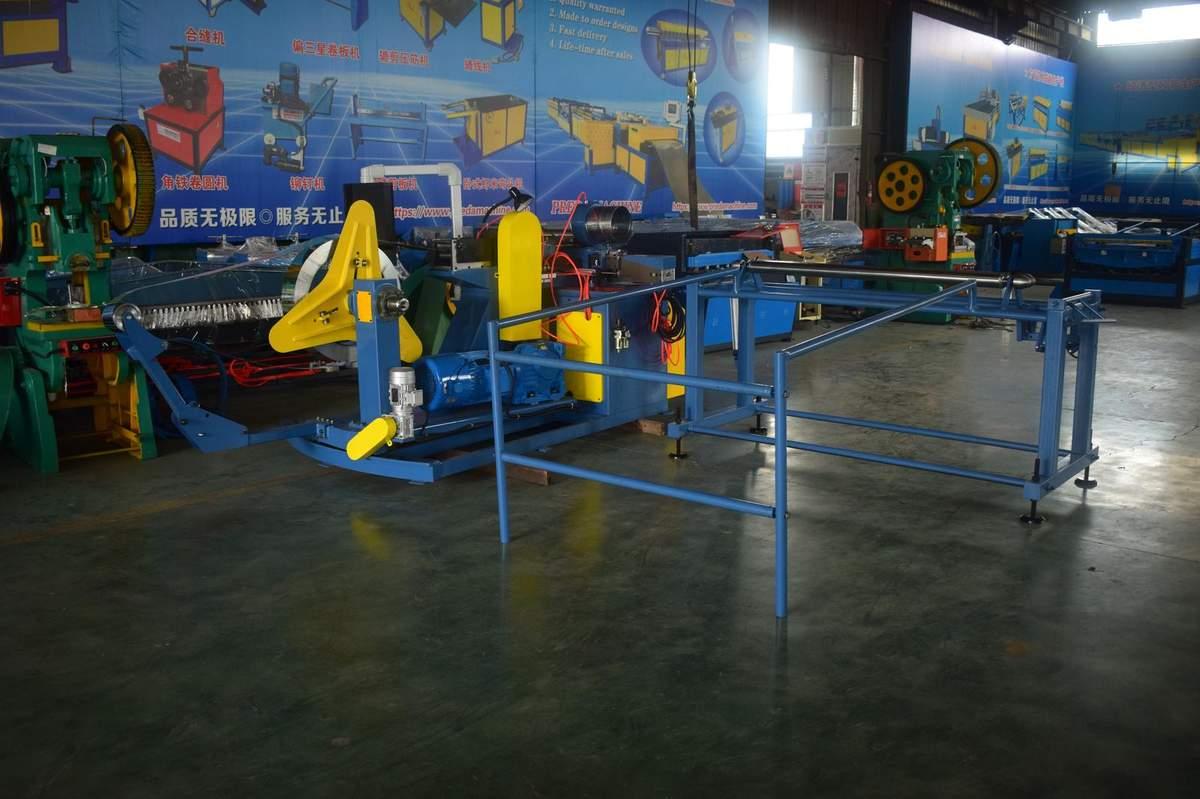
Reading the Tubeformer Specifications
Spiral tubeformer specifications are read in four layers, and each layer maps to a different constraint on your order book. The diameter range sets the smallest and largest round section the machine can form. The material thickness range sets the gauge band it can roll without overloading the drive or distorting the seam. The working speed sets metres per minute on a section, which is the raw input to output calculations. The construction type - strip-fed or mould type, light or heavy duty - decides how comfortably the machine holds up under thicker material and long cycles.
The helical or spiral lock seam is what gives round duct its rigidity: a continuous rolled seam winds along the section as the strip feeds, so the pipe holds its circular form under static pressure without the stiffening beads a long rectangular panel needs. The seam profile, the strip width available and the tooling set together determine which diameters sit in the comfortable operating band of the machine, as opposed to diameters it can reach but not run all day.
Two Preda Spiral Machines at a Glance
The comparison below uses the specifications listed on the Preda product pages. Use it to locate where your own diameter and gauge band falls, then talk through the actual order mix with the equipment supplier before committing to a model.
| Specification | PD-1600 Spiral Tubeformer | PD-2000 Heavy Duty Spiral Tubeformer |
|---|---|---|
| Diameter range | 100-1600 mm | Up to 2000 mm |
| Material thickness | 0.4-1.2 mm | 0.5-1.5 mm |
| Working speed | 1-38 m/min | 1-30 m/min |
| Construction type | Strip-fed spiral tubeformer | Mould type, heavy duty |
| Motor power | Per machine configuration | 15 kW |
| Strongest fit | Mid-range commercial spiral, mixed diameters, high piece count | Large-diameter and heavier-gauge runs, industrial and structural ducting |
The speed gap is worth reading carefully. A machine rated for 1-38 m/min reaches its top speed on the diameters and gauges where it runs most freely; a heavy-duty mould machine gives away some top-end speed in exchange for the rigidity to form thicker, larger sections. Output planning should therefore be built on a realistic average working speed across your typical diameter mix, not on the fastest figure in the catalogue. Changeover time between diameters, strip loading and first-section inspection all sit outside the rated speed and reduce effective metres per shift.
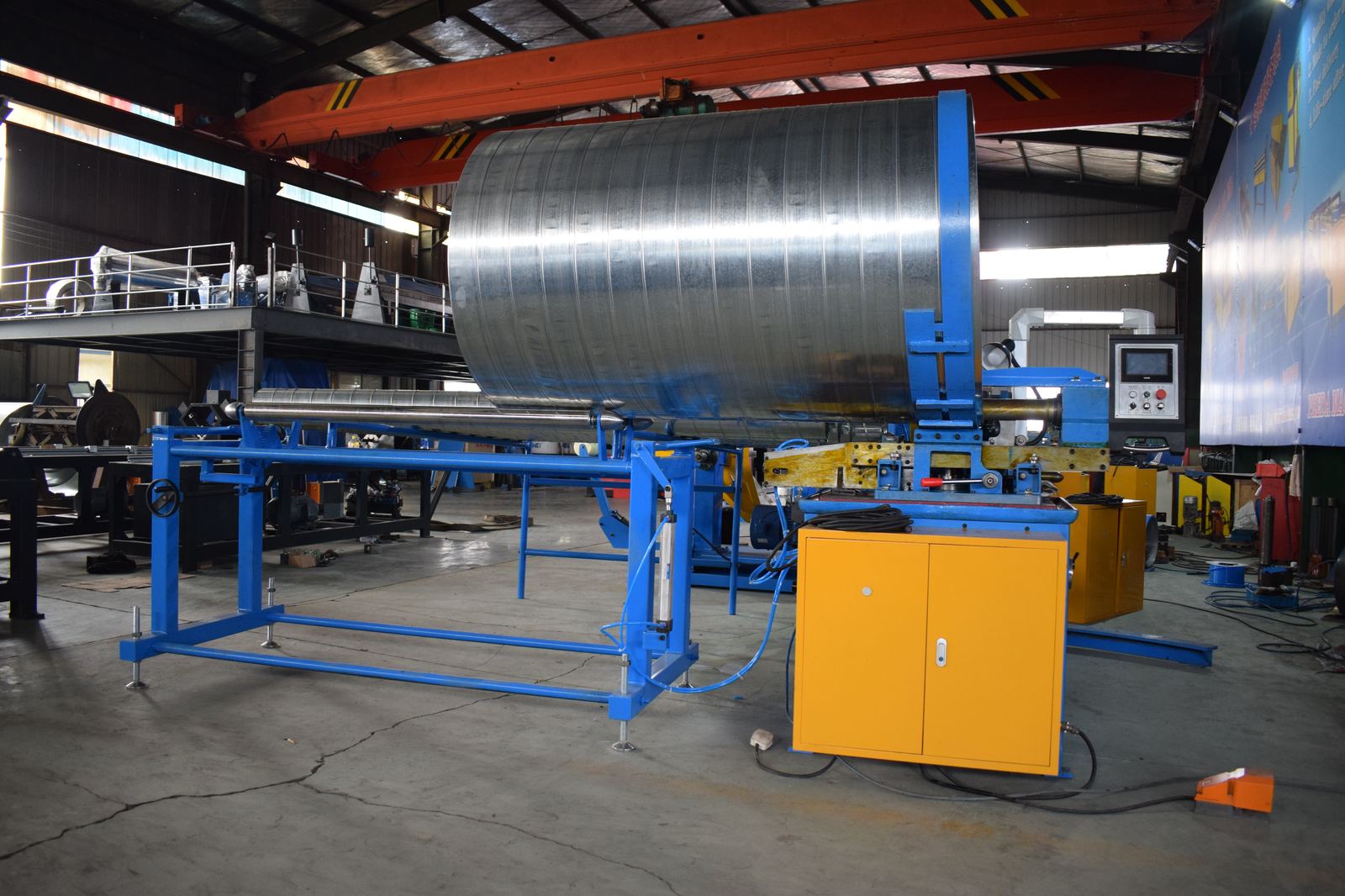
Match the Machine to the Order Mix
The clearest way to size a spiral line is to sort your typical orders into mixes and match each mix to the machine class that carries it comfortably. The table below maps common shop profiles to the direction a specification review should take.
| Order mix you see most | What to size the machine for | Machine direction |
|---|---|---|
| Small to mid diameters, light gauge, high piece count of branches and drops | Broad 100-1600 mm range, fast running speed, quick strip and diameter changes | PD-1600 class strip-fed tubeformer |
| Large diameters, heavier gauge, lower-frequency mains and industrial runs | Range up to 2000 mm, heavy mould construction, thickness to 1.5 mm | PD-2000 heavy duty tubeformer |
| Mixed round plus flat oval sections for shallow voids | Round tubeformer feeding an ovalizer downstream of the spiral line | Tubeformer paired with a hydraulic flat oval duct machine |
| Straight pipe plus elbows, reducers and transitions | Coordinate spiral output with fitting stations on the same floor plan | Spiral line alongside gorelocker and elbow equipment |
Where Round Spiral Fits Against Rectangular Panel Duct
Not every run on a project belongs on a spiral line, and the output plan should know which sections are round and which are rectangular. Round spiral duct presents a smooth internal surface with no corner gaps to leak around, and the circular section is naturally rigid, so long branches hold shape without the stiffening beads a wide rectangular panel needs. The flow path through a round section also stays consistent along its length, which is why spiral is preferred for supply, return and exhaust runs where resistance and leakage matter. Rectangular panel duct still wins where space is a flat slot, where fittings must meet a sharp rectangular ceiling void, or where the project geometry forces square sections. Most commercial jobs use both: round spiral for mains and branches, rectangular panels where the layout only bends that way.
That split matters for capacity planning. If your projects mix round and rectangular work, the spiral tubeformer and the auto duct line or panel equipment do not compete for the same orders - they cover different section types. The output plan should quote weekly metres for each family separately rather than lumping all ductwork into one number.
Scheduling Changeovers and Section Length
Tubeformer output is interrupted every time the diameter changes. Different diameters call for the matching tooling set, a strip width change and a first-section check before production resumes. Shops that batch sections by diameter - producing all 200 mm branches for several jobs before moving to 315 mm mains - lose fewer changeover hours than shops that switch diameter on every section. When you plan weekly metres, group the order book by diameter band and schedule those bands as blocks on the machine calendar.
Section length is the other scheduling detail. Factory-built sections are cut to the lengths that fit transport and site handling, with lengths marked and coded to the job zone on the drawing. Overlong sections are hard to load and install; over-short sections add joints on site, and every joint is a potential leak point. Match standard cut lengths to how the crew on site will lift, connect and seal, and let the tubeformer run those lengths in long continuous passes between cuts.
Gauge, Galvanized Coating and Static Pressure
Material thickness on a spiral line is chosen against the duct diameter, the internal static pressure the system will carry, and the corrosion environment. Light gauge suits smaller branches and normal commercial supply air; heavier gauge appears on large mains, exhaust runs, higher-pressure systems and exposed or outdoor ductwork. The thickness range on the machine has to cover the upper end of that band - running a machine below its rated minimum or above its rated maximum shows up as seam quality drift, not as a headline failure. Coil and strip quality, zinc coating weight and edge condition feed the same decision: a good seam on poor strip is still a compromised section.
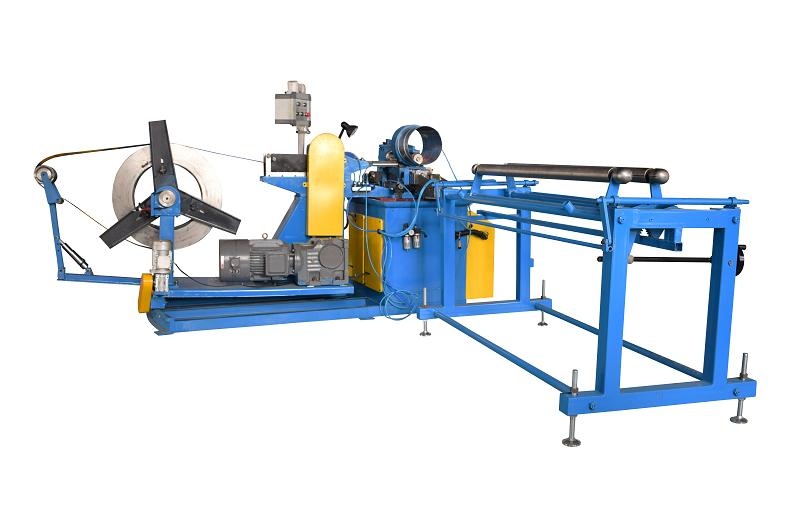
Planning the Downstream Flow
Round spiral rarely ends at the tubeformer. Sections are cut to length, fitted with elbows and reducers, and on projects where ceiling voids or bulkheads are shallow, reshaped into flat oval. The hydraulic flat oval duct machine takes round spiral output and presses it into an oval profile with an adjustable ratio; the Preda PDTY-3000 covers 100-800 mm input diameter at 0.5-1.2 mm material thickness, so it slots in downstream of a spiral line rather than replacing it. Shops that plan this flow up front keep the spiral machine running on round stock and reserve the ovalizer for the sections that actually need a flat profile, instead of ordering pre-made oval sections ahead of site measurements.
Fitting stations follow the same logic. Elbows built on a gorelocker, reducers and transitions each take their own floor space and operator time, and the spiral line should not be sized so far ahead of the fitting capacity that finished sections pile up waiting for assembly. Throughput planning looks at the weakest station, not the fastest one.
Common Planning Mistakes to Avoid
- Sizing to the largest occasional job. A rare 1800 mm main does not justify a heavy-duty machine if ninety percent of the book is 100-400 mm branches; rigidity you do not use costs money and floor space.
- Planning output from top catalogue speed. Rated metres per minute assume ideal diameter and gauge. Average working speed across the real mix, plus changeover and inspection time, is what a weekly plan should use.
- Ignoring the thickness upper bound. The first heavier-gauge tender exposes a machine that cannot hold its seam profile at the top of its range.
- Leaving downstream stations out of the layout. A fast tubeformer fed into slow cutting, fitting or ovalizing becomes a queue, not a capacity increase.
- Choosing construction type by price. Strip-fed and mould-type machines suit different duty cycles; the cheaper class for light production can become the expensive class under continuous heavy-gauge running.
Build the plan from a metre-per-week figure
Estimate the weekly metres of spiral duct your projects require, split by diameter band and gauge, then divide by a realistic average working speed rather than the catalogue maximum. That figure, not the top speed, tells you how many hours the tubeformer needs to run.
Preda Care Service Promise
Every Preda Machine ships CE certified with a two-year warranty, backed by 24/7 technical support, free spare parts shipping, remote PLC programming assistance and a global agent network. A support engineer can review your diameter and gauge mix against the machine range before you commit to a model.
Size Your Spiral Line to the Real Order Book
Send the diameter ranges and gauges your projects repeat most often, and we will match them to a tubeformer class with factory videos showing the seam under load.
Compare Spiral Machines →Frequently Asked Questions
What diameter range should a commercial spiral shop target?
Most commercial supply, return and exhaust work falls between roughly 100 mm branch drops and mains in the larger hundreds of millimetres. A 100-1600 mm machine covers that band comfortably; only shops that regularly produce very large mains need a heavy-duty range extending to 2000 mm.
How do I calculate spiral duct output?
Work out weekly metres split by diameter and gauge, divide by a realistic average working speed (not the catalogue maximum), and add allowance for diameter changeover, strip loading and first-section inspection. Check the resulting hours against the machine's rated thickness and diameter band before treating the figure as achievable.
Can a spiral machine produce flat oval duct?
Round spiral is formed on the tubeformer first, then reshaped into flat oval on a dedicated ovalizer downstream. A combined flow keeps the spiral line producing round stock and reserves ovalizing for the shallow-void sections that need it.
What thickness range do most shops run?
Light commercial branches often sit in the 0.4-1.2 mm band, while larger mains, higher-pressure systems and industrial ductwork call for the upper gauge range, up to 1.5 mm on heavy-duty equipment. Match the machine's thickness limits to the heaviest gauge your projects specify.