This guide covers everything you need to know about TDF vs TDC Flange: Which One Should You Choose?. Key takeaways: detailed specifications, cost comparisons, pros and cons, maintenance requirements, and expert recommendations from Preda Machine — a leading HVAC duct machinery manufacturer since 2008, serving 60+ countries.
In This Guide
What is a Spiral Duct Machine?
A spiral duct machine, also known as a spiral tubeformer, is an automated sheet metal fabrication system that produces round spiral ducts from galvanized steel, stainless steel, or aluminum coils. The machine forms the metal strip into a continuous spiral tube, locking the seam as it goes. This creates a rigid, airtight duct that is the standard for commercial HVAC round ductwork.
🎬 Watch Related Product Videos
See our machines running in real factory tests
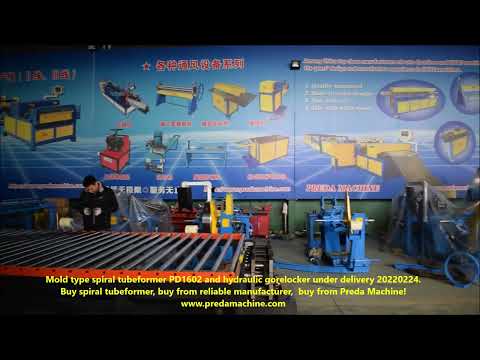
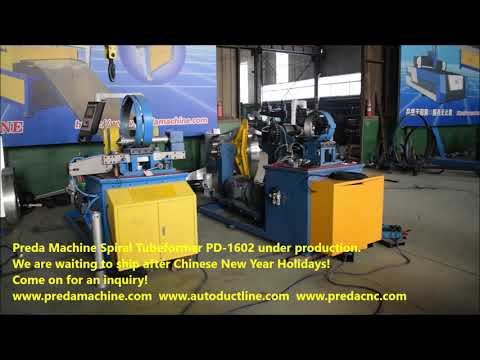
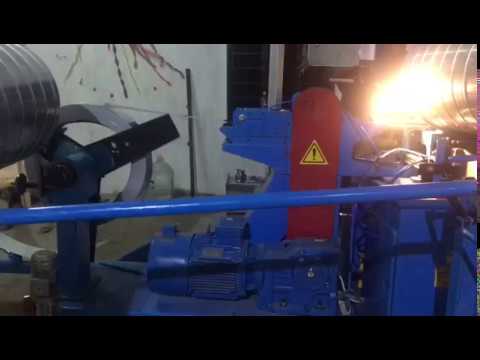
Unlike rectangular ducts that require multiple fabrication steps (shearing, folding, Pittsburgh locking, flange forming), spiral ducts are produced in a single continuous process. A single operator can produce 10-30 meters of duct per minute, making spiral duct machines the most efficient way to manufacture round HVAC ductwork.
Key Advantage
Spiral ducts have 30-40% lower air leakage compared to rectangular ducts because the spiral seam is mechanically locked and continuous. This translates to lower energy costs for building owners and higher efficiency ratings for HVAC systems.
Types of Spiral Tubeformers
Spiral duct machines come in several configurations, each designed for different production volumes and duct sizes:
| Machine Type | Duct Diameter | Strip Width | Typical Output | Best For |
|---|---|---|---|---|
| Light-duty (PD-1200) | 80-1200mm | 100-130mm | 5-10 m/min | Small shops, occasional production |
| Standard (PD-1500) | 80-1500mm | 100-150mm | 10-20 m/min | Medium fabrication shops |
| Heavy-duty (PD-1600) | 80-1600mm | 100-160mm | 15-30 m/min | High-volume manufacturers |
| Aluminum flexible | 50-300mm | Aluminum foil | 10-15 m/min | Flexible duct production |
Fixed Tubeformer vs. Adjustable Tubeformer
Fixed tubeformers use a set of forming tubes (molds) for each duct diameter. To change sizes, you swap the tube. This is simpler and more affordable but requires storing multiple tubes.
Adjustable tubeformers use a hydraulic or mechanical system to change diameter on the fly, without changing tubes. This is faster for high-mix production but costs more and has more moving parts.
Capacity and Size Range
The most important specification is the maximum duct diameter. Most spiral duct machines handle 80-1500mm, which covers 95% of commercial HVAC applications. However, if you regularly produce large ducts for industrial ventilation or tunnel systems, you may need a machine that goes up to 2000mm or more.
Other capacity considerations:
- Material thickness: Standard machines handle 0.4-1.2mm galvanized steel. Heavy-duty models can handle up to 2.0mm.
- Material types: Galvanized steel is standard. Stainless steel and aluminum require special rollers and may need a more powerful motor.
- Coil weight: The decoiler must handle your standard coil size. Most machines support 5-10 ton coils.
- Cutting method: Plasma cutting provides clean cuts on all materials. Saw cutting is cheaper but slower and produces burrs.
Key Features to Look For
1. PLC Control System
A good spiral duct machine should have a touchscreen PLC controller that lets you input duct diameter, length, and quantity. The machine should automatically cut to length and stop when the order is complete. Look for machines with recipe storage — saving your common sizes as presets saves significant setup time.
2. Hydraulic Gorelocker (Elbow Maker)
Many spiral duct machines come with an optional hydraulic gorelocker for producing 90-degree elbows. This is a valuable add-on because elbows are high-margin products that complement straight duct sales.
3. Auto Lubrication System
Forming rollers need constant lubrication to prevent galling and ensure smooth seam formation. An automatic lubrication system applies oil evenly to the strip as it enters the forming head, reducing maintenance and improving seam quality.
4. Safety Features
Look for emergency stop buttons, safety guards on the forming head, and overload protection. The decoiler should have a braking system to prevent coil runaway when the machine stops.
Price Range and Budget
| Machine Class | Price Range (USD) | Production Volume | Payback Period |
|---|---|---|---|
| Entry-level (PD-1200) | $8,000 - $15,000 | Up to 500m/day | 6-12 months |
| Mid-range (PD-1500) | $15,000 - $25,000 | 500-1,500m/day | 4-8 months |
| High-end (PD-1600 + plasma) | $25,000 - $45,000 | 1,500-3,000m/day | 3-6 months |
| Complete line (decoiler + tubeformer + gorelocker) | $35,000 - $60,000 | Full production | 3-6 months |
These are approximate ranges. Actual pricing depends on configuration, options, and shipping. Always get a detailed quote that includes installation, training, and warranty.
Watch Out For
Some suppliers quote very low prices but charge extra for essential items like the decoiler, plasma cutter, or installation. Always compare total cost of ownership, not just the base machine price.
How to Choose the Right Machine
Ask yourself these questions before buying:
- What is your daily production volume? If you produce less than 500m/day, an entry-level machine is sufficient. Over 1,500m/day, you need a heavy-duty model.
- What duct sizes do you sell most? If 80% of your ducts are under 800mm, a standard 1500mm machine is plenty. If you regularly do 1000mm+, consider the 1600mm model.
- Do you need elbows? If yes, budget for a gorelocker. Selling complete systems (straight + elbows + fittings) increases your average order value by 40%.
- What materials do you work with? Galvanized steel only = standard machine. Stainless steel or aluminum = upgraded rollers and more powerful motor.
- Do you have trained operators? Modern PLC machines are easy to learn, but an experienced operator can get 20-30% more output.
Maintenance and After-Sales
A spiral duct machine is a 10-15 year investment. Proper maintenance and reliable after-sales support are critical. Here is what to expect:
- Daily: Clean forming rollers, check lubrication levels, inspect seam quality
- Weekly: Check belt tension, clean plasma cutter nozzle, inspect electrical connections
- Monthly: Lubricate all moving parts, check hydraulic fluid level, calibrate cutting length
- Yearly: Replace worn rollers, inspect gearbox, full electrical inspection
Frequently Asked Questions
Preda Care: After-Sales That Never Expires
When you buy from Preda Machine, you get lifetime technical support. Our global agent network provides local service in 40+ countries. Free spare parts shipping, remote PLC diagnostics, video call troubleshooting, and on-site installation available.
- 24-hour response time
- Free spare parts shipping
- Remote PLC program support
- Global agent network
- Video call troubleshooting
- On-site installation
Have Questions About Your Project?
Tell us your duct specifications, daily volume, and workshop size — our engineers recommend the perfect equipment within 24 hours.
Get Free ConsultationContinue Reading: Related Guides
Go deeper on this topic, then compare the machines that do the work.
Spiral Tubeformer Buying Guide 2026
Head-to-head comparison of PD1600, PD1200 and PD2000 — capacity, price band and ideal shop size.
Read the guide → Buying GuideGorelocker Elbow Machine Guide 2026
Hydraulic vs electric gorelockers: cycle time, gauge range and which elbow sizes each handles.
Read the guide → ProcessOval Duct Manufacturing Guide
How flat oval duct is formed from round spiral tube, and when oval beats rectangular.
Read the guide → Buying GuideAuto Duct Line Buying Guide 2026
Line 2 through Line 5 compared on labour saved, floor space and payback period.
Read the guide →Machines covered in this topic
Compare specifications, gauge range and output for the machines discussed above.
Heavy Duty Spiral Tubeformer PD-2000
Φ200–2000 mm heavy-gauge spiral tube production
View specs → MachinePlasma Cut Spiral Tubeformer PD1600-PLASMA
Spiral tubeformer with integrated plasma cutting
View specs → MachineRound Flange Forming Line YFL-40
Automatic angle ring flange forming line
View specs → MachineSpiral Duct Flanger
Flanging the ends of spiral tube for joint connection
View specs →