A rectangular duct box does not close in one machine. The panel edges are formed into a Pittsburgh (or Whisper Lock) profile on the lockformer, the panel is folded around, and a seam locker closes the longitudinal joint; flange sections, cleats or fittings are then assembled to the closed section. How these stations sit next to each other, how panels move between them, and whether the locker keeps pace with the lockformer decide whether the shop flows or stacks up with half-closed boxes waiting for closure. This guide walks through that seam flow: the order of the stations, the handoff from forming to closing to flange work, where a hydraulic vertical locker and a portable locker fit in, and what to check so panels do not queue up between steps. Figures are the verified HF-1550 and L-12 specifications; cycle times beyond the machine's own rated speed are not prescribed here.
The Seam Flow Through the Shop
The process follows the panel from flat sheet to closed duct section. First the lockformer rolls the panel edge into the locking profile; the panel is then folded so the two edges meet along the longitudinal corner; the seam locker pulls those two edges together and compresses the profile into a closed joint; once the box is closed, flange angles, TDF flanges, cleats or fittings are added to finish the section. Each station hands the panel to the next in a defined order, and a panel that arrives at the locker with the wrong profile, skew edges or mismatched gauge cannot be closed cleanly, which is why the handoff between lockformer and locker matters as much as the locker itself.
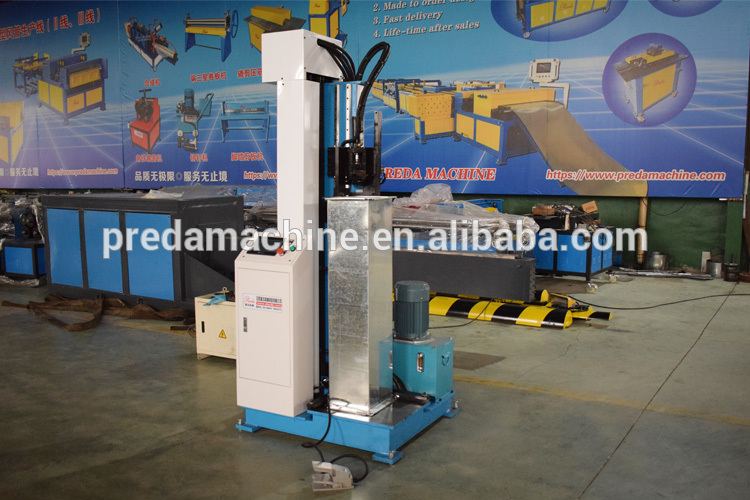
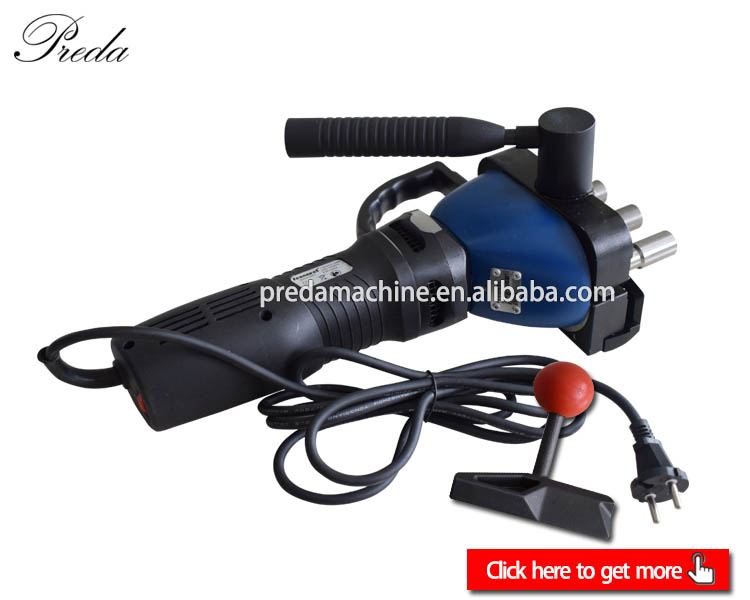
The HF-1550 CNC hydraulic vertical closer works 0.5-1.5 mm strip up to 1550 mm wide, closing Pittsburgh and Whisper Lock seams with a 3 kW hydraulic drive and PLC touchscreen, CE certified with a two-year warranty. The L-12 portable electric closer handles 0.5-1.0 mm Pittsburgh seams at 10 m/min on a 0.55 kW, 120 kg frame. The hydraulic machine suits the fixed workstation for wider, heavier-gauge boxes; the portable unit moves between stations and field-built sections, which changes how it sits in the flow.
Station Order and Panel Handoff
Planning the flow means matching each station's output to the next and keeping panel transfer short. The lockformer produces profiled panels; folding brings the edges together; the locker closes the joint; flange work follows. Where panels are set down between stations, the queue should be kept small so seam profile and edge condition can be checked before closure rather than after a stack of boxes has backed up. The handoff checklist below follows the panel in process order.
| Station | What it contributes | Handoff to the next step | Flow check |
|---|---|---|---|
| Lockformer seam forming | Rolls the panel edge into the Pittsburgh or Whisper Lock profile | Profile matches the locker's seam type; edge straight and square | No profiled panels waiting unclosed; profile consistent along the edge |
| Panel folding | Bends the panel around so the two edges meet along the corner | Edges meet evenly; seam aligned along the longitudinal corner | Panel enters the locker square; one edge not pulled ahead of the other |
| Seam locker closure | Pulls the edges together and compresses the profile into a closed joint | Closed seam handed clean to the flange or fitting assembly | Locker keeps pace; no queue of folded boxes waiting for closure |
| Flange / fitting assembly | Adds angle iron or TDF flanges, cleats and fittings to the closed section | Closed section ready for assembly without reworking the seam | Finished sections move on; seam stays closed through assembly |
Hydraulic and Portable Locker Placement Compared
Where the locker sits in the flow depends on the box size, gauge and whether the machine stays at one station or moves around the shop. The HF-1550 is the fixed CNC hydraulic vertical machine for wider, heavier-gauge panels; it belongs at a dedicated closing station after folding, where a steady panel feed matches its hydraulic closure and PLC-set gauge and pressure. The L-12 portable electric unit is brought to panels that are already assembled or to field sections; it closes light-gauge Pittsburgh seams where a fixed vertical station is impractical. The table compares the verified machine figures and the flow role of each class.
| Specification / flow role | HF-1550 Hydraulic Locker | L-12 Portable Electric Locker |
|---|---|---|
| Seam profile | Pittsburgh / Whisper Lock | Pittsburgh |
| Material thickness | 0.5-1.5 mm | 0.5-1.0 mm |
| Max duct width | 1550 mm | Portable bench-top closer |
| Power / drive | 3 kW, CNC hydraulic | 0.55 kW electric |
| Working speed | CNC hydraulic closure | 10 m/min |
| Weight | Vertical hydraulic frame | 120 kg |
| Role in the flow | Dedicated closing station after folding | Moved between assembled panels and field sections |
| Certification / warranty | CE certified, two-year warranty | CE certified, two-year warranty |
Matching the Locker to the Lockformer Output
A line backs up when the closing step cannot take panels as fast as they are folded and profiled. The lockformer and folding stations set the profiled-panel rate; the locker has to close that output without letting boxes pile up. Gauge and seam type feed this match: heavier-gauge and wider boxes press harder on the closing rollers and take more attention per seam, while light-gauge Pittsburgh sections close quickly on the portable unit. Rather than judging a single machine in isolation, the shop plans the lockformer, folding and closing stations so the panel moves straight through, with only a short buffer between steps.
Panel transfer between stations also affects closure quality. A panel dragged sideways or set down twisted can present the seam skew to the rollers, producing an uneven joint along one side. Keeping the folded panels aligned and feeding them square into the locker reduces rework; after closure, the section moves to flange assembly with the seam checked closed before any flange or cleat is fixed, so a loose joint is not hidden behind the fitting.
Flow Problems That Show Up at the Locker
- Stack of folded boxes waiting to close: closing step cannot keep up with the forming rate; check whether locker capacity or staffing at that station is the bottleneck.
- Seam profile does not match the locker: lockformer set to a different profile; confirm Pittsburgh vs Whisper Lock before panels reach the closing station.
- Panel enters the locker skewed: folding or transfer twisted the box; align the panel so the seam runs straight through the rollers.
- One edge lifts after closure: edges did not meet evenly at folding, or the locker rollers track off-center; check folding handoff and roller alignment.
- Closed seam reopens during flange work: joint was not fully seated at the locker; check roller pressure and profile before assembly continues.
Map one standard section through every station before volume runs
Run a common box size from lockformer through folding, locker and flange assembly once, noting where panels wait and where the handoff skews. Use that map to place the hydraulic and portable lockers and balance the stations before production volume.
Frequently Asked Questions
What order do the duct stations run in?
The lockformer forms the seam profile, the panel folds so the edges meet, the seam locker closes the longitudinal joint, and flange or fitting assembly follows. Each handoff checks profile, edge square and gauge before the panel moves on.
Where does a hydraulic locker fit in the shop flow?
The HF-1550 sits at a dedicated closing station after folding, handling wider and heavier-gauge 0.5-1.5 mm panels up to 1550 mm with CNC hydraulic closure and PLC settings. It matches a steady feed of folded boxes from the forming stations.
When is a portable locker used instead?
The L-12 moves to assembled panels and field sections that do not travel to the fixed station, closing 0.5-1.0 mm Pittsburgh seams at 10 m/min. It serves light-gauge work and on-site closure rather than a fixed-volume closing line.
What keeps the locker from becoming a bottleneck?
Match the closing capacity to the lockformer and folding output, keep panel transfer short and square, and check profile and gauge at each handoff. A queue of folded boxes, skewed panels or reopened seams points to a station or transfer issue before the rollers are blamed.
Preda Care Service Promise
Every Preda Machine ships CE certified with a two-year warranty, backed by 24/7 technical support, free spare parts shipping, remote PLC programming assistance and a global agent network. A support engineer can review your box sizes, gauges and station flow against the HF-1550 or L-12 and advise where each locker fits to keep seams closing cleanly through the shop.
Plan Your Seam Stations Around Your Box Sizes
Share your common duct dimensions, gauges and how panels move through your shop, and we will recommend the hydraulic or portable Pittsburgh locker and the station arrangement that keeps sections flowing from forming to closed, flanged duct.
Compare Seam Lockers →