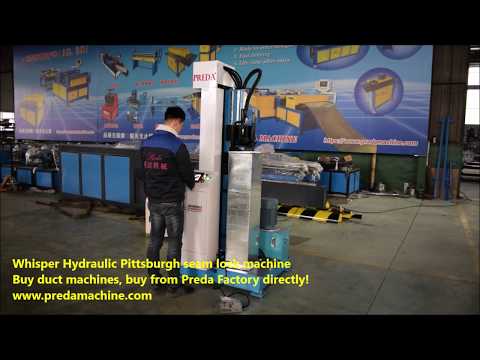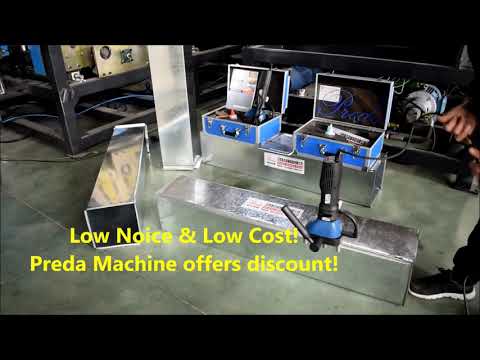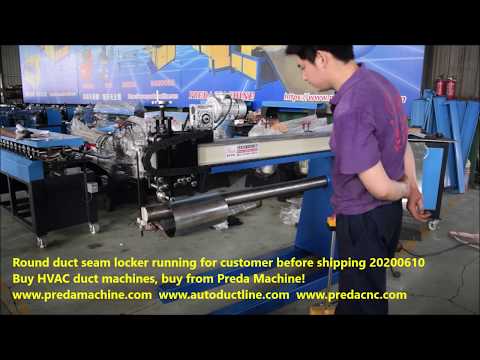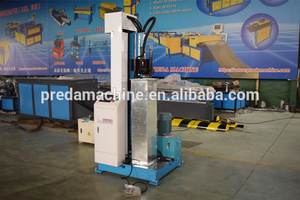
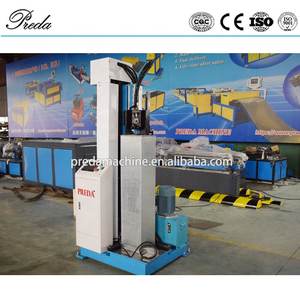

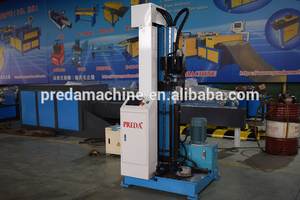
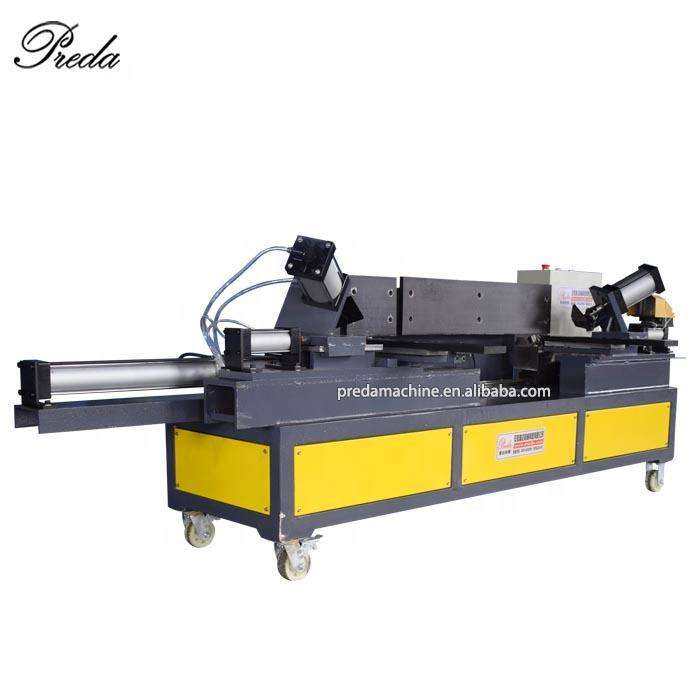
CNC Hydraulic Pittsburgh Seam Locker HF-1550
Last updated: October 12, 2026
CNC hydraulic seam locker with whisper-lock vertical version for high-precision, heavy-duty Pittsburgh seam closure.
Technical Specifications
What is a CNC Hydraulic Pittsburgh Seam Locker HF-1550?
A Pittsburgh lockformer (also called a Pittsburgh lock machine or pittsburgh machine) is a sheet metal forming machine that creates the Pittsburgh lock seam — the most widely used connection method for rectangular HVAC ductwork. The machine rolls a female pocket on one edge of the sheet and a male flange on the mating edge, allowing ducts to be assembled by simply inserting and hammering the seam closed. Pittsburgh lockformers are essential equipment in any sheet metal duct fabrication shop.
Key Features
- CNC-controlled seam closure
- Hydraulic pressure for consistent results
- Vertical whisper-lock version
- Handles heavier gauge material
- Programmable seam parameters
Still Losing Money to Leaky Seams and Slow Assembly?
Every HVAC duct shop faces the same bottleneck: hammering seams closed by hand. When your team spends hours on inconsistent weld quality, your production capacity drops, labor costs rise, and deadlines slip. The CNC Hydraulic Pittsburgh Seam Locker HF-1550 is engineered to eliminate these inefficiencies — automating CNC hydraulic seam locker while delivering consistent, factory-grade quality.
In this guide, we break down exactly how this machine transforms your HF-1550 whisper lock workflow, what specifications matter for your operation, and how to calculate your return on investment. Whether you run a 3-person job shop or a 50-employee production facility, understanding these details directly impacts your bottom line.
How It Transforms Your Production Line
The CNC Hydraulic Pittsburgh Seam Locker HF-1550 operates on a proven principle: CNC hydraulic seam locker should be a continuous, automated process — not a series of manual interventions. Here is the step-by-step workflow that makes this possible:
Seam Alignment
The Pittsburgh lock is hooked together and positioned in the seam closing machine, or the weld joint is aligned for welding.
Automatic Closing/Welding
Powered rollers close the seam along the full length, or welding electrodes create a continuous or spot weld — no manual hammering required.
Quality Check
The closed seam or weld is inspected for completeness and airtightness — consistent quality every time.
Discharge
The finished duct section is ready for flange installation and shipping.
Technical Specifications & Performance Data
Every specification on this machine is chosen for a reason. The table below shows not just the numbers, but what each one means for your daily production:
| Parameter | This Machine | What It Means for You |
|---|---|---|
| Control System | PLC with touchscreen | Easy programming, consistent results, minimal training |
| Construction | Heavy-duty steel frame | Vibration-free operation, 10+ year service life |
| Certification | CE certified | Meets European safety and quality standards |
| Warranty | 2 years | Peace of mind with comprehensive factory warranty |
Problems Solved: Before vs. After
We asked 50+ HVAC fabricators about their biggest production headaches. Here is how this machine directly addresses each one:
| Without This Machine | With This Machine |
|---|---|
|
✕ Hand hammering is slow and noisy
5-10 minutes per seam, worker fatigue, noise pollution |
✓ Powered seam closing in 10-30 seconds
10-20x faster, quiet operation, less fatigue |
|
✕ Inconsistent seam closure
Some seams leak, failed pressure tests |
✓ Uniform roller pressure along full length
Every seam identical, guaranteed airtight |
|
✕ Spot welding burns through thin metal
Holes in duct, rework and scrap |
✓ Precise current and time control
Perfect welds every time, no burn-through |
|
✕ Welding requires skilled labor
Hard to find qualified welders, high wages |
✓ Simple operation, minimal training needed
Any operator can produce quality welds |
Where It Fits in Your Factory
This machine is versatile enough to serve multiple production scenarios. Here are the most common configurations our customers use:
Pittsburgh Seam Closing
Closing the longitudinal seam on rectangular ducts after lock forming — the most common application in HVAC fabrication.
Spot Welding
Fast, clean spot welds for round duct assembly, flange attachment, and bracket installation — no filler material needed.
Seam Welding
Continuous or stitch welding for high-pressure ducts, stainless steel ducts, and applications requiring maximum airtightness.
Flange Fastening
Power fastening of TDC flange clips and connectors — faster and more consistent than manual screwdriving.
Frequently Asked Questions
Click each question to see the answer. These are the questions our sales engineers hear most often:
CNC Hydraulic Seam Locker vs a Mechanical Lockformer
A lockformer forms and closes the Pittsburgh seam in one pass. A hydraulic seam locker closes a seam that has already been formed. It exists because hydraulic force closes heavier gauge reliably, and because separating the two operations lets each run at its own pace.
| Machine | Operation | Gauge capability | Best fit |
|---|---|---|---|
CNC Hydraulic Pittsburgh Seam Locker HF-1550 This machine — closes a pre-formed seam | Closing only The seam is formed upstream | Heavier gauge, hydraulic force Very consistent closing pressure | Heavier gauge work, or a layout where forming and closing are separate Also where seam leakage has been a recurring problem |
Mechanical closing | Closing only Pre-formed seam | Standard gauge Mechanical force | Standard gauge at moderate volume Lower capital than hydraulic |
Forms and closes in one pass | Both operations One handling | Up to 1.2 mm One machine, one pass | You want forming and closing in a single handling Simpler layout, lower labour |
Forms and closes, standard gauge | Both operations One handling | Up to 1.0 mm Commercial duty | Standard commercial gauge with a simple layout The most common rectangular duct machine |
Mechanical closing | Closing only Pre-formed seam | Standard gauge Mechanical | You want closing off the critical path at standard gauge Compare with the L-12 on speed and gauge |
Commissioning a Hydraulic Seam Locker
Hydraulic closing is consistent, which is the point. Set it up carefully once and the seam becomes the most reliable operation in the shop.
- 1. The locker closes; it does not form. A badly formed seam upstream will not be corrected here, however much force is applied.
- 2. Cut a section and inspect the lock. Pressure that suits 22 ga will not close 18 ga.
- 3. Hydraulic force stops at the limit, not at the material. Set the minimum stroke that closes the seam completely and lock it.
- 4. Level, temperature and hose condition determine whether closing pressure is consistent through the day.
- 5. The only reliable check, and the one that catches a leaking seam before it reaches site.
- 6. An unsupported section twists and closes unevenly, producing a seam that is tight at one end and open at the other.
- 7. Hydraulic machines make it easy to compensate by force, which hides a wrong setting. Write the correct one down instead.
- 8. A drift in the recorded pressure needed to close a seam is early warning of pump or seal wear.
Hydraulic Seam Locker Faults: Symptom, Cause, Fix
Check oil, hoses and stroke limit first. Then confirm the seam was correctly formed upstream — this machine can only close what it is given.
| Symptom | Most likely cause | What to do |
|---|---|---|
Seam still leaks after closing Seam formed incorrectly upstream | The locker cannot correct a badly formed seam The most common misdiagnosis on this machine | Inspect the formed seam before it reaches the locker Fix the forming operation, not the closing force |
Closing inconsistent through the shift Hydraulic oil temperature or level | Sustained cycling heats small hydraulic units and pressure droops Recovers when cool, which is the clue | Check the level with the machine stopped and level, and allow cool-down intervals If it does not recover when cool, call us |
Seam over-closed or coating damaged Stroke limit too long | Hydraulic force stops at the limit you set The classic hydraulic-specific fault | Reduce the stroke to the minimum that closes the seam and lock it Set and record a limit per gauge |
Oil weeping at a fitting Hose or fitting wear | Vibration and handling damage hoses over time Often mistaken for an internal seal failure | Tighten or replace the fitting and check hoses at the start of each shift Cap fittings if the machine is stored |
Section jams or will not feed Seam not formed square, or the section unsupported | A seam formed out of square will not pass through the closing head Usually an upstream fault | Check the formed seam and the section support before increasing force Never force a section through |
Will not build pressure Air in the system or a bypassing relief valve | After transport or an oil top-up, air can be trapped Or the relief is set below the working pressure | Bleed the system per the manual and check the relief setting Never raise the relief setting above specification to compensate |
Hydraulic vs Mechanical Closing: The Five-Year Cost
The purchase price difference between a hydraulic and a mechanical closer is real, but it is not the number that should decide it. The deciding numbers are gauge capability, seam reject rate, and what a service call costs you in stopped production.
| Cost line | Mechanical closer | Hydraulic closer | What it means |
|---|---|---|---|
Purchase price Lower | Typically 25–40% less Lower entry cost | Higher Pump, valves and a control system | The mechanical machine wins on capital But capital is usually the smallest line over five years |
Gauge capability Standard commercial gauge | 24–22 ga comfortably Strains at 18 ga | Comfortable at 20–18 ga Consistent closing force | Decisive if your gauge mix includes 18 ga Otherwise the mechanical machine is adequate |
Seam reject rate Setting-dependent | Consistent once set correctly Drifts with mechanical wear | Very consistent Force is controlled rather than mechanical | If leaking seams have been a recurring problem, this is why Rework on site costs far more than the capital difference |
Service requirement Simpler | Mechanical adjustment and roll care In-house in most shops | Oil, hoses, seals and the pump Scheduled hydraulic maintenance | The mechanical machine is simpler to keep running But hydraulic service is predictable, not frequent |
Best five-year choice Standard gauge, moderate volume | The mechanical closer Lower total cost in this case | The hydraulic closer Lower total cost when 18 ga or leakage is the issue | Decide on gauge mix and reject history, not on price See the mechanical option on the L-12 page |
Deciding Whether to Move From Mechanical to Hydraulic Closing
Most shops that buy a hydraulic closer do so after a specific problem, not as a first purchase. These are the triggers that justify the change.
- 1. If leaking seams are reaching site regularly, the cost of that rework almost always exceeds the capital difference between the two machines.
- 2. Measure the mix over a month. If 20–18 ga is more than about a fifth of your work, the hydraulic machine is the correct specification.
- 3. If operators are adjusting closing pressure several times a shift, mechanical closing is fighting your material. Hydraulic control removes that variable.
- 4. Service frequency matters less than service consequence. If a closing fault stops the whole line, consistency is worth paying for.
- 5. A hydraulic closer needs oil, seal and hose maintenance. If that is a problem in your shop, the mechanical machine is the better operational choice.
- 6. Both machines will keep up with a lockformer. The difference is in what comes out of them.
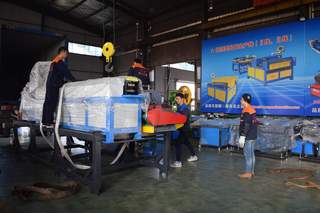
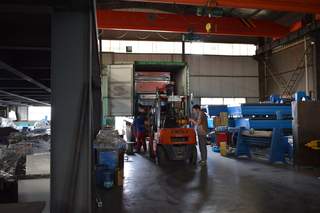
Professional Packaging & Global Shipping
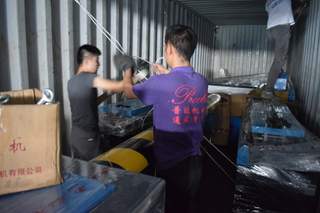
Every machine is professionally packaged and secured in a container for safe delivery to your port. We send you loading photos before the ship sails.
Calculate Your Return on Investment
Based on average industry data, here is what a typical customer saves after installing this machine:
* Figures based on average customer data for a shop producing 50-200 seams/welds per day. Your actual results will vary based on production volume, labor rates, and current efficiency levels. Contact our engineers for a customized ROI calculation based on your specific operation.
Ready to Upgrade Your CNC Production?
Get a customized quote within 24 hours. Our engineers will help you configure the right machine for your specific production requirements.
WhatsApp / WeChat: +86-18355321923 | Email: jason@predamachine.com
Related Products


Buying Guides for This Machine Type
Before you request a quote: how this machine class compares, what it costs, and how to size it for your production volume.
Seam Locker Buying Guide 2026
Portable vs CNC hydraulic vs Pittsburgh L-12 closers — where each one pays for itself.
Read the guide → Buying GuidePittsburgh Lockformer Buying Guide 2026
SA-15HB vs SA-12HB vs snaplock vs S&drive: which lock profile and machine fits your duct class.
Read the guide → MaintenancePittsburgh Lockformer Maintenance Guide
Daily, weekly and annual service schedule that keeps a lockformer accurate past ten years.
Read the guide → TroubleshootingPittsburgh Lockformer Problems & Solutions
Symptom-to-cause troubleshooting table for the faults that stop a lockformer mid-shift.
Read the guide →