A Pittsburgh seam locker closes the female pocket and male flange that a lockformer has rolled along the two edges of a rectangular duct panel. It is the machine that turns a folded panel into a sealed section, and the choice between a portable bench-top locker and a hydraulic vertical closer is decided by section width, gauge, daily seam volume and whether the work happens in a fixed workshop or moves to site. This guide compares the two machine classes on the specifications that matter, matches each to a shop profile, and explains how seam closure quality is decided at the closer rather than at the pressure test.
What the Closer Actually Does
The Pittsburgh lock seam is the most widely used connection on rectangular HVAC ductwork. One edge carries a rolled female pocket, the mating edge a male flange; the locker runs the assembled pair through a set of closing rollers that tuck the flange into the pocket and compress it along the full seam length. Done evenly, the seam holds tight through assembly and pressure test. Done with inconsistent roller pressure, it leaves a loose lock that shows up as a corner leak, a ragged edge or a section that pulls apart when the panel is squared on the bench.
The closer is also where Whisper Lock seams are handled alongside the standard Pittsburgh profile. Whisper Lock, sometimes called a flanged or cleat-style pocket, reads differently under the rollers, and the machine has to be set up for the seam profile the lockformer is producing. Matching closer to lockformer profile matters more than choosing the fastest machine: a closing roller set tuned to one seam will not cleanly seat another.
Two Machine Classes, Two Production Profiles
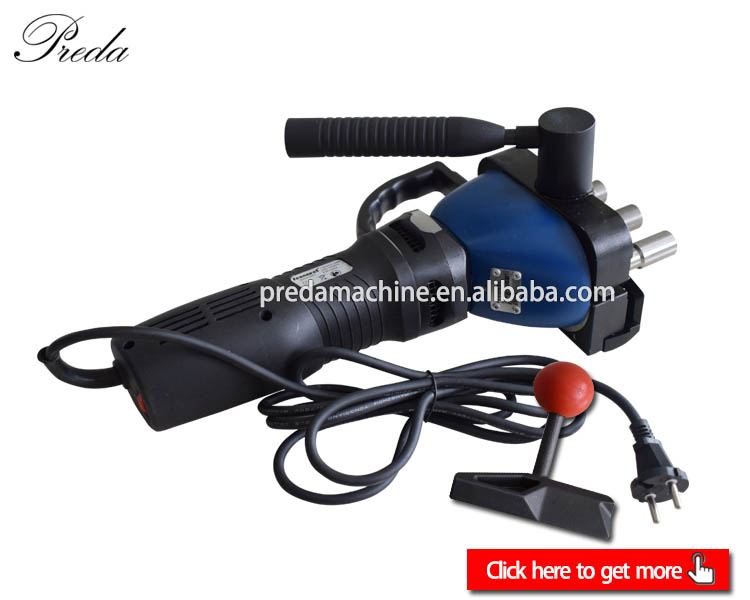
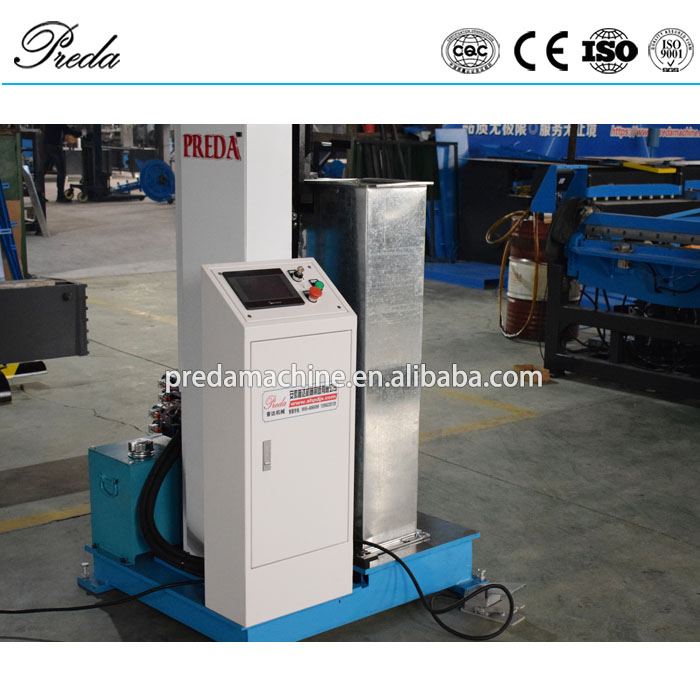
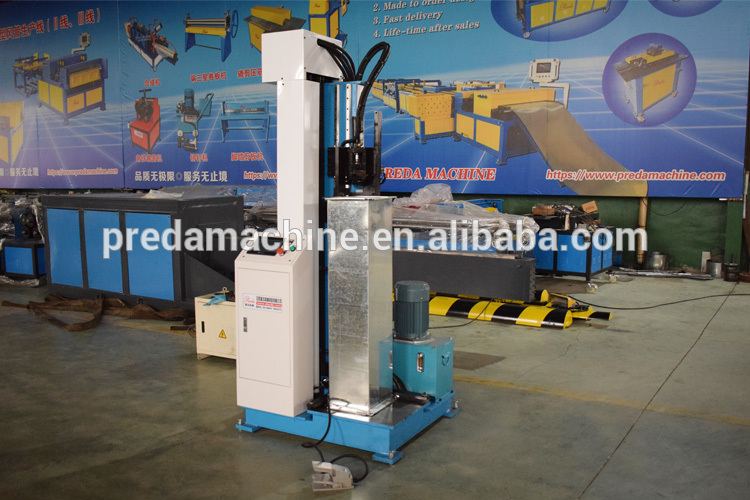
The Preda lineup covers the two ends of this spectrum. The L-12 is a compact, bench-top electric Pittsburgh locker aimed at entry-level shops and mobile seam closing; the HF-1550 is a CNC hydraulic vertical closer built for wider panels and steady workshop volume. The comparison below follows the specifications listed on the product pages.
| Specification | L-12 Portable Seam Locker | HF-1550 Hydraulic Vertical Closer |
|---|---|---|
| Machine class | Compact bench-top electric locker | CNC hydraulic vertical seam locker |
| Seam type | Pittsburgh | Pittsburgh / Whisper Lock |
| Material thickness | 0.5-1.0 mm | 0.5-1.5 mm |
| Maximum duct width | Bench-top section handling | Up to 1550 mm |
| Working speed | 10 m/min | Hydraulic controlled closing |
| Power | 0.55 kW | 3 kW |
| Weight | 120 kg | Vertical hydraulic frame, in-shop installation |
| Strongest fit | Small shops, entry-level capacity, portable or site seam closing | Steady workshop output, wider and heavier panels, consistent hydraulic pressure |
The difference between the two is not speed on paper so much as how pressure is applied along the seam. A bench-top electric locker drives the seam through rollers under motor power and depends on the operator feeding the section squarely. A hydraulic vertical closer applies controlled closing pressure through the hydraulic frame, which keeps roller force even along wide panels and heavier gauge material where hand-fed rollers would otherwise drift. For a narrow light-gauge section that difference is barely visible; for a 1500 mm wide panel at 1.5 mm it is the difference between a clean seat and a buckled edge.
Matching the Closer to Your Shop Profile
Work through the profile that matches your floor before comparing price. The table below maps common shop situations to the machine class that carries them comfortably.
| Shop situation | What the work demands | Closer direction |
|---|---|---|
| Small shop, light gauge, occasional sections, some site fabrication | Compact footprint, movable bench-top unit, Pittsburgh closure on 0.5-1.0 mm | L-12 class portable locker |
| Growing workshop, regular rectangular duct, mixed seam types | Even pressure across sections, Pittsburgh and Whisper Lock capability | Hydraulic vertical closer with seam-profile options |
| Wide panels up to 1550 mm, thicker gauge mains | Hydraulic frame rated to 1.5 mm and 1550 mm width | HF-1550 class vertical closer |
| High daily seam volume on the same standard section | Repeatable setup, consistent pressure between operators, minimal manual feed variation | Hydraulic closer with CNC control |
| Retrofit and on-site sealing of existing runs | Portable unit that can be moved to the section, light gauge repair work | Portable bench-top locker |
When a Manual or Light Electric Setup Is Enough
Not every shop needs a hydraulic vertical closer, and buying one before the work justifies it ties up capital and floor space for capacity that sits idle. A light electric bench-top locker is the right call where daily section count stays low, panels stay narrow and within the 0.5-1.0 mm band, and the crew closes seams alongside other jobs rather than running a dedicated closing station. Small contractors producing a few sections a day, repair shops sealing retrofit ductwork, and new shops proving out their first commercial contracts all fall in this group. The L-12 at entry-level pricing is built for that role: compact enough to move between bench and site, straightforward to set up, and inexpensive to maintain where roller wear is the only consumable to track.
The crossover point arrives when the work changes in any of three directions: sections grow wide enough that hand-feeding twists the panel, gauge climbs past 1.0 mm and the bench rollers cannot seat the seam, or daily seam volume becomes a dedicated station where one operator spends the shift closing seams. At that point the manual feed and light frame become the bottleneck, and the hydraulic closer pays back through consistent quality and fewer reworked corners. The machine should follow the workload, not precede it.
Floor Space, Setup and Operator Training
Closer layout matters more than most buyers expect. A vertical hydraulic locker needs a stable in-shop position, space to feed the panel from one side and receive it on the other, and clearance for the operator to walk the seam along its full length. A bench-top locker occupies a workbench footprint and can share the lockformer or shearing station, which suits a compact shop. Before ordering, measure the longest panel you close and lay out the feed path on the floor plan; a closer that blocks the panel flow creates a walk-around problem every shift.
Operator learning time is short on both classes, but the failure mode differs. On a bench-top unit, the main skill is feeding the panel square and keeping steady pace; an operator who angles the edge produces a wavy seam. On a hydraulic closer, the main skill is setting the seam profile and pressure correctly, then loading the section straight into the rollers. The closer setup should be documented - seam type, roller set, pressure level - so the next operator reproduces the same section instead of relearning it. Shops that keep a short setup note taped to the machine cut down the number of first-section rejects after every shift change.
Thickness and Width Set the Real Ceiling
The two specification limits that rule out a machine first are material thickness and maximum duct width. A locker rated to 1.0 mm cannot seat a 1.2-1.5 mm panel cleanly; the rollers ride over the heavier edge and the seam stays partly open. Similarly, a bench-top closer has no frame for a very wide panel, and forcing one through risks twisting the section as it feeds. Before buying, list the heaviest gauge and widest panel your projects specify, and check that machine's upper limits against those two numbers - not against the average job.
Width also ties to operator ergonomics. Wide panels need the section supported as it feeds, or the operator fights to keep the edge aligned with the rollers. A vertical hydraulic closer gives a stable feed path; a portable bench unit works best on shorter, narrower sections where the operator can hold the panel level with two hands.
Seam Closure Quality and the Leak It Prevents
Most duct leaks trace to the corners, and most corner leaks trace back to how the seam was closed. A pocket that is only partially tucked at the end of a wide section leaves a small opening at the corner radius; when the assembled duct is put under static pressure, that opening is exactly where air escapes. Hydraulic pressure applied evenly along the seam keeps the tuck depth consistent from start to end of the panel, which is why steady-volume shops move away from hand-fed closers once section width and gauge grow.
Roller condition feeds the same outcome. Worn or zinc-caked rollers cannot hold their closing profile, and the wear appears as a softer lock before it appears as a visible ridge. Inspect the rollers when the seam starts to feel loose, keep the running surfaces clean of zinc buildup, and replace the worn set before the scrap pile grows. The closer is a consumable-tool machine at heart: its rollers are the wearing parts, and their state decides the seam as much as the drive does.
How the Closer Sits Beside the Lockformer
The closer cannot compensate for a lockformer that rolled a shallow or distorted pocket. If the female groove is too shallow or the male flange is burred, the closer presses a bad profile together as best it can, and the section still fails. The two machines form one system: the lockformer sets the seam profile, the locker seats it. When comparing a seam line, ask how the closer's roller set matches the lockformer's output, and whether replacement rollers for both are available through the same supplier. Shops that run a Pittsburgh lock former feeding a matching closer get the most consistent sections; mixing profiles from unrelated machines is where corner problems start.
Check the end of the seam first
On the first closed section of a shift, run a finger along the last 150 mm of the seam and check the corner radius. Looseness there means pressure is dropping toward the end of the panel - the most common sign that roller pressure or feed alignment needs attention before a batch runs.
Preda Care Service Promise
Every Preda Machine ships CE certified with a two-year warranty, backed by 24/7 technical support, free spare parts shipping, remote PLC programming assistance and a global agent network. Closing rollers and seam tooling are stocked as spare parts, with the supplier able to match the closer to the lockformer profile on your line.
Match the Closer to Your Width and Gauge
Send the section widths and material gauges your projects repeat, and we will match them to a portable bench locker or a hydraulic vertical closer with factory footage of the seam being closed.
Compare Seam Lockers →Frequently Asked Questions
Can a portable seam locker handle heavy gauge duct?
The L-12 class portable locker is rated for 0.5-1.0 mm Pittsburgh seams. Heavier gauge up to 1.5 mm and wider panels belong on a hydraulic vertical closer, which applies the frame pressure thicker material needs.
What maximum width can the HF-1550 close?
The HF-1550 hydraulic vertical locker handles duct width up to 1550 mm in the 0.5-1.5 mm band, closing both Pittsburgh and Whisper Lock seams under controlled hydraulic pressure.
Why do ducts leak at the corners?
Usually because the seam was only partly tucked at the end of the panel, leaving an opening at the corner radius where static pressure pushes air out. Even closing pressure along the full seam is the main prevention, alongside a correctly profiled pocket from the lockformer.
Do I need a separate machine for Whisper Lock?
A hydraulic closer built to handle both profiles, like the HF-1550, can close Pittsburgh and Whisper Lock with the appropriate roller setup. A single-profile bench-top locker is limited to the seam type its rollers are cut for.
Is the entry-level locker a real production machine?
Yes, within its rated band. The L-12 closes Pittsburgh seams on 0.5-1.0 mm galvanized at 10 m/min on a 0.55 kW drive; it is an entry-level production locker for light gauge and moderate volume, not a machine to stretch to 1.5 mm mains or 1550 mm wide panels. Match the machine's rated limits to your heaviest and widest job before assuming it covers the shop.