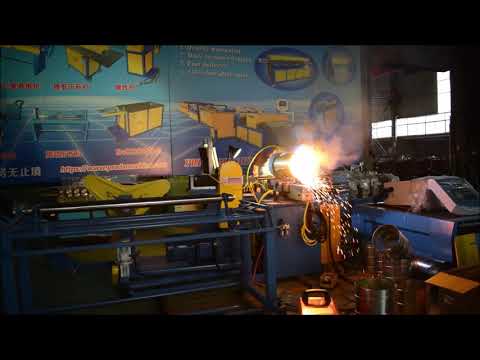
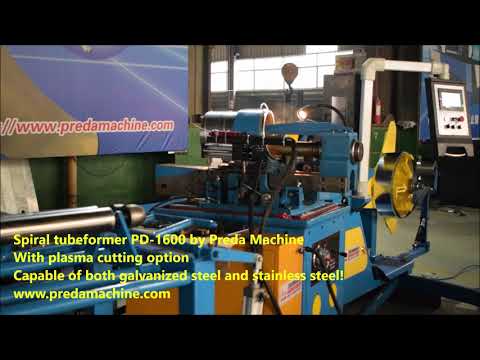
Plasma Cut Spiral Tubeformer PD1600-PLASMA
Last updated: October 12, 2026
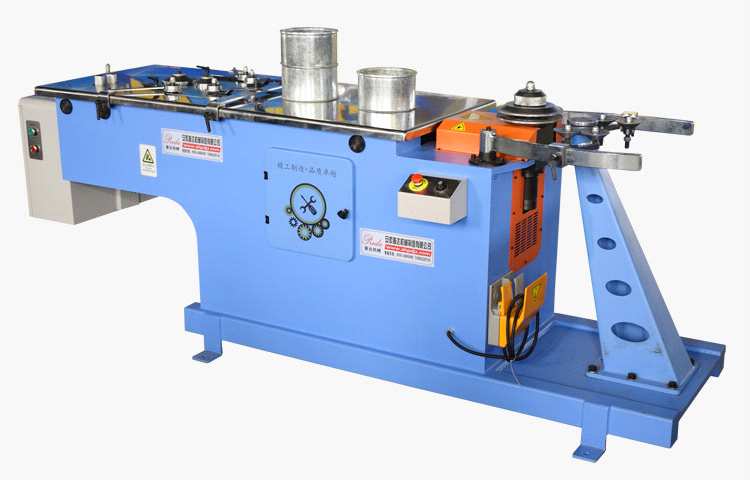
Mould-type spiral tubeformer with integrated 120A plasma cutting system. Produces spiral ducts 100-1600mm with versatility for stainless steel and complex profiles.
Technical Specifications
What is a Plasma Cut Spiral Tubeformer PD1600-PLASMA?
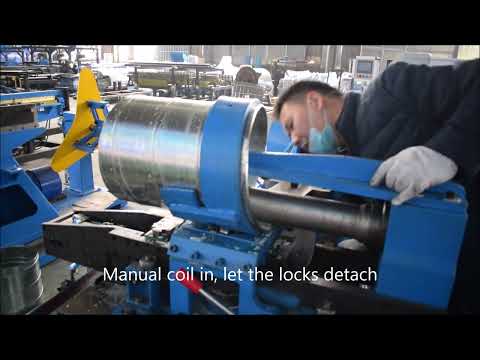
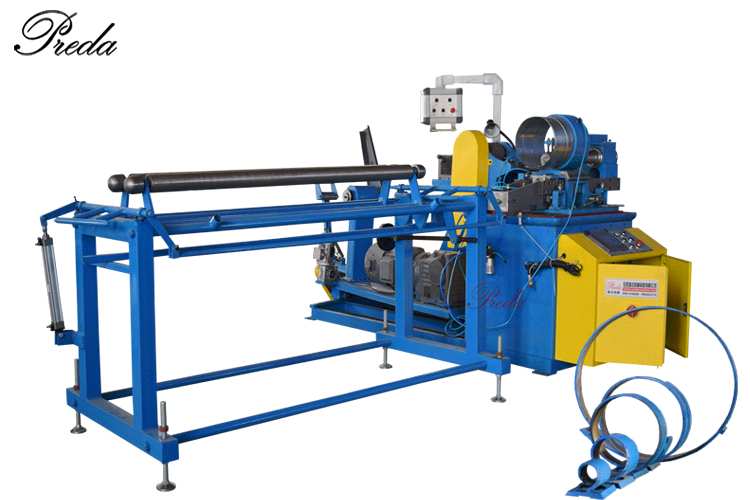
A spiral duct forming machine (also called a spiral tubeformer) is an industrial machine that continuously manufactures round spiral ducts from galvanized steel, stainless steel, or aluminum coils. The machine forms a helical seam by rotating metal strip around a fixed mandrel, producing ducts with superior structural rigidity and air-tightness compared to rectangular ducts. Spiral duct machines are widely used in HVAC ventilation, dust collection, and exhaust systems.
Key Features
- Integrated 120A plasma cutting
- Cuts stainless steel and aluminum
- Flying cut synchronized with forming
- Panasonic PLC with touch screen
- Servo-driven rail guide
- No external lock strip required
Still Losing Money to Inconsistent Spiral Duct Quality?
Every HVAC duct shop faces the same bottleneck: manual spiral duct forming. When your team spends hours on hand-forming seams and cutting lengths, your production capacity drops, labor costs rise, and deadlines slip. The Plasma Cut Spiral Tubeformer PD1600-PLASMA is engineered to eliminate these inefficiencies — automating plasma cut spiral tubeformer while delivering consistent, factory-grade quality.
In this guide, we break down exactly how this machine transforms your PD1600-PLASMA workflow, what specifications matter for your operation, and how to calculate your return on investment. Whether you run a 3-person job shop or a 50-employee production facility, understanding these details directly impacts your bottom line.
How It Transforms Your Production Line
The Plasma Cut Spiral Tubeformer PD1600-PLASMA operates on a proven principle: plasma cut spiral tubeformer should be a continuous, automated process — not a series of manual interventions. Here is the step-by-step workflow that makes this possible:
Coil Feeding & Leveling
Galvanized steel or aluminum coil is automatically fed through precision leveling rollers, eliminating coil memory and ensuring a perfectly flat strip enters the forming head.
Continuous Spiral Forming
The strip is wrapped around the forming mandrel while the lock seam is simultaneously rolled and crimped. This creates the characteristic spiral seam that gives round ducts their superior strength and airtightness.
Precision Length Cutting
A flying shear or slitter cuts the continuous tube to your exact programmed length without stopping production — critical for maintaining high output rates.
Automatic Discharge
Finished ducts are automatically ejected onto the collection table, ready for flange installation or direct shipment.
Technical Specifications & Performance Data
Every specification on this machine is chosen for a reason. The table below shows not just the numbers, but what each one means for your daily production:
| Parameter | This Machine | What It Means for You |
|---|---|---|
| Control System | PLC with touchscreen | Easy programming, consistent results, minimal training |
| Construction | Heavy-duty steel frame | Vibration-free operation, 10+ year service life |
| Certification | CE certified | Meets European safety and quality standards |
| Warranty | 2 years | Peace of mind with comprehensive factory warranty |
Problems Solved: Before vs. After
We asked 50+ HVAC fabricators about their biggest production headaches. Here is how this machine directly addresses each one:
| Without This Machine | With This Machine |
|---|---|
|
✕ Inconsistent duct diameter
Ducts don't fit together on site, causing rework and delays |
✓ PLC-controlled diameter accuracy ±0.5mm
Every duct fits perfectly on first try, zero rework |
|
✕ Slow manual production
2-3 workers needed per machine, max 5-8 ducts/hour |
✓ Automated continuous production up to 38 m/min
One operator produces 30-60 ducts/hour |
|
✕ Air leakage at seams
Energy loss, failed pressure tests, customer complaints |
✓ Precision spiral lock seam with 360° crimping
Leakage class C/D compliance, passes every pressure test |
|
✕ Material waste from bad cuts
10-15% scrap rate from manual cutting errors |
✓ CNC flying shear with ±1mm length accuracy
Scrap rate below 2%, significant material savings |
Where It Fits in Your Factory
This machine is versatile enough to serve multiple production scenarios. Here are the most common configurations our customers use:
Commercial HVAC Projects
Shopping malls, office towers, hospitals — anywhere large volumes of round duct are needed for main supply and exhaust runs.
Industrial Ventilation
Factory exhaust systems, dust collection, fume extraction where durable, airtight round duct is essential.
Tunnel & Underground
Metro stations, parking garages, underground facilities requiring high-pressure, large-diameter ductwork.
Duct Fabrication Shops
Sheet metal shops producing spiral duct for contractors — the core revenue machine for round duct specialists.
Frequently Asked Questions
Click each question to see the answer. These are the questions our sales engineers hear most often:
Plasma Cut Tubeformer: In-Line Cutting vs a Separate Cut-Off
Integrating plasma cutting into the tubeformer removes a handling step and tightens length accuracy. It also adds a consumable, a fume extraction requirement and a control system. It pays where cut-to-length volume is high; it is overkill where lengths are cut occasionally.
| Setup | Length accuracy | Handling | Best fit |
|---|---|---|---|
Plasma Cut Spiral Tubeformer PD1600-PLASMA This machine — forming plus cutting in line | Tight and repeatable Programmed lengths | No move to a separate saw One operator, one station | High-volume cut-to-length with tight tolerances Also where length variation is causing assembly problems on site |
Forming only | Depends on the separate cut-off Manual or semi-automatic | Tube moved to a cutting station Extra handling | Most of your tube is cut to length in a separate operation anyway Lower capital and simpler to maintain |
Large diameter, forming only | Depends on the cut-off Separate operation | Separate handling As above | Large diameter without a cutting bottleneck Choose on diameter, not on cutting |
End flanging | N/A Downstream operation | After cutting Complementary | You need flanged ends as well as cut lengths Consider the whole line, not one machine |
The cutting technology in detail | Reference Background reading | N/A Guide page | You want to understand plasma cutting before specifying it Read this before you compare quotations |
Installing an In-Line Plasma Cut: The Non-Obvious Requirements
The plasma head is the easy part. Fume extraction, earthing and consumable management are what determine whether the installation is a success.
- 1. Cutting galvanised steel produces zinc oxide fume. Extraction is a health requirement, not an accessory, and retrofitting it is far more expensive.
- 2. Plasma cutting is sensitive to air quality. Moisture in the line shortens consumable life dramatically and degrades cut quality.
- 3. Plasma cutting introduces electrical noise. Poor earthing causes control faults that look like random machine failures.
- 4. Nozzles and electrodes wear. Set a change interval based on cut metres rather than waiting for cut quality to drop.
- 5. Programmed length and actual length differ by the kerf and by any lag in the cut start. Measure the first piece of every batch.
- 6. Dross indicates wrong torch height, speed or consumable condition. It is far easier to correct at set-up than to grind off later.
- 7. On an integrated machine the cable is close to moving parts. Route and clip it deliberately.
- 8. This is the number that tells you whether your air supply and settings are right.
Plasma Cut Tubeformer Faults: Symptom, Cause, Fix
Faults split into cutting faults and forming faults. Isolate by making tube with the cutter disabled before adjusting anything else.
| Symptom | Most likely cause | What to do |
|---|---|---|
Cut length wrong but forming correct Kerf compensation or cut-start lag | Programmed length does not account for the material removed or the trigger delay A calibration issue rather than a fault | Measure an actual piece and offset the programmed length accordingly Re-check whenever the gauge changes |
Dross on the cut face Torch height, speed or consumable condition | Usually a consumable nearing end of life, followed by speed Almost never the machine itself | Replace the consumables first, then adjust speed and torch height Log cut metres to set a proper change interval |
Cut starts inconsistently Air pressure or moisture in the line | Plasma starting is very sensitive to air quality Classic sign of a wet air supply | Fit a dryer and drain the receiver daily Check pressure at the torch, not at the compressor |
Control faults or random resets Earthing or electrical noise | Plasma introduces noise; poor earthing lets it reach the controls Looks like a machine fault and is not | Check the earth connection and route the torch cable away from signal cables Fit a separate earth if the fault persists |
Consumables wearing very fast Wet air or excessive pierce count | Moisture in the supply is the dominant cause Followed by cutting patterns that require many starts | Dry the air and review the nesting to reduce starts Compare cut metres per set before and after |
Tube diameter wrong Forming set-up, not the cutter | On an integrated machine it is easy to blame the new technology Diameter is a forming parameter | Disable the cutter, make tube, and set the helix angle from the diameter table See the tubeformer set-up steps for the forming side |
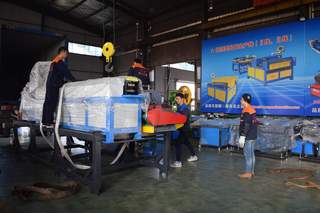
Professional Packaging & Global Shipping
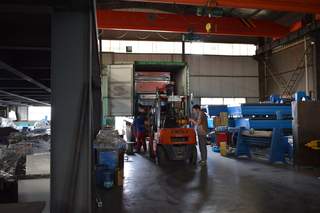
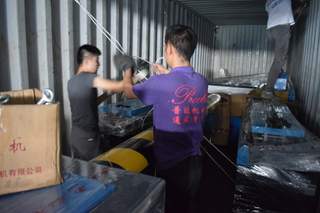
Every machine is professionally packaged and secured in a container for safe delivery to your port. We send you loading photos before the ship sails.
Calculate Your Return on Investment
Based on average industry data, here is what a typical customer saves after installing this machine:
* Figures based on average customer data for a shop producing 500-1000m² of duct per month. Your actual results will vary based on production volume, labor rates, and current efficiency levels. Contact our engineers for a customized ROI calculation based on your specific operation.
Ready to Upgrade Your Plasma Production?
Get a customized quote within 24 hours. Our engineers will help you configure the right machine for your specific production requirements.
WhatsApp / WeChat: +86-18355321923 | Email: jason@predamachine.com
Related Products
Buying Guides for This Machine Type
Before you request a quote: how this machine class compares, what it costs, and how to size it for your production volume.
Spiral Duct Machine Buying Guide
How to match tubeformer diameter range, gauge capacity and mould type to your actual order mix.
Read the guide → ROICNC Plasma Cutter for HVAC Duct
Whether a plasma table pays off in a duct shop, and what gauge range it realistically handles.
Read the guide → ComparisonSpiral Tubeformer Buying Guide 2026
Head-to-head comparison of PD1600, PD1200 and PD2000 — capacity, price band and ideal shop size.
Read the guide → ReviewSpiral Tubeformer PD1600 Review & Setup
Setup sequence, operator settings and real customer output data from the PD1600 platform.
Read the guide →