A hydraulic seam locker closes the Pittsburgh or Whisper Lock joint along a rectangular duct edge with powered rollers under controlled pressure. The difference between a tight sealed seam and a loose, lifted edge usually comes down to how the roller gap and closing pressure are set for the active gauge, and how the two edges are aligned before the panel enters. This guide explains how gauge drives that setting, what the rollers actually do along the seam, how alignment and first-seam inspection protect the joint, and how roller wear changes the setup over time. The machine figures used below are the verified HF-1550 CNC hydraulic seam locker specifications; no per-seam timing or unverified pressure number is claimed.
How the Powered Rollers Close the Joint
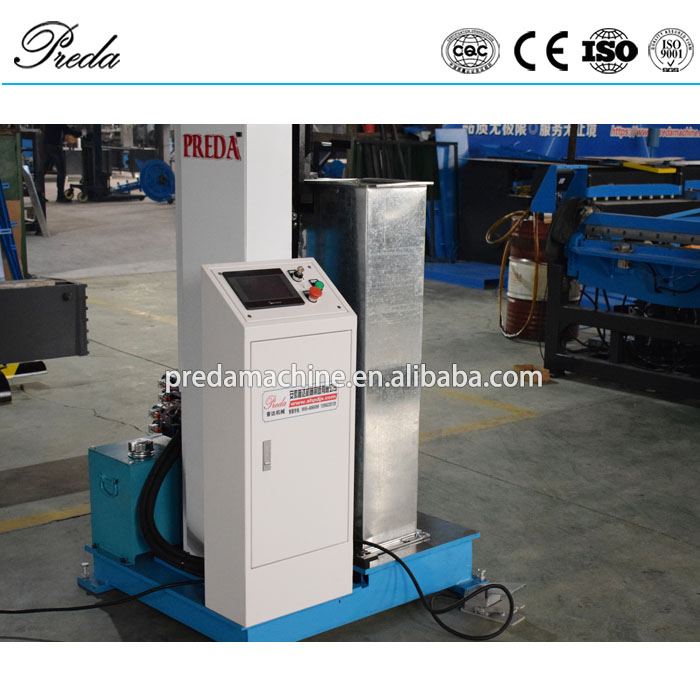
The Pittsburgh lock is formed upstream on a lockformer: one edge carries a female pocket, the mating edge a male flange. On the seam locker, the hooked joint is positioned under the powered rollers, which run along the full length and fold the pocket tight around the male edge. A hydraulic system supplies the closure force so the press stays consistent along the seam rather than varying with hand pressure. The Whisper Lock is a different profile the same locker class can close, with its own pocket and male edge geometry; the setup principle of matching roller pressure to gauge applies to both, while the profile itself is set by the lockformer that formed the edge.
Because the rollers act on the hooked seam rather than on the flat sheet, edge alignment matters before the panel enters: the pocket and male edge must sit together without one edge riding ahead of the other. A seam that enters at an angle rolls closed with a twisted or partly lifted joint; the roller cannot straighten an already misaligned edge once it starts closing.
How Gauge Drives Roller Gap and Pressure
Heavier strip needs the rollers to press firmly enough to fold the thicker pocket fully around the male edge without leaving a springback gap. Lighter gauge must not be over-compressed, since excessive pressure marks the galvanized surface or flattens the lock profile. The working rule is to set closure for the active gauge rather than a remembered setting from the last panel, and to inspect the first seam before the batch continues. This guide keeps the discussion at that setup level; exact roller clearances are a machine and profile-specific adjustment confirmed on the first joint.
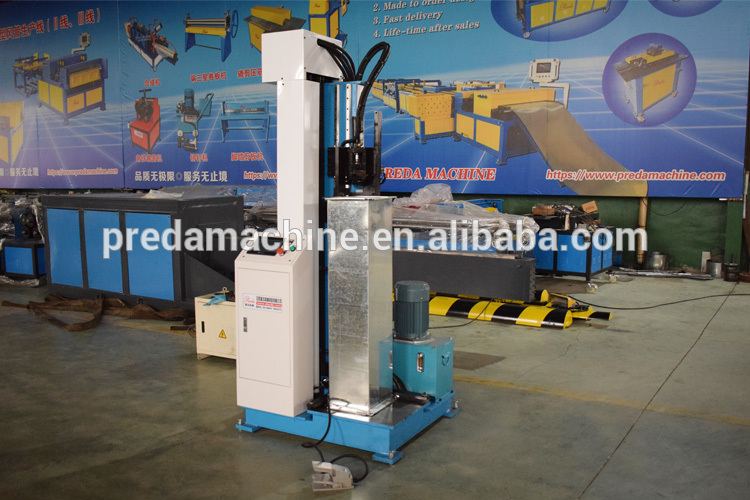
The machine's gauge band sets the boundary for that adjustment. The HF-1550 handles 0.5-1.5 mm material across a maximum duct width of 1550 mm, with 3 kW hydraulic operation and a PLC touchscreen for programmable seam parameters. Gauges outside that band tend to show as either incomplete closure on heavy strip or surface marking and profile crush on light strip; the fix belongs at the roller/pressure setting rather than in repeated re-running of the seam.
| Gauge class | Strip character | Roller / pressure direction | Seam check on the first joint |
|---|---|---|---|
| Light gauge within band | Thin, flexible, easier to mark | Use the minimum closure that still folds the pocket fully; watch for surface marks | Even lock along the length, no flattened profile or zinc scuff |
| Mid gauge | Balanced stiffness, standard commercial duct | Standard roller closure; pocket wraps the male edge cleanly | Tight seam with no lifted edge; flat panel at the joint |
| Heavy gauge within band | Thicker, stiffer, more springback | Firm enough closure to overcome springback; verify full pocket wrap | Male edge fully captured; no gap along the seam line |
| Outside machine band | Beyond 0.5-1.5 mm | Machine not rated for the gauge; do not force closure | Choose the correct machine class for the heaviest regular gauge |
HF-1550 Verified Specifications
The HF-1550 is a vertical CNC hydraulic locker built for high-precision, heavy-duty Pittsburgh seam closure, with the Whisper Lock vertical version in its product line. The figures below are the listed specifications for the machine; control, construction and certification follow the Preda standard line rather than an estimated performance claim.
| Specification | HF-1550 CNC Hydraulic Seam Locker |
|---|---|
| Material thickness | 0.5-1.5 mm |
| Maximum duct width | 1550 mm |
| Seam type | Pittsburgh / Whisper Lock |
| Power | 3 kW |
| Operation | CNC hydraulic |
| Control | PLC with touchscreen, programmable seam parameters |
| Certification / warranty | CE certified, two-year warranty |
| Position in the lineup | Vertical powered locker for heavier rectangular seam closure |
Alignment, First-Seam Check and Roller Wear
Before closing a batch, align the two edges so the pocket and male edge run parallel under the rollers, then run one short joint. Inspect that seam along its length: the lock should be even, the male edge fully captured, and the panel flat at the joint without a lifted or wavy edge. If the first seam shows partial closure, pressure or roller alignment is corrected before more panels are fed; re-running a crooked seam only marks the surface and softens the lock.
Roller condition changes the setting over time. Worn or grooved rollers press unevenly across the width and can leave a seam that closes on one side but stays open on the other. Roller inspection belongs in the routine maintenance along with blade and guide checks; a worn set should be replaced rather than compensated for by raising pressure, since higher force on a worn roller tends to mark the sheet and still miss the uneven contact. Keeping the lockformer's edge profile in good condition matters too, because a poorly formed pocket on the upstream side cannot be fully corrected at the locker.
Where the Powered Locker Sits in the Shop Flow
The vertical hydraulic locker suits repeated rectangular seam closure on standard-to-heavier gauge panels up to its 1550 mm width. Portable hand-held closers remain useful for small batches, short or angled seams, edge work and on-site repairs that a fixed vertical machine cannot reach; the two cover different positions in the workflow rather than one replacing the other. The preparation line feeds a blank, the lockformer forms the edge, and the hydraulic locker closes the joint; each station's setup affects the finished seam, and a tight locker cannot recover an edge formed out of profile upstream.
Common Seam Problems and Their Source
- Loose or partly closed seam: pressure set for a lighter gauge, or rollers worn; check closure on the first joint.
- Lifted edge along the panel: the two edges entered misaligned; align pocket and male edge before feeding the next panel.
- Surface marks or scuffed zinc: over-compression on light gauge; ease the roller closure while keeping the pocket wrapped.
- Uneven closure side to side: roller wear or uneven contact; inspect rollers before raising pressure.
- Pocket does not capture the male edge: upstream lockformer edge profile; verify the lockformer seam rather than over-tightening the locker.
Check one seam full-length before releasing the batch
After a gauge or seam-profile change, close one joint and run a finger or inspection along its full length for even lock, captured male edge and flat panel. A setup problem found on that first seam is a quick adjustment; the same issue after a stack has been closed means rework on finished sections.
Frequently Asked Questions
Does the HF-1550 close both Pittsburgh and Whisper Lock?
Yes. The machine's seam type covers Pittsburgh and Whisper Lock; the pocket and male edge profile itself comes from the lockformer upstream, while the hydraulic locker folds that profile tight along the length.
What gauge range does the HF-1550 handle?
0.5-1.5 mm material, up to 1550 mm duct width, on 3 kW CNC hydraulic operation with PLC touchscreen seam parameters. Gauges beyond this band need the correct machine class rather than a pressure adjustment.
How do I set the roller gap for a heavier panel?
Set firm enough closure to overcome springback and fully wrap the pocket, then verify on the first joint that the male edge is captured without surface marking. Exact clearance is profile and machine specific; the first-seam inspection confirms the setting holds.
Can the locker fix a poorly formed seam?
No. A pocket that is out of profile from the upstream lockformer cannot be fully corrected by closing pressure alone. Keep the lockformer edge in good condition so the locker receives a well-formed joint to close.
Preda Care Service Promise
Every Preda Machine ships CE certified with a two-year warranty, backed by 24/7 technical support, free spare parts shipping, remote PLC programming assistance and a global agent network. A support engineer can review your gauges, seam profiles and panel widths against the HF-1550 and walk through the roller and first-seam setup.
Match the Powered Locker to Your Gauge and Seam Mix
Share the gauges, panel widths and seam types you close most often, and we will confirm the HF-1550 vertical hydraulic locker covers your range, including the roller setting and first-seam inspection routine that keeps joints tight and even.
Compare Seam Lockers →