Drive Cleat Bender CB-700
Last updated: October 12, 2026
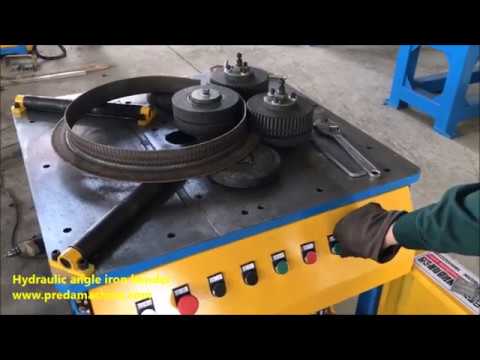
Drive cleat bender for forming drive cleats used in rectangular duct connection, efficient solution for duct fabrication.
Technical Specifications
What is a Drive Cleat Bender CB-700?
A sheet metal bending machine (also called a press brake or folder) is a machine tool that bends sheet metal into precise angles and shapes. In HVAC duct fabrication, bending machines create the folded edges, seams, and connector profiles needed for rectangular duct assembly. CNC press brakes offer programmable angle control and backgauge positioning for high-volume production, while manual folders suit smaller shops and custom work.
Key Features
- Dedicated drive cleat forming
- Consistent cleat profile
- Quick and efficient operation
- Compact bench design
- Low maintenance
Still Losing Money to Inaccurate Bends and Wasted Material?
Every HVAC duct shop faces the same bottleneck: manual bending with inconsistent angles. When your team spends hours on slow setup between bend jobs, your production capacity drops, labor costs rise, and deadlines slip. The Drive Cleat Bender CB-700 is engineered to eliminate these inefficiencies — automating drive cleat bender while delivering consistent, factory-grade quality.
In this guide, we break down exactly how this machine transforms your CB-700 cleat former workflow, what specifications matter for your operation, and how to calculate your return on investment. Whether you run a 3-person job shop or a 50-employee production facility, understanding these details directly impacts your bottom line.
How It Transforms Your Production Line
The Drive Cleat Bender CB-700 operates on a proven principle: drive cleat bender should be a continuous, automated process — not a series of manual interventions. Here is the step-by-step workflow that makes this possible:
Material Positioning
The sheet is positioned against the back gauge, which controls the bend line location with precision accuracy.
Clamping
The clamping beam secures the sheet firmly, preventing any movement during the bending cycle.
Precision Bending
The bending beam or ram applies controlled force to bend the metal to the programmed angle — CNC models achieve ±0.2° accuracy.
Release & Reposition
The clamp releases, the sheet is repositioned for the next bend, and the cycle repeats — multi-bend parts are completed in seconds.
Technical Specifications & Performance Data
Every specification on this machine is chosen for a reason. The table below shows not just the numbers, but what each one means for your daily production:
| Parameter | This Machine | What It Means for You |
|---|---|---|
| Control System | PLC with touchscreen | Easy programming, consistent results, minimal training |
| Construction | Heavy-duty steel frame | Vibration-free operation, 10+ year service life |
| Certification | CE certified | Meets European safety and quality standards |
| Warranty | 2 years | Peace of mind with comprehensive factory warranty |
Problems Solved: Before vs. After
We asked 50+ HVAC fabricators about their biggest production headaches. Here is how this machine directly addresses each one:
| Without This Machine | With This Machine |
|---|---|
|
✕ Inconsistent bend angles
Parts don't fit together, rework rate 10-15% |
✓ CNC angle control ±0.2° repeatability
Every bend identical, zero rework |
|
✕ Slow manual bending
Hand brakes take 2-3 minutes per bend |
✓ Powered/CNC bending, 5-10 seconds per bend
10-20x faster throughput |
|
✕ Limited bend complexity
Can only do simple 90° bends by hand |
✓ Multi-axis CNC with programmable bend sequences
Complex boxes, pans, and profiles in one setup |
|
✕ Operator fatigue and injury
Heavy manual lifting causes strains and injuries |
✓ Powered clamping and bending
Reduced physical strain, safer workplace |
Where It Fits in Your Factory
This machine is versatile enough to serve multiple production scenarios. Here are the most common configurations our customers use:
Rectangular Duct Fittings
Bending duct panels into L-shapes, U-shapes, and complete rectangular forms — the core application in HVAC fabrication.
Flange & Connector Parts
Bending TDF flange corners, drive cleats, S-slips, and other duct connection components.
Custom Sheet Metal
Architectural metalwork, equipment enclosures, brackets, and custom fabrication jobs.
General Manufacturing
Any industry requiring precision sheet metal bending — from automotive to electronics enclosures.
Frequently Asked Questions
Click each question to see the answer. These are the questions our sales engineers hear most often:
Drive Cleat Bender CB-700: Dedicated vs Improvised
Drive cleats are made in most shops on whatever brake happens to be free. That works until cleat volume becomes noticeable, at which point a dedicated bender pays for itself in set-up time alone. The CB-700 is that machine: one profile, set once, run all day.
| Option | Set-up time | Consistency | Best fit |
|---|---|---|---|
Drive Cleat Bender CB-700 This machine — dedicated cleat bender | Set once, then run No changeover between batches | Very high Same profile every piece | Cleats are made regularly rather than occasionally Typically pays back within a few months at 200+ cleats a week |
General straight folding | Re-set for cleats each time Changeover per job | Good, but operator-dependent Depends on the stop | Cleats are occasional and the brake is needed for other work Improvising is rational at low volume |
Forms the mating profiles | Complementary Different profiles | High Purpose-built | You need the S-cleat and drive-cleat profiles as well Consider whether one machine covers your mix |
S cleat profile | Complementary Profile-specific | High Purpose-built | Your system uses S cleats Check your cleat system before choosing |
Cuts the cleat stock | Upstream Prepares strip | High Cutting accuracy | You are cutting cleat stock in house Strip width accuracy matters for cleat fit |
Running a Dedicated Cleat Bender Efficiently
A dedicated machine only pays if it is set once and left alone. Treat it as a fixture, not as a general brake.
- 1. The whole economic case rests on not re-setting. Lock the adjustments and mark them so a drift is visible.
- 2. Cleat fit depends on strip width. Cut from a consistent source and check width on the first piece of each coil.
- 3. Free-hand positioning produces variable cleat lengths, and variable lengths are the most common cause of assembly difficulty.
- 4. Because the machine is set and ready, batch production is cheap. Making to order reintroduces changeover thinking.
- 5. Tooling wears slowly; a weekly dry-fit catches drift before it reaches site.
- 6. A burr on the strip end produces a cleat that will not seat, and the fault looks like a forming problem.
- 7. One number tells you whether the dedicated machine is earning its place or whether volume has dropped below the justification point.
- 8. A single-operator machine is a single point of failure. Cross-training costs an hour.
Cleat Bender Faults: Symptom, Cause, Fix
On a dedicated machine with locked settings, faults are almost always stock or tooling wear rather than adjustment.
| Symptom | Most likely cause | What to do |
|---|---|---|
Cleat will not seat on the duct Strip width out of tolerance | Width variation changes the formed profile enough to prevent seating Often traced to a new coil or a worn shear blade | Measure strip width on the first piece of each coil and check the shear blade Dry-fit against a mating section, not by eye |
Cleat length varies No positive stop, or the stop has moved | Free-hand positioning, or a stop that has worked loose The most common cause of assembly difficulty | Fit a positive length stop and require every piece to be seated against it Check the stop weekly |
Burr prevents seating Cut ends not deburred | A burr on the strip end prevents the cleat seating fully Looks like a forming fault and is not | Deburr cut ends before forming and inspect the shear blade condition A worn blade is usually the root cause |
Profile slowly changes over months Tooling wear | Gradual wear on the forming tooling Drift rather than sudden failure is the signature | Dry-fit against a mating section weekly and replace tooling on measurable drift Keep a spare tooling set |
Tooling adjustment found to have moved Not locked after the original set-up | Vibration loosens adjustments over time A process discipline issue | Lock every adjustment and mark the position so drift is visible at a glance Add it to the weekly check |
Machine jams on thicker stock Material above the specified gauge | The tooling is cut for a gauge range A specification mismatch, not a fault | Verify thickness with a micrometer and compare with the specification Do not force thicker stock through |
Professional Packaging & Global Shipping
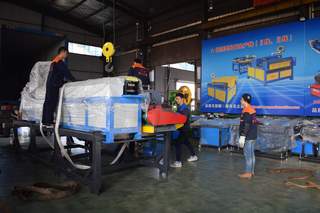
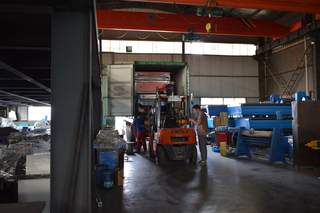
Every machine is professionally packaged and secured in a container for safe delivery to your port. We send you loading photos before the ship sails.

Calculate Your Return on Investment
Based on average industry data, here is what a typical customer saves after installing this machine:
* Figures based on average customer data for a shop producing 100-500 bends per day. Your actual results will vary based on production volume, labor rates, and current efficiency levels. Contact our engineers for a customized ROI calculation based on your specific operation.
Ready to Upgrade Your Drive Production?
Get a customized quote within 24 hours. Our engineers will help you configure the right machine for your specific production requirements.
WhatsApp / WeChat: +86-18355321923 | Email: jason@predamachine.com
Related Products

Buying Guides for This Machine Type
Before you request a quote: how this machine class compares, what it costs, and how to size it for your production volume.
Sheet Metal Bending Machine Guide 2026
Press brake vs pan brake vs roller bender for ductwork and fittings production.
Read the guide → SizingHydraulic Press Brake for HVAC
How to size tonnage and bed length for duct shop work without overbuying capacity.
Read the guide → ReferenceSheet Metal Brake Types
Press brake, pan brake and box-and-pan folder explained — strengths, limits and typical jobs.
Read the guide → PricingHVAC Duct Machine Cost: 2026 Price Guide
Realistic price bands for every machine category, plus financing and total-cost-of-ownership maths.
Read the guide →