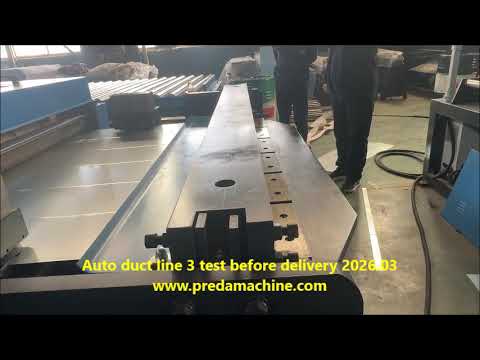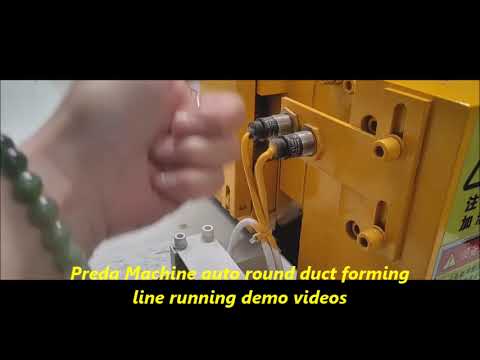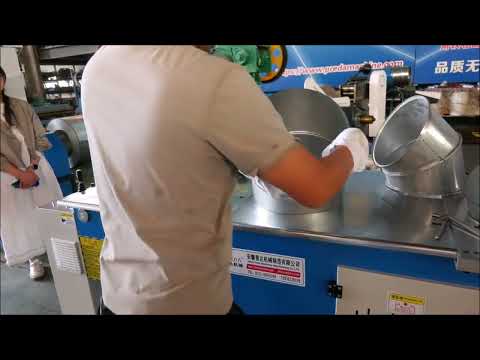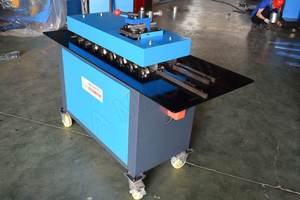

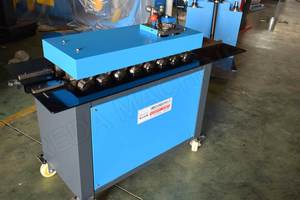


S & Drive Machine
Last updated: October 12, 2026
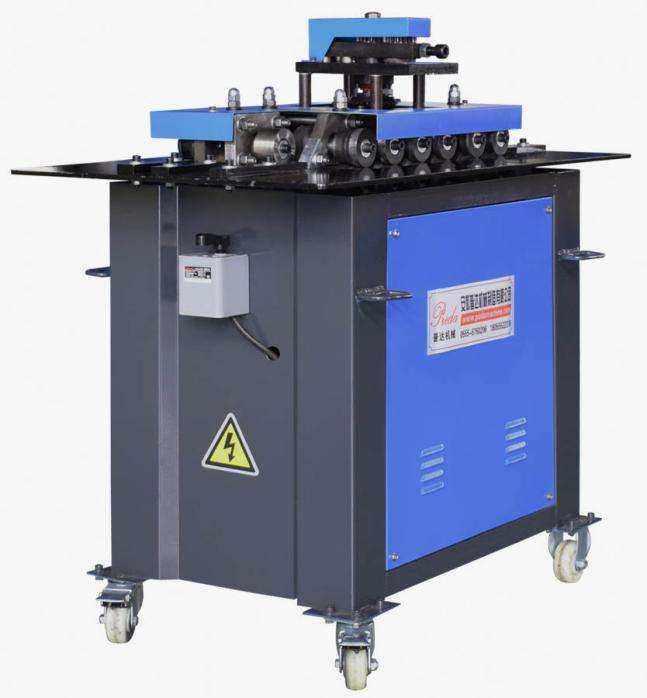
Combined S-slip and drive cleat forming machine for traditional rectangular duct connection systems.
Technical Specifications
What is a S & Drive Machine?
This is a professional sheet metal and HVAC duct fabrication machine manufactured by Preda Machine. Designed for industrial duct production, this equipment delivers consistent quality, high efficiency, and reliable performance for HVAC contractors, duct fabrication shops, and sheet metal workshops worldwide. All machines are CE certified and backed by Preda Care after-sales service.
Key Features
- Dual function in one machine
- Quick change between S and drive
- Hardened forming rollers
- Consistent profile quality
Still Losing Money to Weak Duct Seams and Air Leakage?
Every HVAC duct shop faces the same bottleneck: hand-forming Pittsburgh locks. When your team spends hours on inconsistent seam quality, your production capacity drops, labor costs rise, and deadlines slip. The S & Drive Machine is engineered to eliminate these inefficiencies — automating S and drive machine while delivering consistent, factory-grade quality.
In this guide, we break down exactly how this machine transforms your S-slip drive cleat workflow, what specifications matter for your operation, and how to calculate your return on investment. Whether you run a 3-person job shop or a 50-employee production facility, understanding these details directly impacts your bottom line.
How It Transforms Your Production Line
The S & Drive Machine operates on a proven principle: S and drive machine should be a continuous, automated process — not a series of manual interventions. Here is the step-by-step workflow that makes this possible:
Material Feeding
The sheet metal edge is fed into the forming rollers, guided by adjustable fences that ensure perfect alignment every time.
Multi-Station Roll Forming
7 or more precision roller stations progressively bend the metal edge into the Pittsburgh lock profile — male on one side, female on the other.
Edge Hemming (Optional)
Additional roller sets can simultaneously form hems, drive cleats, or S-slips on the opposite edge in a single pass.
Discharge & Stacking
The formed panel exits the machine ready for assembly — simply hook the male and female locks together and close with a seam locker.
Technical Specifications & Performance Data
Every specification on this machine is chosen for a reason. The table below shows not just the numbers, but what each one means for your daily production:
| Parameter | This Machine | What It Means for You |
|---|---|---|
| Control System | PLC with touchscreen | Easy programming, consistent results, minimal training |
| Construction | Heavy-duty steel frame | Vibration-free operation, 10+ year service life |
| Certification | CE certified | Meets European safety and quality standards |
| Warranty | 2 years | Peace of mind with comprehensive factory warranty |
Problems Solved: Before vs. After
We asked 50+ HVAC fabricators about their biggest production headaches. Here is how this machine directly addresses each one:
| Without This Machine | With This Machine |
|---|---|
|
✕ Hand-formed locks are inconsistent
Some seams too tight, some too loose, air leakage varies |
✓ Precision roller forming, identical every time
Consistent airtight seams, predictable quality |
|
✕ Slow manual forming
One worker can form 20-30 panels/hour by hand |
✓ Powered feed, 10-15m/min forming speed
One operator processes 100+ panels/hour |
|
✕ Multiple machines for different profiles
Need separate machines for Pittsburgh, S-slip, hem |
✓ Quick-change roller sets, multiple profiles on one machine
One machine does it all, save floor space and money |
|
✕ Sharp edges cause injuries
Workers cut hands on raw sheet edges |
✓ Integrated edge hemming option
Safe rolled edges, fewer workplace injuries |
Where It Fits in Your Factory
This machine is versatile enough to serve multiple production scenarios. Here are the most common configurations our customers use:
Rectangular Duct Fabrication
The Pittsburgh lock is the standard longitudinal seam for rectangular HVAC ducts worldwide — this machine is essential for any duct shop.
Custom Sheet Metal Work
Forming locks and hems for custom enclosures, cabinets, and architectural metalwork.
High-Volume Production
Integration with auto duct lines or standalone high-volume lock forming for duct manufacturers.
Job Shop & Repair
Smaller shops and service contractors needing reliable lock forming for retrofit and repair work.
Frequently Asked Questions
Click each question to see the answer. These are the questions our sales engineers hear most often:
S & Drive Machine: Which Cleat System Are You Actually Running
This is the question to answer before buying any cleat machine. Drive cleats, S cleats and the profiles used to join them vary by region and by customer specification. Buying a machine for the wrong system produces cleats that look right and do not assemble.
| Machine | Profiles produced | Pairs with | Choose it when |
|---|---|---|---|
S & Drive Machine This machine — S cleat and drive cleat profiles | Both the S cleat and the drive cleat One machine, two profiles | Rectangular duct assembly Standard commercial systems | Your assembly system uses S and drive cleats together Confirm against your customers' specification before ordering |
S cleat profile | S cleat only Profile-specific | S cleat assembly systems Dedicated | You only ever make S cleats Faster per piece than changing profiles on one machine |
Drive cleats only | Drive cleat only Dedicated | Drive cleat assembly Set once, run all day | Drive cleats are made in volume every week Improvising them on a brake stops being sensible at volume |
The longitudinal seam | Pittsburgh lock Different operation | The duct itself Upstream of cleats | You are building a rectangular duct line Seams and cleats are complementary, not alternatives |
Cuts the cleat stock | N/A Upstream | Strip preparation Cutting accuracy | You cut cleat stock in house Strip width accuracy determines cleat fit |
Setting Up an S & Drive Machine for Assembly-Ready Cleats
Cleats only matter if they assemble. Everything below is about making the check at the machine rather than on site.
- 1. Profiles vary by market and by customer. Get the specification, or a sample, before you commit to tooling.
- 2. Width variation changes the profile enough to prevent assembly. Check width on the first piece of every coil.
- 3. S cleat and drive cleat are different settings on the same machine. Two cards, both at the machine.
- 4. The only reliable check. A cleat can measure correctly and still not assemble.
- 5. Variable cleat lengths are the most common cause of assembly difficulty, and a stop removes it entirely.
- 6. A burr prevents seating and the fault looks like a forming problem.
- 7. Profile tooling wears slowly. A monthly dry-fit catches drift before it reaches site.
- 8. Once the machine is set, batch production is cheap and it takes cleats off the critical path.
S & Drive Machine Faults: Symptom, Cause, Fix
Cleat faults are nearly always stock width, tooling wear or the wrong profile for the system. All three are checkable at the bench.
| Symptom | Most likely cause | What to do |
|---|---|---|
Cleat will not assemble with the mating section Wrong profile for the system | The profile looks right and belongs to a different system The most costly cleat fault because it reaches site | Confirm the profile against a customer sample before running the batch Get the specification in writing at order stage |
Cleat fit varies between coils Strip width variation | Width tolerance between coils is wider than most shops assume Often a purchasing rather than a machine issue | Measure width on the first piece of each coil and speak to the supplier if it varies Record the supplier and width together |
Cleat length inconsistent No positive stop | Free-hand cutting or positioning The most common assembly difficulty | Fit a positive length stop and require every piece against it Check the stop weekly |
Burr prevents seating Cut ends not deburred | A burr stops the cleat seating fully Looks like a forming fault | Deburr before forming and check the shear blade condition A worn blade is usually the root cause |
Profile drifts over months Tooling wear | Gradual wear on the profile rolls Drift rather than sudden failure | Dry-fit monthly and replace tooling on measurable drift Keep a spare set |
Machine jams on thicker stock Material above the tooling specification | Profile tooling is cut for a gauge range A specification mismatch | Verify thickness with a micrometer and compare with the specification Do not force thicker stock through |
Professional Packaging & Global Shipping
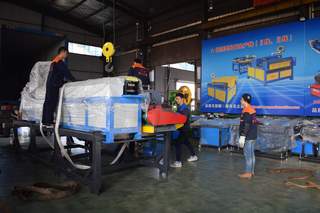
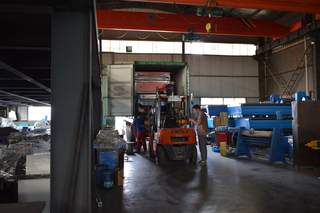
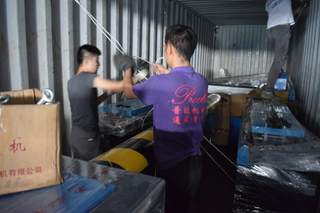
Every machine is professionally packaged and secured in a container for safe delivery to your port. We send you loading photos before the ship sails.
Calculate Your Return on Investment
Based on average industry data, here is what a typical customer saves after installing this machine:
* Figures based on average customer data for a shop producing 500-1500 panels per month. Your actual results will vary based on production volume, labor rates, and current efficiency levels. Contact our engineers for a customized ROI calculation based on your specific operation.
Ready to Upgrade Your S Production?
Get a customized quote within 24 hours. Our engineers will help you configure the right machine for your specific production requirements.
WhatsApp / WeChat: +86-18355321923 | Email: jason@predamachine.com
Related Products

Buying Guides for This Machine Type
Before you request a quote: how this machine class compares, what it costs, and how to size it for your production volume.
Pittsburgh Lockformer Buying Guide 2026
SA-15HB vs SA-12HB vs snaplock vs S&drive: which lock profile and machine fits your duct class.
Read the guide → Buying GuideSeam Locker Buying Guide 2026
Portable vs CNC hydraulic vs Pittsburgh L-12 closers — where each one pays for itself.
Read the guide → MaintenancePittsburgh Lockformer Maintenance Guide
Daily, weekly and annual service schedule that keeps a lockformer accurate past ten years.
Read the guide → TroubleshootingPittsburgh Lockformer Problems & Solutions
Symptom-to-cause troubleshooting table for the faults that stop a lockformer mid-shift.
Read the guide →