On a coil-fed automatic duct line, the decoiling end decides how often the run stops. A line that levels, beads, notches and shears quickly still loses its advantage if every coil change means parking the machine, rolling a fresh coil onto the car, threading the strip and waiting for the first blank to be checked. The coil car and its loading arrangement are the part of the line that keeps strip moving between rolls; this guide compares single-station and two-station loading, looks at the multi-cradle arrangement used on the compact full-process line, and pairs the comparison with the AML-3 and AML-6 specifications listed on the Preda product pages so the feeding choice follows the shop's actual coil size and change rhythm.
What the Coil Car Does Before the First Forming Roller
The coil car is the carriage that carries a heavy steel roll from the delivery position to the decoiler mandrel, then lowers or pivots so the strip can be threaded into the leveling rollers. Before any bead, notch or shear happens, the line depends on that carriage to place the roll squarely, hold it while the mandrel expands, and move clear of the strip path. A car that cannot swing the next coil into position in advance forces the operator to handle two jobs at once: keep the current run moving and prepare the replacement roll.
Feeding design also shapes the rest of the shift. A coil car that queues the next roll means the operator can stage it while the current roll still feeds; a single-station setup means the next roll waits off the line until the current one is spent. The difference shows up in uptime rather than in the listed metres per minute: the line's working speed stays the same, but the share of the shift spent actually feeding strip changes with how smoothly rolls are exchanged.
Single-Station Loading: One Car, One Roll at a Time
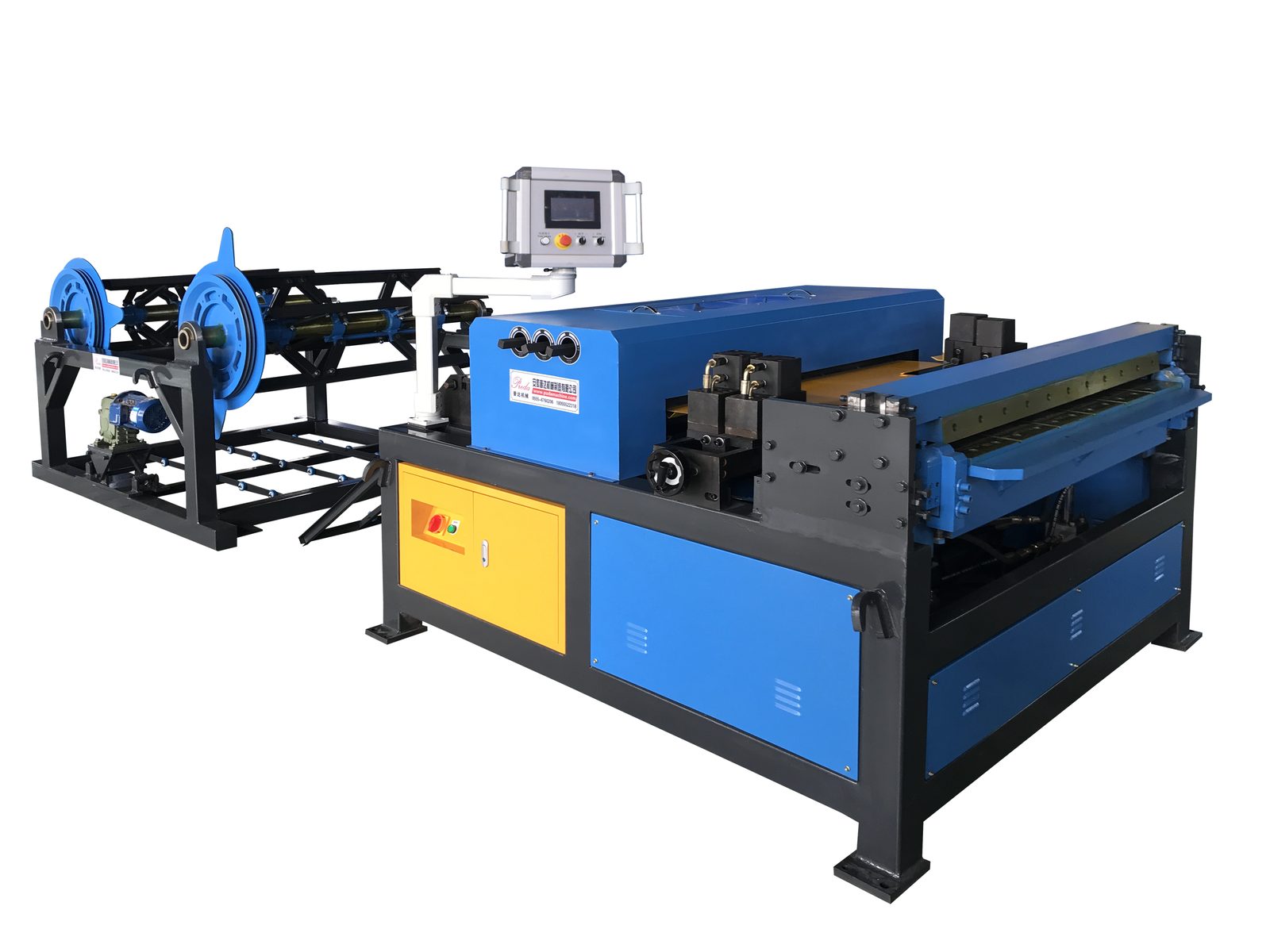
A single-station decoiler carries one roll on the mandrel. When that roll runs out, the line stops, the empty mandrel is released, the next roll is brought over and loaded, and the strip is re-threaded before production resumes. This arrangement is the simpler and lower-cost option for a shop that runs thinner coil variety, changes rolls infrequently, or treats the line as one station among several rather than the centre of the shop. It also needs less floor depth at the feed end, because there is no second car swing to clear.
The trade-off is that every coil change is a full stop. Leveling, beading and shearing resume together after threading, and the first blank of the new roll usually needs a size and squareness check before the run can go to volume. For a shop whose daily output is spread across many short jobs and small rolls, those stops are absorbed naturally into job changes. For a shop running long rectangular sections from heavy rolls, the repeated stops stack into meaningful lost feed time over a week.
Two-Station Coil Car: Queued Second Roll, Continuous Feeding
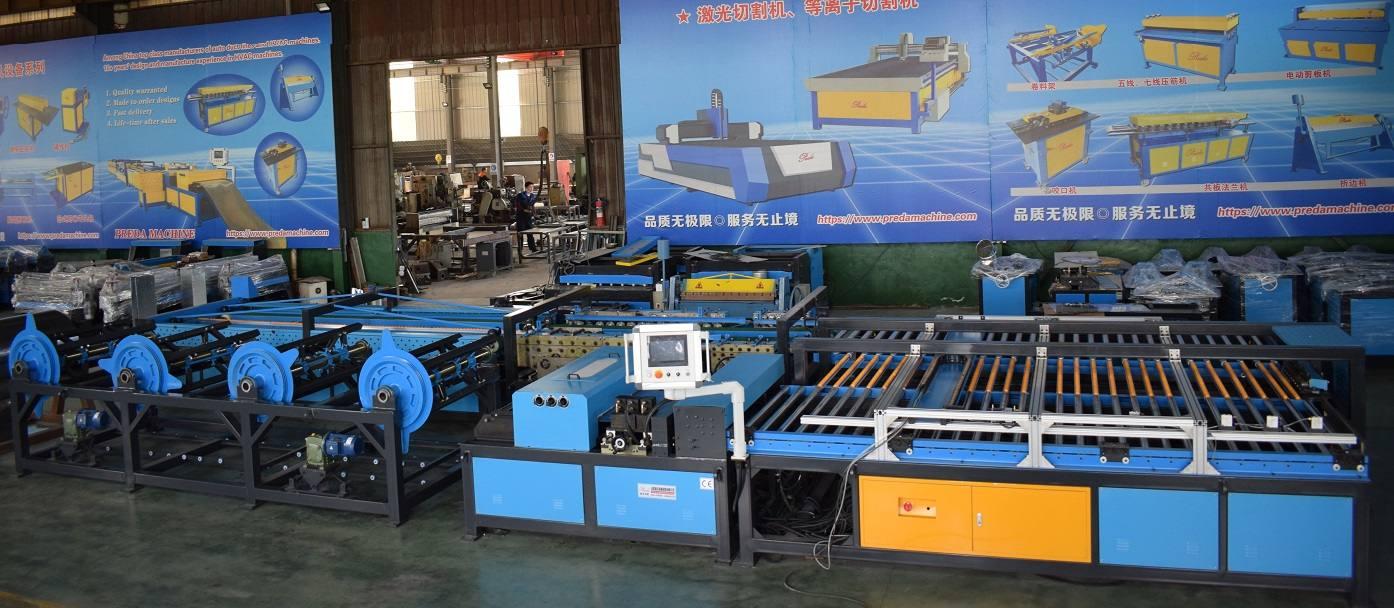
A two-station coil car keeps the running coil on the feed side while the second roll waits on the car's second position. As the current roll nears its end, the queued roll is already on the carriage and ready to move over; the exchange takes place without a separate off-line roll delivery step. This is the feeding arrangement on the AML-3, described on its product page as a coil car with two stations for continuous coil feeding, paired with Mitsubishi PLC control and frequency-controlled decoiler motors.
The value of the second station is continuity rather than speed: the line's 12 m/min working speed does not change because the car has two positions, but the operator spends less of the change waiting for a roll to arrive. The queued roll also lets the shop match roll size to job length more easily, because the next material can be staged while the current one still feeds. The requirement is floor clearance: the second position and its swing need an aisle that does not collide with a column, a coil rack or the exit bench, so the feed-end aisle must be measured before the line is placed.
Multi-Cradle Feeding on the Compact Full-Process Line
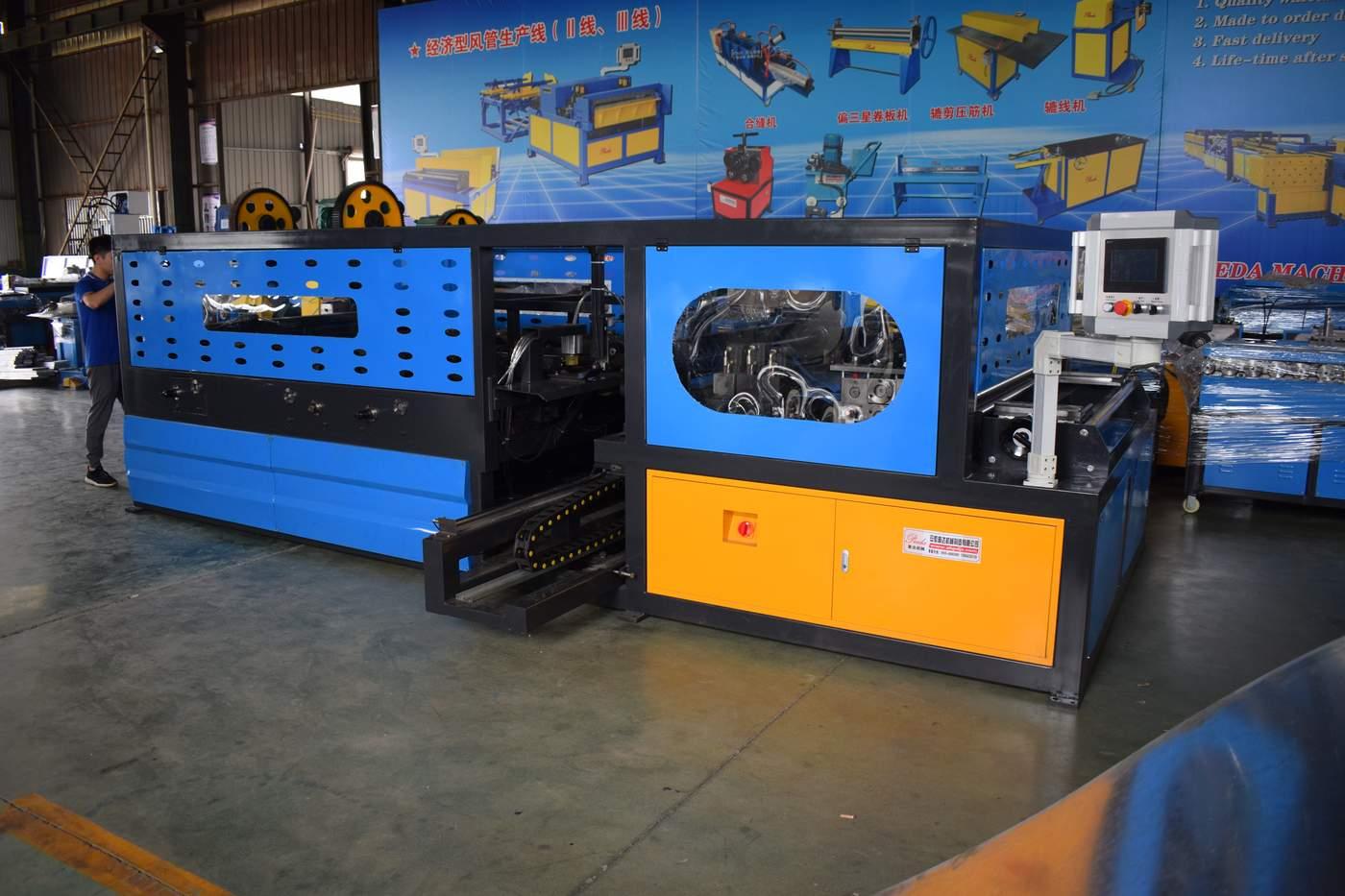
The AML-6 super auto duct line takes a different feeding approach for its one-machine full-process build: four electric coil cradles with four material trays, rated 5-7 tonnes per roll, feeding the integrated host, movable lockformer, duplex TDF and angle steel flange stations and servo folding under one computer control system. Rather than a swinging two-station car, this arrangement holds several rolls on cradles that the line draws from in sequence, suited to a small or medium shop that keeps the whole rectangular process in a compact footprint.
This cradle setup is tied to the AML-6's integrated layout. Because folding, lock forming and flanging sit in the same machine, the feeding end is sized to keep that whole sequence fed rather than a separate blank line. The working speed on the AML-6 is 16 m/min across the same 0.45-1.5 mm band and 1300/1500/1600 mm width configurations; the cradles exist to keep that faster sequence supplied without repeated manual roll moves.
Single-Station vs Two-Station vs Multi-Cradle: What Changes on the Floor
The table below compares feeding arrangements by how the roll exchange happens, where the operator stands during a change, and what floor clearance each needs. These are workflow differences; none of them changes the machine's listed thickness band, width or speed.
| Feeding arrangement | Roll exchange | Operator role during change | Floor requirement | Typical fit |
|---|---|---|---|---|
| Single-station decoiler | Line stops, empty mandrel released, next roll brought and threaded | Stages the replacement roll after the run stops | Minimal feed-end depth, no second car swing | Low-volume shop, short jobs, mixed small rolls |
| Two-station coil car (AML-3) | Second roll queued on the car, exchanged without off-line delivery | Stages the next roll while the current one still feeds | Aisle for second-position swing and roll delivery | Steady rectangular production, repeated coil changes |
| Four electric cradles (AML-6) | Sequence between cradles/trays feeding the integrated machine | Monitors cradles and material feed for the full-process unit | Cradle row clearance along the compact machine | Small/medium shop needing full process in one footprint |
Reading the Line Specifications the Feeding Choice Sits On
Feeding arrangement is chosen together with the line configuration. The two Preda line families below share the same material band and width options; speed and feeding differ, and those differences map onto how much steady rectangular output the shop expects between coil changes.
| Specification | AML-3 Auto Duct Line | AML-6 Auto Duct Line |
|---|---|---|
| Models | AML-3-1300 / 1500 / 1600 | AML-6-1300 / 1500 / 1600 |
| Material thickness | 0.45-1.5 mm | 0.45-1.5 mm |
| Maximum width | 1300 / 1500 / 1600 mm | 1300 / 1500 / 1600 mm |
| Working speed | 12 m/min | 16 m/min |
| Feeding setup | Two-station coil car, continuous coil feeding | Four electric coil cradles, four material trays, 5-7 tonnes per roll |
| Control | Mitsubishi PLC with touchscreen | One computer control system |
| Coverage | Decoiling, leveling, grooving, hydraulic notching and shearing to blank | Beading, notching, shearing, Pittsburgh lock, duplex TDF and angle steel flanging, folding in one machine |
What to Measure Before Choosing a Feeding Setup
- Roll weight and diameter you actually run. Heavier, wider rolls make a queued second station or cradles more valuable; small frequent rolls suit a simpler decoiler.
- How often the line changes coil in a shift. A change every short job tolerates a stop; long runs from one roll reward an arrangement that exchanges without parking the line.
- Feed-end aisle width and delivery path. Mark where the coil truck or pallet sets the roll down and where the car swings; confirm that path reaches the mandrel without crossing the strip or exit path.
- Width configuration against the widest panel. Choose 1300, 1500 or 1600 mm from the widest section on your order list, then match feeding to how that coil arrives.
- Whether downstream stands in the same machine. A full-process one-machine build uses cradles to feed its own lockformer and flange stations; a blanking line feeds a separate bench downstream.
Common Feeding Mistakes That Waste Uptime
- Buying the feeding arrangement from roll price only. A cheaper single station saves upfront but adds a full stop at every change; compare that against change frequency.
- Ignoring the second-station swing. A two-station car that cannot swing past a column or rack becomes a single station on the floor.
- Staging rolls off to the side with no travel path. The operator still walks the roll to the line, so the queued position must connect to a real delivery aisle.
- Mixing cradle expectations with a car-fed line. The AML-6 cradles belong to its integrated build; a separate blanking line does not gain that multi-roll staging without the matching machine.
- Assuming feeding raises listed speed. Feeding keeps the line running between rolls; it does not change the 12 or 16 m/min working speed the machine is set to.
What Continuous Feeding Does Not Solve
Good coil handling removes roll-change stops, but it does not correct an undersized width configuration, worn leveling rollers or a downstream bench that produces inconsistent sections. The strip that leaves a well-fed line still needs matched forming, notching and seam closure to become a good duct. Feeding is the layer that keeps material available; station setup, roller condition and first-blank checks still decide finished quality.
It also does not remove operator judgment. The setter still reads the drawing, calls the panel program, checks the first blank and watches feed for notch or size mismatch. A queued coil makes that work less interrupted; it does not replace the experience behind it.
Sketch the coil delivery, car swing and strip path before quoting
On a floor sketch, mark where the roll truck sets material down, the mandrel position, the second car or cradle row, and the strip path to the leveling station. If the second position has a clear aisle and delivery route, a two-station or cradle arrangement is worth pricing; if the feed end cannot take that depth, a simpler decoiler may be the realistic fit.
Preda Care Service Promise
Every Preda Machine ships CE certified with a two-year warranty, backed by technical support, spare parts shipping, remote PLC programming assistance and a global agent network. A support engineer can review your roll weights, coil change frequency and feed-end aisle against the AML-3 two-station car or the AML-6 cradle arrangement, and match the feeding setup to your rectangular output.
Match Coil Feeding to Your Roll Routine
Share the roll sizes you run, how often the line changes coil per shift, and the feed-end floor space you have, and we will map them to the AML-3 two-station coil car or the AML-6 electric cradle setup.
Compare Auto Duct Lines →Frequently Asked Questions
Does a two-station coil car run faster than a single station?
No. Working speed is set by the line model, 12 m/min on the AML-3. The second station keeps the line fed through a roll change instead of adding metres per minute; the benefit is fewer stops, not a higher listed speed.
What rolls does the AML-6 cradle setup carry?
The AML-6 uses four electric coil cradles with four material trays, rated 5-7 tonnes per roll, feeding the integrated host, movable lockformer and duplex flange stations under one computer control system.
Which feeding setup fits a narrow feed end?
A single-station decoiler needs the least feed-end depth. A two-station car needs clearance for the second-position swing, and the AML-6 cradle row needs its own aisle along the machine; measure before choosing.
Do I choose width before or after feeding arrangement?
Width configuration (1300, 1500 or 1600 mm) comes from the widest panel on your order list across the 0.45-1.5 mm band. Feeding arrangement then matches how that coil arrives and how often the line changes rolls.