An auto duct line is not one purchase so much as a stage in how a shop organizes rectangular duct work. A new shop starts with separate machines for shearing, lockforming, flanging and seam closing; a growing shop groups those stations into a semi-automatic workflow; an established shop runs blanks through a programmed line that levels, notches, shears and feeds the panel in sequence. This guide walks through those automation stages, matches each to a realistic production volume, and compares the AML-3 and AML-6 auto duct line specifications so the upgrade decision follows the shop's growth rather than jumping ahead of it.
The Three Automation Stages a Shop Actually Passes Through
Most duct fabricators do not move from hand tools straight to a full line. The path runs through three recognizable stages, and the right machine choice at each stage is the one that removes the current bottleneck without buying capacity that sits idle.
Stage one: single machines on separate stations. A shear or plasma cuts blanks, a lockformer rolls the Pittsburgh edges, a flanger forms the TDC or angle-iron flange, and a seam locker closes the finished panel. Each station has its own setup, its own operator and its own quality variation. This stage suits a small shop, a contractor with a fabrication corner, or a shop still proving which section types its market asks for. The bottleneck here is usually blank preparation and the movement of panels between stations.
Stage two: grouped semi-automatic workflow. Related machines are laid out in sequence so a panel travels from blank to lock to flange without being carried across the shop, and the most repetitive station is motorized or hydraulic. A Pittsburgh lock former paired with a seam locker, and a flange former matched to the shop's connection standard, mark this stage. Quality improves because fewer hand moves touch the panel; the main remaining variables are blank squareness and setup between section sizes.
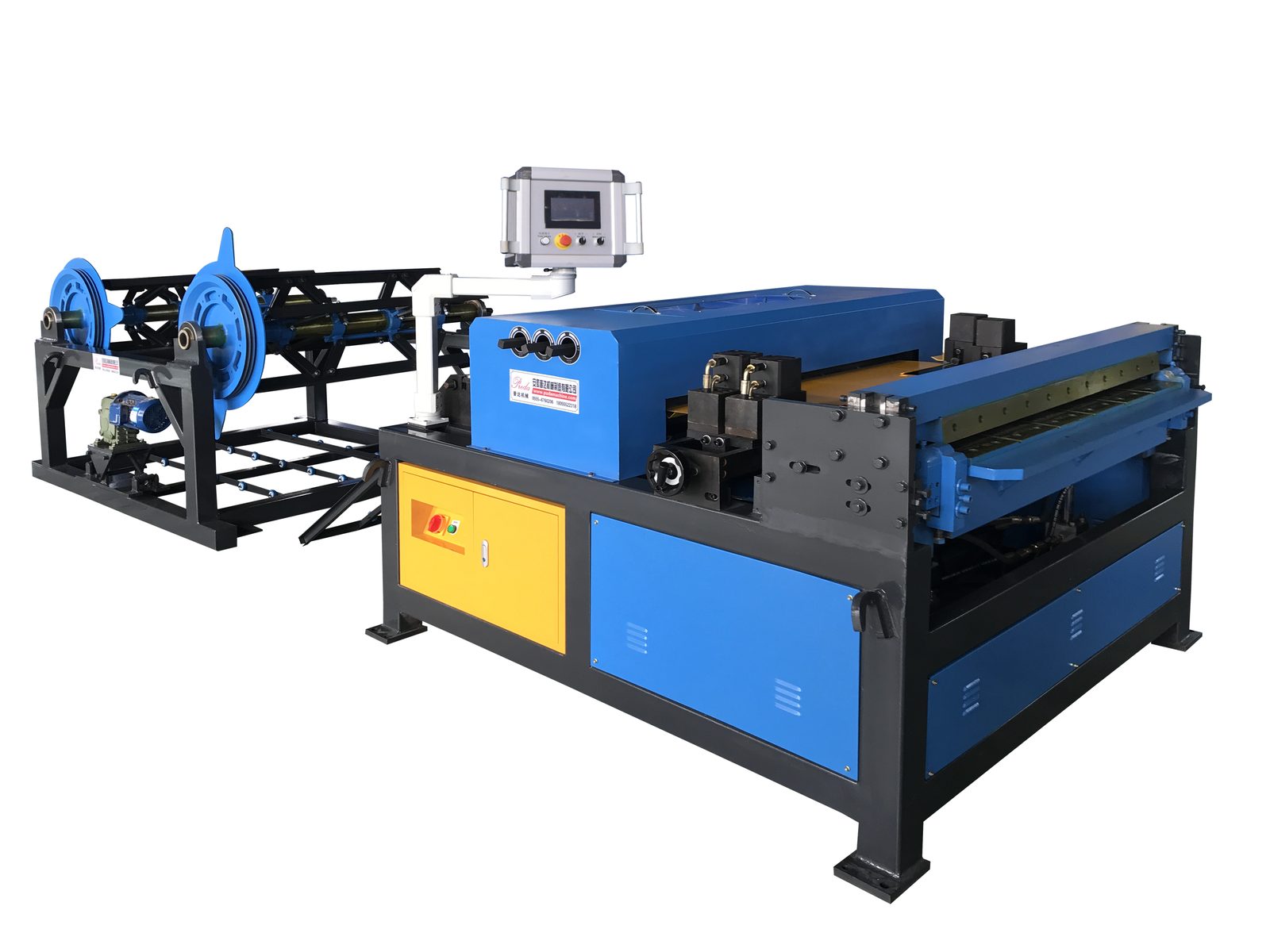
Stage three: full automatic duct line. Coil or sheet feeds a programmed line that levels the material, notches the corners, shears the blank to size and carries it through the forming stations in one pass. The operator's role moves from feeding each station to setting the program, checking the first section and monitoring the run. This stage exists where weekly rectangular volume is steady enough to keep the line running across shifts, and where consistent blank squareness and seam consistency have become a commercial requirement rather than a nice-to-have.
What Each Stage Demands and What It Removes
The comparison below frames each stage by how work moves through the floor, where labor sits, and which quality variables remain under operator control.
| Dimension | Stage 1: Single machines | Stage 2: Grouped semi-automatic | Stage 3: Full auto duct line |
|---|---|---|---|
| Workflow | Panels carried between separate stations | Stations laid out in sequence, panel travels along the bench | One programmed feed through leveling, notching and shearing |
| Labor focus | Operator per station, hand feeding and measuring | Operator moves panel through grouped stations | Program setup, first-section check, run monitoring |
| Blank squareness | Depends on shear setup and backgauge | Improved by matched station layout | Held by the line's programmed leveling and shearing pass |
| Setup between sizes | Done at each machine independently | Coordinated per section size | Recalled from the line program |
| Best fit | Small shops, mixed low volume, first commercial contracts | Growing shops with steady weekly rectangular output | High-volume fabrication, repeated section types, multi-shift running |
Reading the Auto Duct Line Specifications
When a shop reaches the stage where a full line makes sense, four specification numbers do most of the work. The material thickness range sets the gauge band the line handles from coil to blank. The maximum width sets the widest panel the line can produce, in the 1300, 1500 or 1600 mm configurations common on the Preda lineup. The working speed sets metres per minute through the line. The model and configuration tell you which station set the line carries and how it is arranged on the floor.
The two Preda line families compared below follow the specifications listed on the product pages. The AML-3 is the three-station class line; the AML-6 listed under the super auto duct line is the higher-speed line family. Both cover the same 0.45-1.5 mm thickness band and the same width configurations, with the AML-6 running at the higher working speed.
| Specification | AML-3 Auto Duct Line | AML-6 Auto Duct Line |
|---|---|---|
| Models | AML-3-1300 / 1500 / 1600 | AML-6-1300 / 1500 / 1600 |
| Material thickness | 0.45-1.5 mm | 0.45-1.5 mm |
| Maximum width | 1300 / 1500 / 1600 mm | 1300 / 1500 / 1600 mm |
| Working speed | 12 m/min | 16 m/min |
| Position in the lineup | Balanced line for steady rectangular production | Higher-speed line for heavier weekly output |
Line Layout: Straight, U-Shape and Panel Flow
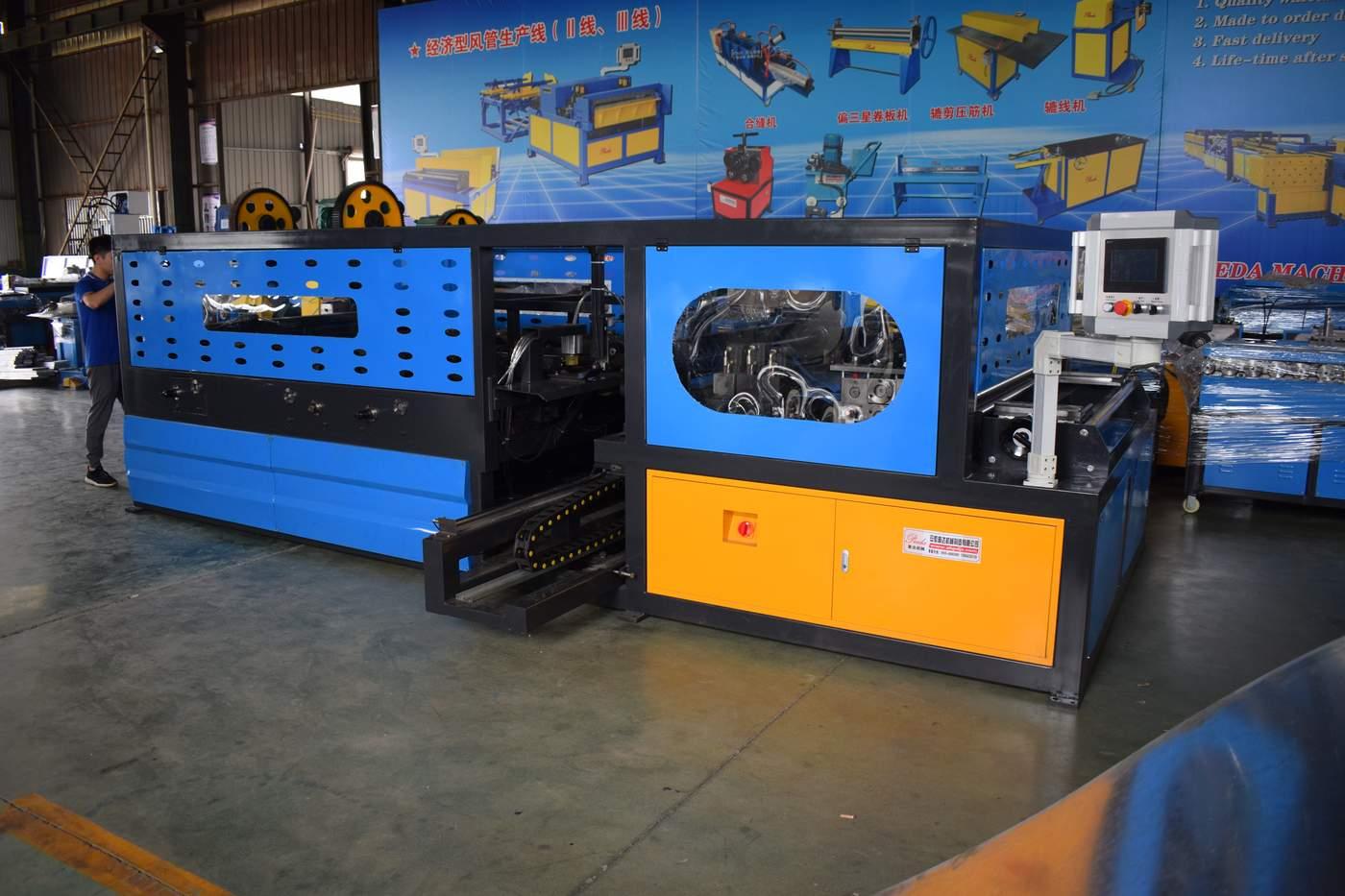
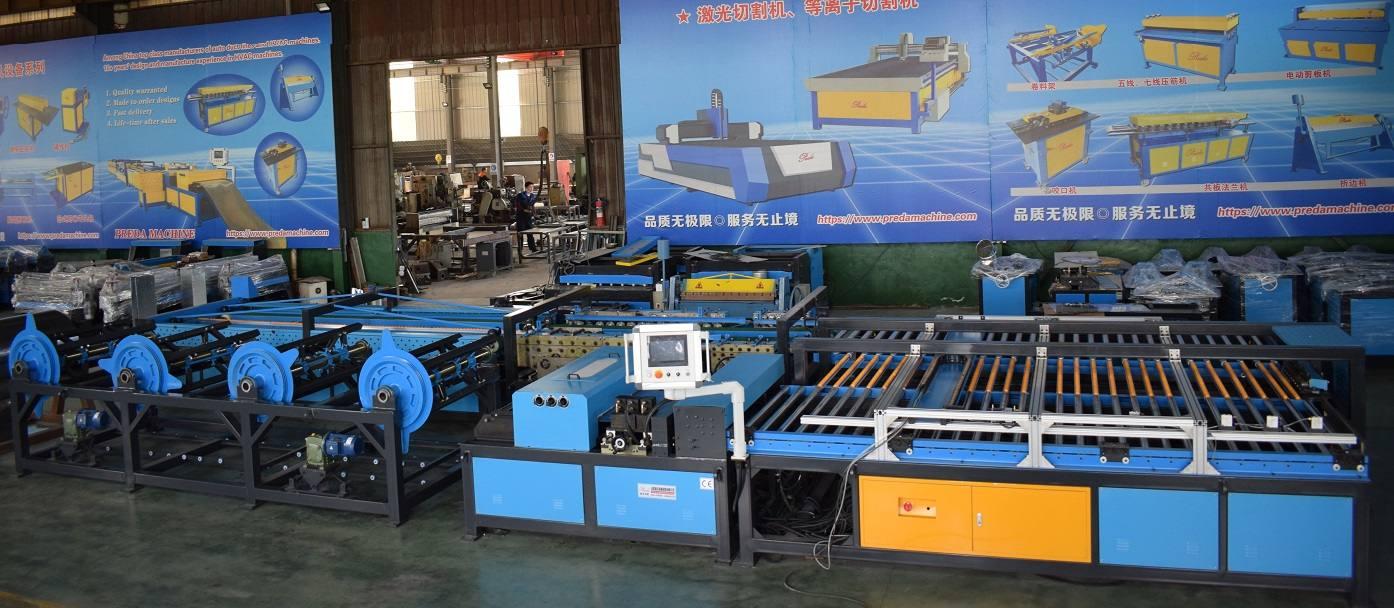
Beyond the model, the physical arrangement decides how much floor space the line takes and how smoothly panels exit. Straight-through lines run coil in one end and blanks out the other, which suits a shop with a long wall and a clear material path. U-shape and compact arrangements turn the flow back along the same side, saving floor area where the workshop is narrow or the line shares a hall with other equipment. The arrangement also affects where the lockformer, flange former and seam locker sit downstream of the line - those stations should receive the blank on the side the line exits, not force a cross-shop carry.
Section Mix: Standard Repeats vs Custom Sizes
The other factor that decides whether a line pays back is how much of the work repeats. A line runs fastest on standard section sizes that recur across many jobs - the same widths, gauges and notch patterns produced day after day. A shop whose every project calls for one-off widths, special gauges and custom fittings spends proportionally more time changing programs and first-section checking, which erodes the speed advantage of the line. Before sizing a full automatic line, look at how many of your weekly sections fall into a narrow set of standard sizes. If most do, the line will stay in production; if every blank is unique, a grouped semi-automatic workflow may return the same quality at lower capital outlay.
People, Safety and the Change to Machine Oversight
Moving from hand-fed stations to a programmed line changes the crew's role, and that change should be planned alongside the machine purchase. The operator on a line is a setter and monitor: reading the drawing, entering or recalling the section program, verifying the first blank, and watching the run for notch or size mismatches. Existing shop floor knowledge of seams, flanges and static pressure still matters - it is what lets the setter recognize a bad section before it leaves the station - but manual feeding skill becomes a smaller part of the job. Training should cover program recall, first-section measurement, roller and blade inspection, and the stop conditions an operator acts on rather than works around.
Safety follows the same shift. A moving coil feed, shear and roller line carries pinch and cutting hazards that separate hand stations do not present in the same way; guarding, emergency stops and clear feed paths need to be in place before the first production run, and the workshop layout should keep non-operators out of the line's material path. Shops that treat the line as a bench with a motorized sheet tend to skip the guarding step and discover it once a panel is running at working speed.
Common Over-Investment Mistakes
- Buying the line before the volume exists. Idle capacity is the most expensive automation mistake; fill the grouped workflow first, then let steady weekly output justify the line.
- Choosing speed over width match. A 16 m/min line cannot compensate for a width configuration that misses your widest panel; configuration comes first, speed second.
- Leaving downstream stations unupgraded. A high-quality blank fed into a worn lockformer or inconsistent closer still produces reworked sections at the flange and seam.
- Underestimating floor flow. A line that blocks the panel exit or forces a cross-shop carry to the next station wastes most of the sequence advantage.
- Assuming the line removes training. Machine oversight still needs operators who understand seams, gauges and the drawings - the skill changes, it does not disappear.
What a Line Removes, and What It Does Not
An automatic line removes the operator-dependent variation in blank squareness and blank preparation. The panel that leaves the line is square within the machine's repeatability, not within whoever held the sheet against the backgauge that day. It does not remove every quality variable: seam profile still depends on the lockformer rollers, flange flatness on the flange former, and closure tightness on the downstream locker. A line feeds a better blank into those stations, but the stations themselves still need setup, roller inspection and first-section checks. Shops that buy a line expecting it to fix a worn lockformer or an inconsistent closer tend to find the quality problems moved downstream rather than disappeared.
Labor is the other expectation to set honestly. A full line reduces the number of hands moving each blank, but it does not remove the need for a trained operator who can set programs, read a drawing, check the first section and intervene when a notch or size does not match. The skill profile shifts from manual feeding to machine oversight and setup, and that operator still needs the same seam and flange knowledge the hand-fed shop required.
Staging the Upgrade to Match Growth
The safest automation path upgrades one bottleneck at a time. Start by tracking where panels queue: if blanks are late and out-of-square, the first investment is blank preparation, whether that means a better shear or the leveling/notching/shearing station a line provides. If queues form at the lock or flange, group those stations before buying the full feed. When blank quality, seam consistency and daily rectangular volume all hold steady over several months, the step to a programmed line is the upgrade that pays back. Buying the line first and waiting for volume to fill it usually means months of idle capacity and a setup crew learning the machine on occasional jobs.
Width and thickness selection follow the same rule as any duct machine: size to the heaviest and widest panel the projects specify, not the average. Both line families cover 0.45-1.5 mm and the 1300-1600 mm width band, so the configuration choice is driven by the widest section on the tender list, and the speed choice by whether weekly volume needs the 12 m/min balanced line or the 16 m/min higher-speed family.
Track queues before you buy the line
For two weeks, note which station panels pile up at. The queue points to the true bottleneck; the station that always stays empty is where extra capacity would sit idle. Match the next purchase to the queue, and the line arrives when the floor is actually ready for it.
Preda Care Service Promise
Every Preda Machine ships CE certified with a two-year warranty, backed by 24/7 technical support, free spare parts shipping, remote PLC programming assistance and a global agent network. A support engineer can review your section mix, panel width and weekly output against the AML-3 and AML-6 configurations before the upgrade.
Match the Line to Your Shop's Stage
Share the rectangular sections, gauges and weekly metres your projects run, and we will map them to a single-machine setup, a grouped workflow or an auto duct line configuration with factory videos.
Compare Auto Duct Lines →Frequently Asked Questions
When does a small shop need an auto duct line?
An automatic line earns its place when weekly rectangular volume is steady, blank squareness has become a repeated quality issue, and the grouped semi-automatic stations are already laid out in sequence. Shops with occasional batches are usually better served by upgrading the single bottleneck machine first.
What thickness and width do the AML-3 and AML-6 cover?
Both families run 0.45-1.5 mm material in 1300, 1500 and 1600 mm width configurations. The AML-3 works at 12 m/min and the AML-6 at 16 m/min; choose width against your widest panel and speed against your weekly volume.
Does an auto duct line replace the seam locker and flange former?
No. The line prepares and feeds the blank; lockforming, flanging and seam closing still run on their own stations downstream. The line improves blank consistency, while those stations remain responsible for seam and flange quality.
Straight line or U-shape - which should I choose?
A straight-through line suits a long wall with a clear material path; a U-shape returns the flow along one side and fits a narrower workshop. The choice is driven by floor plan and downstream station access more than by machine performance.