Round duct shops usually reach a point where one spiral tubeformer covers the common diameters and gauges, and a second question appears: what happens when the project list calls for a larger diameter or a heavier strip? The Preda lineup splits into the fixed-mould PD-1600 for the standard round-duct range and the heavy-duty PD-2000 for larger diameters and thicker gauge work. This guide compares the two machines on diameter range, strip thickness, working speed and listed power, and matches each to the kind of order book it serves, so the choice follows the shop's actual diameter and gauge mix rather than the largest number on a spec sheet.
How a Spiral Tubeformer Makes Round Duct
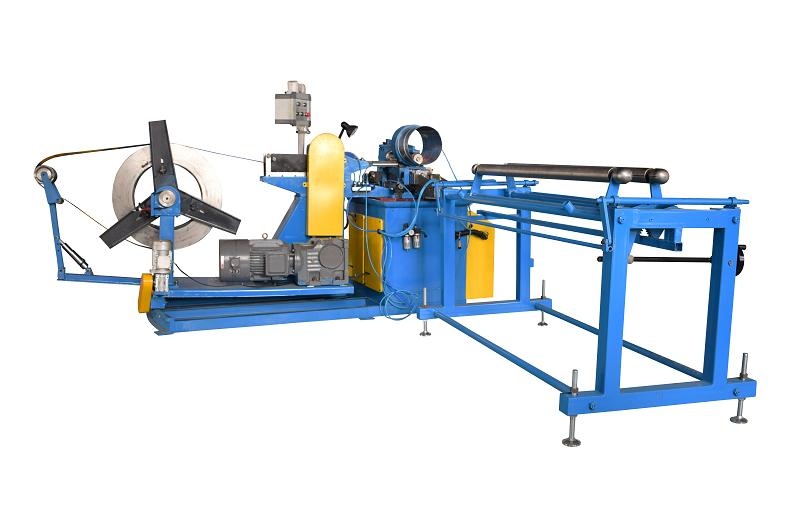
A spiral tubeformer feeds a narrow strip through forming rollers that roll the strip edge into a spiral lock, wind the strip around a mould at a controlled angle, and cut the finished section to length. The machine's diameter capacity is tied to the mould set it carries; the strip thickness the rollers can form depends on their pressure and the frame stiffness; the working speed in metres per minute sets how quickly a run of sections can be produced. Shops that understand these three levers read a spiral machine comparison by diameter band, gauge band and speed rather than by a single headline output figure.
Cutting method affects how the section leaves the machine. Roller cutting trims the completed spiral seam to length mechanically, suited to standard gauge and diameter work. Plasma cutting cuts through the strip to a clean length and is used where heavier gauge or larger diameters make a mechanical roller cut less effective. The Preda spiral range offers roller or plasma cutting configurations, and the choice sits with the gauge and diameter mix on the shop's orders.
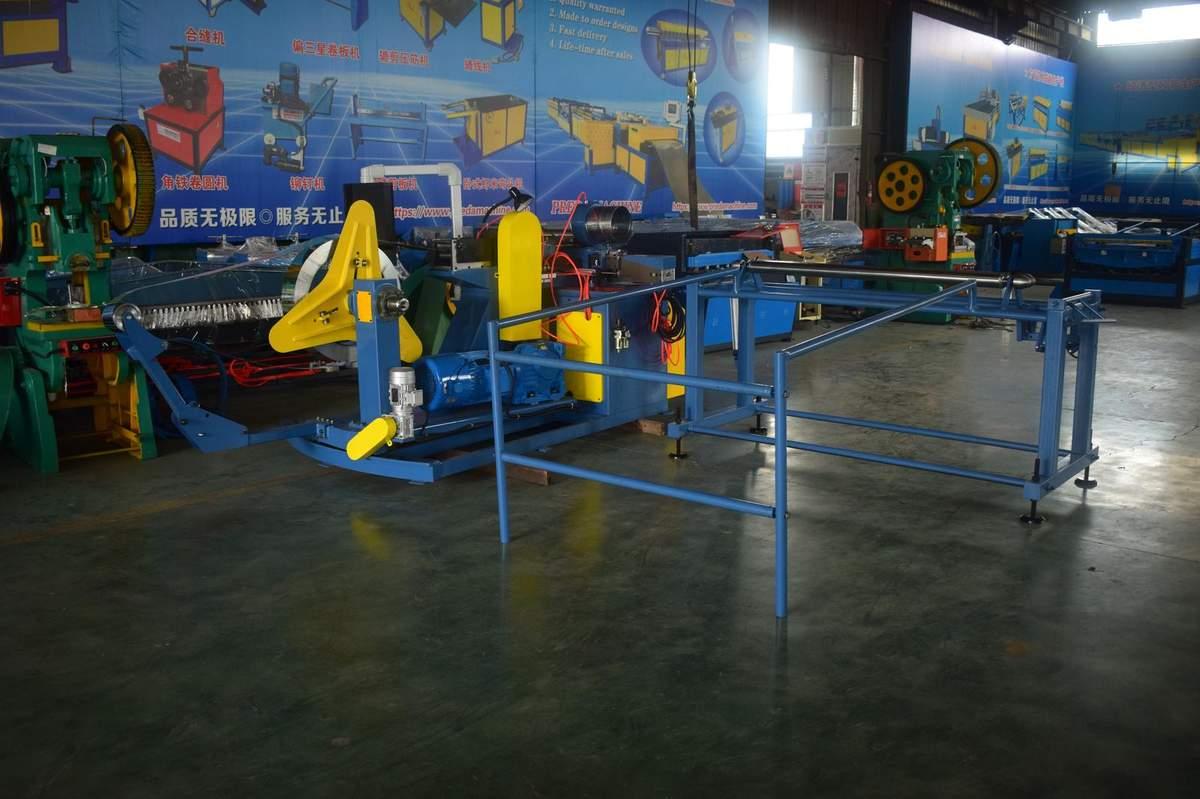
PD-1600: The Fixed-Mould Standard Range Machine
The PD-1600 is a fixed-mould spiral tubeformer built for the round duct diameters most commercial ventilation jobs call for. Its listed range covers 100-1600 mm diameter on 0.4-1.2 mm strip, with a working speed of 1-38 m/min and roller or plasma cutting available. This is the machine a duct shop reaches for when its round work sits in the ordinary commercial band: standard sizes, light-to-moderate gauge, repeat sections that keep the mould running across the shift.
Fixed-mould construction means the machine carries the mould set matched to its diameter band; diameter changes within that band follow the mould configuration rather than a universal head. That keeps the roller and lock geometry straightforward to maintain, and suits a shop whose order book repeats a familiar set of round sizes. Where the work stays inside 100-1600 mm and 0.4-1.2 mm, the PD-1600 delivers the standard spiral sections the market asks for, without the heavier frame and power a larger machine would need.
PD-2000: The Heavy-Duty Large-Diameter Machine
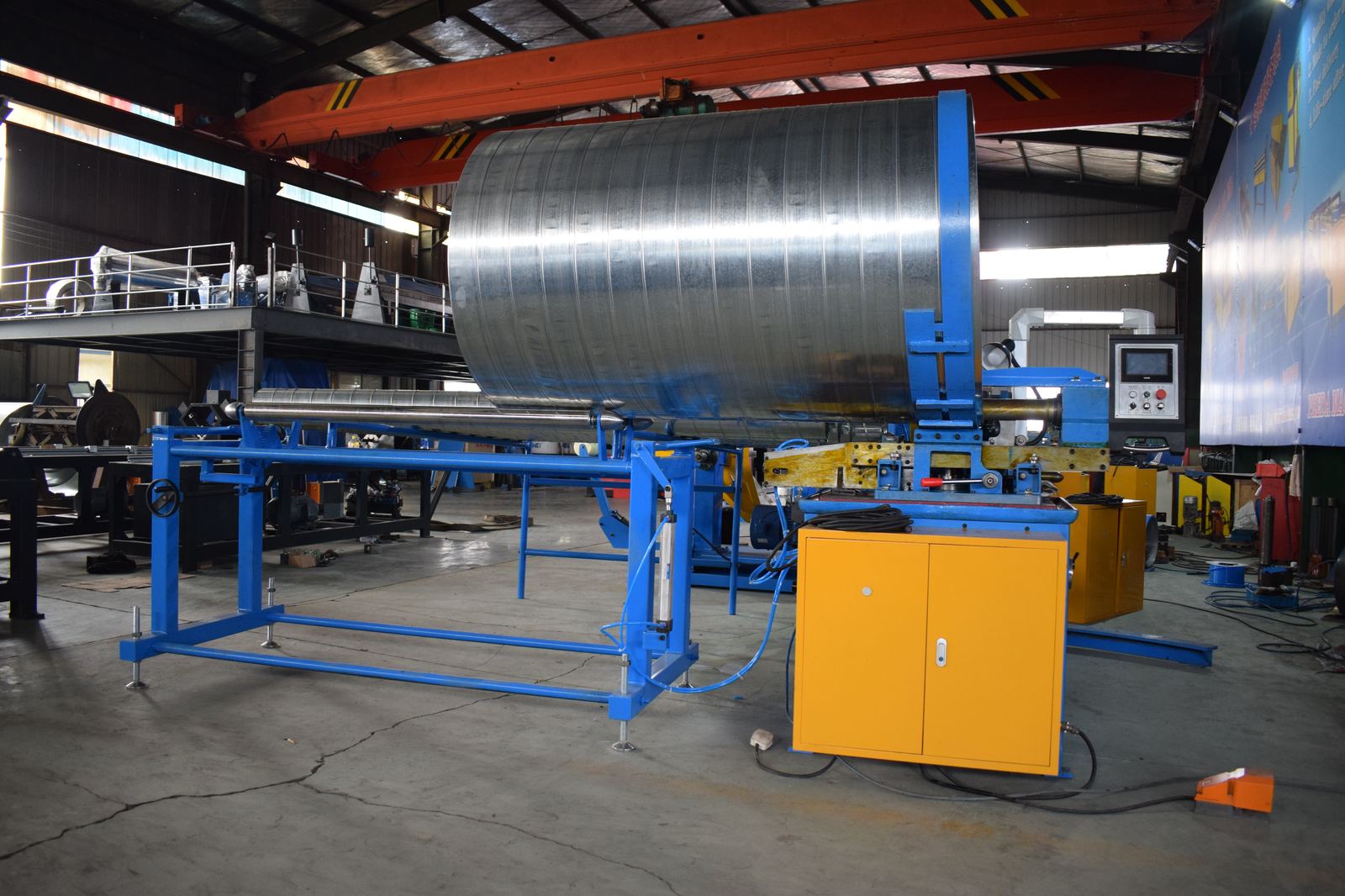
The PD-2000 is the heavy-duty, mould-class spiral machine built beyond the standard range. Its listed diameter reaches up to 2000 mm, on a 0.5-1.5 mm strip band, with a working speed of 1-30 m/min and a 15 kW drive. The heavier strip and larger diameter demand a stiffer frame, stronger rollers and the higher drive power the standard-range machine does not carry; that is why the PD-2000 sits in the heavy-duty class rather than alongside the standard line.
This machine fits shops whose projects include large-diameter ventilation runs, heavier-gauge round sections, or mixed work where some orders push past the 1600 mm / 1.2 mm band of the standard machine. Its listed top speed is lower than the standard machine's band because larger diameter and thicker strip require slower, more controlled forming; capacity and frame stiffness take priority over maximum metres per minute at light gauge. A shop should only size into the PD-2000 when its order book actually contains those large diameters or heavier gauges, otherwise the heavy frame and drive stand idle on ordinary round work.
Side-by-Side Specification Comparison
The figures below are taken from the product page specifications. They frame the two machines by the bands they are built to cover; actual configuration can vary with mould set and cutting option, so confirm the exact diameter moulds and cutting method against your order list before ordering.
| Specification | PD-1600 Spiral Tubeformer | PD-2000 Heavy-Duty Tubeformer |
|---|---|---|
| Machine class | Fixed-mould standard range | Heavy-duty mould class |
| Diameter range | 100-1600 mm | Up to 2000 mm |
| Strip thickness | 0.4-1.2 mm | 0.5-1.5 mm |
| Working speed | 1-38 m/min | 1-30 m/min |
| Listed drive | Standard drive for the gauge band | 15 kW drive for heavier strip and large diameter |
| Cutting | Roller or plasma cutting | Heavy-duty cutting for large sections |
| Best fit | Standard commercial round duct, repeat sizes, light-to-moderate gauge | Large-diameter runs, heavier gauge, mixed large-and-standard orders |
Matching Diameter and Gauge to Your Order Book
The most reliable comparison is not which machine is bigger, but which band your existing orders occupy. Sort the round sections you supply across the last several months by diameter and by strip thickness. If most sit between 100 and 1600 mm on 0.4-1.2 mm material, the standard machine covers the shop's real work. If a consistent share of jobs calls for diameters past 1600 mm or strip toward 1.2-1.5 mm, the heavy-duty machine is where the capacity gap shows up. A shop with occasional large sections may weigh the extra investment against how often those orders actually return.
| Order profile | Diameter / gauge on the jobs | Machine direction |
|---|---|---|
| Standard commercial round duct | 100-1600 mm, 0.4-1.2 mm | PD-1600 fixed-mould |
| Mixed standard and occasional large | Most 100-1600 mm, some over 1600 mm | PD-1600 base; review PD-2000 if large orders recur |
| Large-diameter or heavy-gauge regular work | Up to 2000 mm, 0.5-1.5 mm | PD-2000 heavy-duty |
| Multi-shift round output | Repeat sizes, steady daily run | Match machine to band; speed and mould set follow output |
Speed, Output and What the Numbers Do and Do Not Mean
Working speed in metres per minute measures how fast the strip travels through the rollers on the configured diameter and gauge. It is a useful comparison within the same band, but the two machines are not matched by top speed alone: the PD-2000's lower top speed reflects its larger diameter and heavier strip, not a weaker machine. Real shop output also depends on section length, mould changeover between sizes, cut-to-length setup and how steadily the operator feeds the strip. A high top speed on a machine running the wrong gauge band will not produce usable sections, while a machine matched to its band keeps repeatable quality across the shift.
Diameter capacity and gauge band are the primary selection criteria; speed is secondary. Choose the mould class that covers your largest regular diameter and your thickest regular strip first, then look at the speed band for how many metres the shop needs per shift. Picking the speed machine first and discovering the diameter or gauge falls outside its band is the more expensive mistake.
Common Selection Mistakes
- Buying the heavy machine for a rare large order. A PD-2000 sized for occasional past-1600 mm work sits idle on ordinary sections; weigh recurrence before paying for the heavy frame.
- Reading top speed as total output. Metres per minute does not include changeover, setup and section handling; steady repeat sizes drive real output.
- Matching gauge before diameter. A machine that reaches a large diameter but cannot hold the thicker strip still produces reworked seams; check both bands.
- Ignoring cutting configuration. Heavier strip and large sections may need plasma rather than roller cutting; confirm the cutting option for the gauge mix.
- Assuming one mould fits all sizes. Fixed-mould capacity follows the mould set; ask which diameters the delivered mould configuration covers.
What the Machine Does Not Cover Downstream
A spiral tubeformer produces the round section; collars, flanges, fittings and sealing still follow on other stations. The shop's round-duct quality also depends on strip preparation, lock consistency and how sections are finished after cutting. Choosing the right machine class protects the forming step, but the downstream fitting and assembly stations still need their own setup and inspection. For shops pairing spiral output with oval sections, a flat oval machine reshapes selected round lengths for shallow spaces; that is a separate downstream decision rather than part of the tubeformer comparison.
Sort three months of round sections before comparing machines
List the largest diameter and thickest strip you run on a regular basis, not on a single tender. If those sit in the standard band, the fixed-mould machine covers the work; if large or heavy sections return week after week, the heavy-duty machine closes that gap. Bring that diameter-and-gauge list to the comparison rather than the largest size you have ever quoted.
Preda Care Service Promise
Every Preda Machine ships CE certified with a two-year warranty, backed by 24/7 technical support, free spare parts shipping, remote PLC programming assistance and a global agent network. An engineer can review your diameter list, gauge band and weekly round-metre output against the PD-1600 and PD-2000 configurations, and advise on mould set and cutting option.
Find the Tubeformer Band for Your Round Duct
Share the diameters, strip gauges and weekly round sections your projects call for, and we will map them to the PD-1600 fixed-mould or PD-2000 heavy-duty configuration with the matching cutting option.
Compare Spiral Duct Machines →Frequently Asked Questions
What diameter range does the PD-1600 cover?
The PD-1600 covers 100-1600 mm diameter on 0.4-1.2 mm strip, running at 1-38 m/min with roller or plasma cutting, built for the standard commercial round-duct band.
When do I need the PD-2000 instead?
The PD-2000 reaches diameters up to 2000 mm on 0.5-1.5 mm strip at 1-30 m/min with a 15 kW drive. It suits regular large-diameter or heavier-gauge work; occasional large sections should be weighed against how often the orders return.
Why is the PD-2000 top speed lower?
Larger diameter and thicker strip require slower, more controlled forming on a heavier frame. The heavy-duty machine prioritizes capacity and stiffness over maximum metres per minute at light gauge.
Which cutting method suits heavier sections?
Roller cutting suits standard gauge work; plasma cutting is used where heavier strip or large diameters make a mechanical roller cut less effective. Match the cutting option to your gauge mix when configuring the machine.