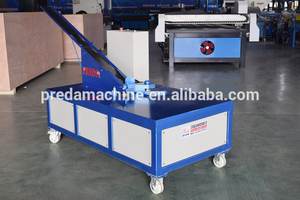


Pneumatic TDF Corner Matics PC-12
Last updated: October 12, 2026
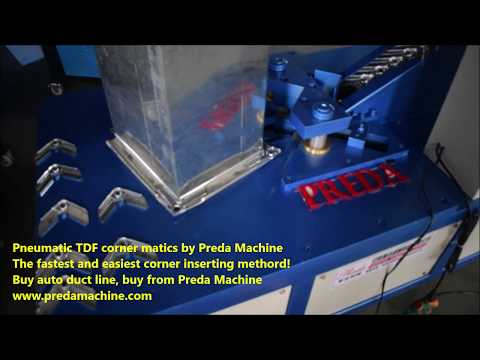
Pneumatic TDF corner making machine for fast, consistent corner crimping in high-volume duct fabrication shops.
Technical Specifications
What is a Pneumatic TDF Corner Matics PC-12?
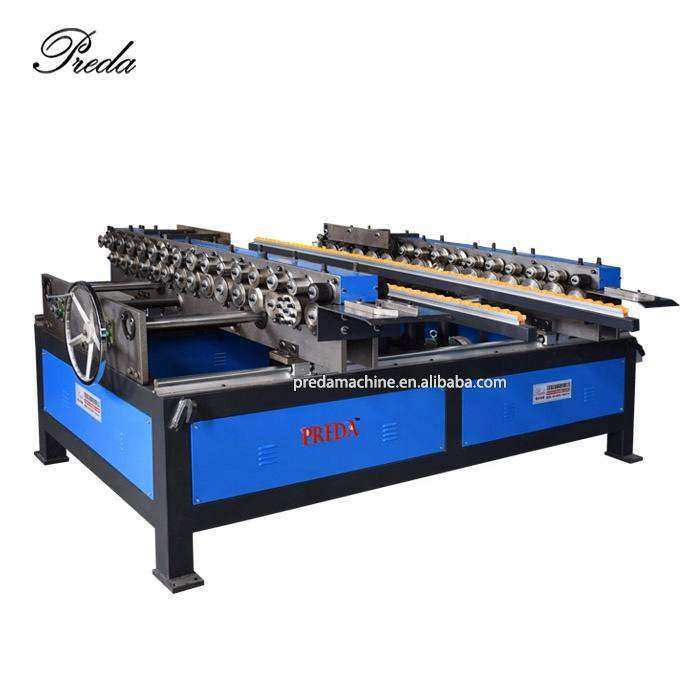
A flange forming machine is sheet metal equipment that produces TDF (Transverse Duct Flange) or TDC (Transverse Duct Connector) flanges on the edges of rectangular duct panels. These flanges allow duct sections to be bolted together with gaskets for air-tight connections. Flange formers are typically used in conjunction with auto duct lines or as standalone machines for custom ductwork fabrication.
Key Features
- Fast pneumatic operation
- Consistent corner quality
- Foot pedal control
- High-volume production ready
- Low energy consumption
Still Losing Money to Slow Flange Installation and Poor Seals?
Every HVAC duct shop faces the same bottleneck: manual flange forming and riveting. When your team spends hours on inconsistent flange dimensions, your production capacity drops, labor costs rise, and deadlines slip. The Pneumatic TDF Corner Matics PC-12 is engineered to eliminate these inefficiencies — automating pneumatic TDF corner matics while delivering consistent, factory-grade quality.
In this guide, we break down exactly how this machine transforms your PC-12 corner machine workflow, what specifications matter for your operation, and how to calculate your return on investment. Whether you run a 3-person job shop or a 50-employee production facility, understanding these details directly impacts your bottom line.
How It Transforms Your Production Line
The Pneumatic TDF Corner Matics PC-12 operates on a proven principle: pneumatic TDF corner matics should be a continuous, automated process — not a series of manual interventions. Here is the step-by-step workflow that makes this possible:
Panel Feeding
The duct panel edge is fed into the flange forming rollers, with adjustable guides ensuring proper alignment.
Flange Roll Forming
Multiple roller stations progressively form the TDF/TDC flange profile — creating the integral flange that replaces traditional angle iron frames.
Corner Notching (Optional)
Integrated notching stations cut the corner reliefs needed for clean 90° flange corners.
Corner Crimping
Hydraulic or pneumatic corner tools crimp the flange corners, creating a rigid, square connection point.
Technical Specifications & Performance Data
Every specification on this machine is chosen for a reason. The table below shows not just the numbers, but what each one means for your daily production:
| Parameter | This Machine | What It Means for You |
|---|---|---|
| Control System | PLC with touchscreen | Easy programming, consistent results, minimal training |
| Construction | Heavy-duty steel frame | Vibration-free operation, 10+ year service life |
| Certification | CE certified | Meets European safety and quality standards |
| Warranty | 2 years | Peace of mind with comprehensive factory warranty |
Problems Solved: Before vs. After
We asked 50+ HVAC fabricators about their biggest production headaches. Here is how this machine directly addresses each one:
| Without This Machine | With This Machine |
|---|---|
|
✕ Angle iron flanges are heavy and slow
Welding angle iron takes 10-15 min per duct, adds weight |
✓ TDF integral flange formed in seconds
Flange time reduced to 30 seconds, 40% lighter |
|
✕ Flanges don't align on site
Gaps between flanges cause air leakage, need shimming |
✓ CNC-formed flanges with ±0.3mm accuracy
Perfect flange alignment, gasket seals every time |
|
✕ Riveting is slow and labor-intensive
Each flange needs 8-12 rivets, 5-10 minutes per duct |
✓ TDF flange is integral — no rivets needed
Eliminate riveting entirely, save 70% assembly time |
|
✕ Corner gaps and leaks
Poor corner construction is the #1 leak source |
✓ Hydraulic corner crimping creates tight corners
Leakage class C compliance, no corner leaks |
Where It Fits in Your Factory
This machine is versatile enough to serve multiple production scenarios. Here are the most common configurations our customers use:
Commercial HVAC Ductwork
TDF flanges are the global standard for commercial rectangular duct connections — used in offices, hospitals, schools, and retail.
Industrial Ventilation
TDC flanges for high-pressure industrial systems where heavier gauge and stronger connections are required.
Duct Retrofit & Replacement
Upgrading old angle-iron duct systems to modern TDF flange technology for better sealing and faster installation.
Prefabrication Facilities
High-volume duct prefab shops where consistent flange quality is essential for just-in-time delivery to construction sites.
Frequently Asked Questions
Click each question to see the answer. These are the questions our sales engineers hear most often:
Pneumatic vs Hydraulic vs Manual Corner Matics
Pneumatic corner matics are the middle option: faster than a manual tool, cheaper and cleaner than hydraulic, and entirely dependent on your compressed air. If your shop already runs air tools, this is usually the right corner solution; if it does not, the compressor cost changes the calculation.
| Drive | Corners per hour | Infrastructure needed | Best fit |
|---|---|---|---|
Pneumatic Corner Matics PC-12 This machine — air-powered crimping | 400–700 Fast cycling | Compressed air at a stable pressure Check your receiver capacity | Shops that already run air tools and want bench-speed corners Compact footprint, clean operation |
Hydraulic crimping | 300–500 Slower cycling, higher force | Hydraulic power unit Self-contained | Heavier gauge, stainless, or crimping at the assembly point Force rather than speed is the reason to choose it |
Dedicated mechanical station | 300–600 Operator-paced | Floor space and mains power No air required | One station serving several flange formers Also the choice when you have no compressed air |
The die itself | Depends on the drive Consumable tooling | Fits the machine above Wear item | You already have a drive and need a die Also the spare every shop should keep |
Clamp-mounted TDC die | 40–80 Manual | A bench only No infrastructure | Site work or occasional TDC corners Not a production option |
Installing Pneumatic Corner Matics Without Losing Speed to Air Supply
Pneumatic tools fail in a particular way: they work on day one and get slowly slower as the compressor struggles to keep up. Prevent that at installation and the machine will hold its rated speed.
- 1. A corner matics cycles far more often than an impact wrench. Calculate consumption at your actual corners-per-hour rate, then add margin.
- 2. Line loss is the usual cause of a pneumatic tool that slows through the day. A receiver near the bench holds pressure at the point of use.
- 3. Over-pressure increases die wear and coating damage; under-pressure produces partial crimps. Set it once and lock it.
- 4. Water in the line reaches the cylinder and the die, and it is the main cause of premature seal failure in pneumatic tooling.
- 5. Pressure makes a partial crimp look convincing. Pull-test one corner per batch in the first month.
- 6. Pneumatic cycling is fast, so the die wears faster than on a manual tool. Look for rounding on the crimp edges under a bright light.
- 7. A slower or softer cycle usually means pressure drop rather than a tool fault. Train operators to report it early.
- 8. Both are cheap compared with a stopped corner station, and both are the items you will actually need.
Pneumatic Corner Matics Faults: Symptom, Cause, Fix
Work from the air supply backwards. Most faults blamed on the tool are pressure or contamination problems at the supply end.
| Symptom | Most likely cause | What to do |
|---|---|---|
Crimps get weaker through the shift Pressure drop as demand rises | The compressor cannot keep up with sustained cycling Classic signature: fine at start-up, weak by mid-morning | Fit a receiver near the machine and check pressure at the tool under load Measure at the point of use, not at the compressor |
Partial crimps at random Pressure fluctuating, or the flange not seated | Either supply instability or operator variation Intermittent faults are usually one of these two | Log pressure for an hour; if it is stable, the issue is seating Make seating a written step |
Tool cycles but does not crimp fully Die worn or depth setting lost | Fast cycling wears the die quickly, and the depth adjuster can drift Distinguish by inspecting the die edge | Inspect the die under a bright light and re-set depth on scrap Replace the die when the edges show rounding |
Water spraying from the exhaust No filter, or the receiver not drained | Condensation in the line reaching the tool Leads to seal failure if ignored | Fit a filter and drain the receiver daily Check for existing seal damage if this has been happening a while |
Cycle slows noticeably Restricted line or a failing valve | Undersized hose, a partly closed valve, or a worn spool Usually infrastructure rather than the tool | Check hose bore and valve positions first, then the valve itself Time ten cycles before and after each change |
Coating cracking at the crimp Depth too great for the gauge | Over-crimping fractures the galvanising, which is where corrosion starts Often set for a heavier gauge and never changed back | Re-set depth for the current gauge and destructive-test Record the setting per gauge on a card at the bench |
Professional Packaging & Global Shipping
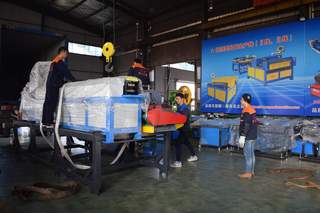
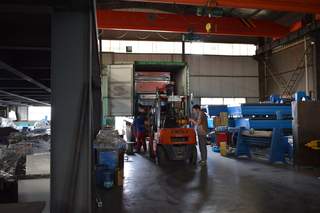
Every machine is professionally packaged and secured in a container for safe delivery to your port. We send you loading photos before the ship sails.

Calculate Your Return on Investment
Based on average industry data, here is what a typical customer saves after installing this machine:
* Figures based on average customer data for a shop producing 300-800 duct sections per month. Your actual results will vary based on production volume, labor rates, and current efficiency levels. Contact our engineers for a customized ROI calculation based on your specific operation.
Ready to Upgrade Your Pneumatic Production?
Get a customized quote within 24 hours. Our engineers will help you configure the right machine for your specific production requirements.
WhatsApp / WeChat: +86-18355321923 | Email: jason@predamachine.com
Related Products

Buying Guides for This Machine Type
Before you request a quote: how this machine class compares, what it costs, and how to size it for your production volume.
TDF Corner Making Guide 2026
Corner machine vs corner matics vs hand molds: the real cost per corner at different volumes.
Read the guide → ComparisonTDF vs TDC Flange Guide
The two dominant rectangular duct flange systems compared on sealing, speed and installed cost.
Read the guide → Buying GuideTDF Flange Former Buying Guide 2026
T-12 vs T-16 vs Duplex vs Dual Head — throughput, gauge range and shop-size fit.
Read the guide → ComparisonTDF Bender: Electric vs Pneumatic
Power source choice for TDF benders — air supply requirements, cycle speed and maintenance load.
Read the guide →