The longitudinal seam on a rectangular duct panel is formed in a lock former and then closed in a seam closer. The profile being closed decides how stiff the finished corner is, how the seam behaves under static pressure, and what the closer must handle through its stroke. Pittsburgh lock and whisper lock are the two profiles a hydraulic seam locker is asked to work with, and the machine's gauge band, width and closing force have to match the profile chosen for the project. This guide compares the two seam profiles by formation and shop behaviour, then pairs them with the HF-1550 CNC hydraulic seam locker and the portable L-12 closer specifications listed on the Preda product pages.
Where the Seam Profile Comes From
A lock former rolls a hooked profile along one or both longitudinal edges of a rectangular panel. Those hooks meet when the panel is folded into a section, and a seam locker presses or rolls the interlocked edge closed along the full length. The profile itself is set by the lock former's rollers; the seam closer exists to seat that already-formed profile rather than to form it from flat sheet. That separation matters when choosing a closer: the machine matches the profile it will receive, and the two operations can run at their own pace in different parts of the shop.
Profile choice reaches back into the panel design and forward into how the section behaves in service. A stiffer hooked corner holds rectangular shape against duct deflection; a lower-profile or quieter-running seam suits sections where noise or edge height is a concern. Both profiles are closed along the longitudinal joint, and both leave the finished section ready for flanging, collar fitting or gasket sealing downstream.
Pittsburgh Lock
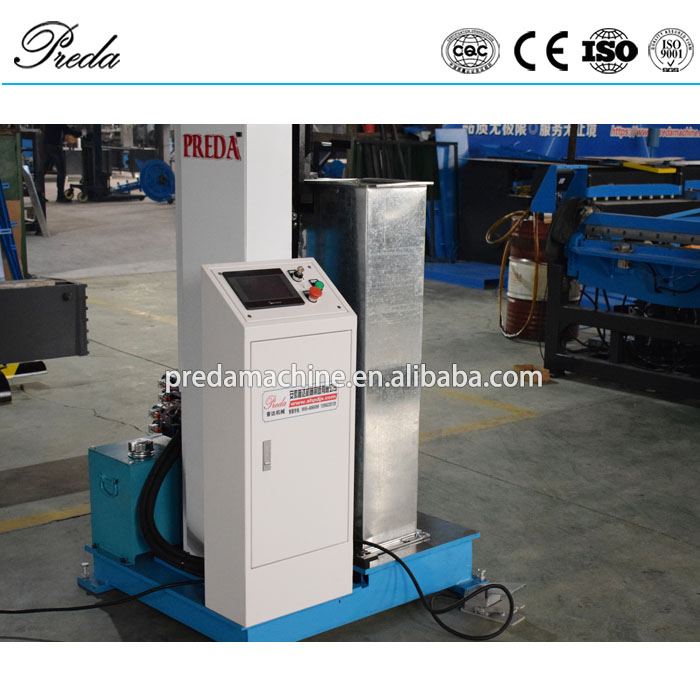
The Pittsburgh lock is the standard hooked longitudinal seam for rectangular HVAC duct. It interlocks two formed hooks and is closed along the seam to give the corner a stiff, repeatable joint. It is the common profile on commercial rectangular duct, matched to Pittsburgh lockformers and Pittsburgh seam closers through the standard gauge range. Its strength is a well-proven, widely understood joint that fits standard flange and fitting practice across shops.
On the closer side, the Pittsburgh profile is what the portable L-12 electric closer is built around: 0.5-1.0 mm material, Pittsburgh seam, 10 m/min, 0.55 kW, 120 kg, priced for on-site or mobile seam closing. The hydraulic HF-1550 covers the heavier 0.5-1.5 mm band and up to 1550 mm width, closing the Pittsburgh seam with powered rollers under CNC hydraulic control and a PLC touchscreen.
Whisper Lock
The whisper lock is the alternative profile listed alongside Pittsburgh on the HF-1550, designed as a quieter-running and lower-profile seam closure. The name points at running noise and edge character rather than a different end goal: the section still needs a seated longitudinal joint. Shops choose whisper lock where seam noise, profile height or a cleaner finished edge matters, typically on commercial and comfort-ventilation duct where the Pittsburgh corner's extra hook height is not required.
Because the HF-1550 lists Pittsburgh and whisper lock together, the same hydraulic closer can work both profiles when the matching lock former supplies them. The closer's gauge band and width still govern the material it receives; profile type changes the hook geometry being seated, not the 0.5-1.5 mm band or 1550 mm width the machine is rated for. Choosing between the profiles follows the project's duct specification, acoustic expectation and existing lock former tooling.
How the Two Profiles Compare
The table frames each profile by origin, where it sits in standard practice, and the closing setup it expects. Stiffness and sealing statements are qualitative; the gauge and width figures below are the Preda machine ratings, not assumed joint performance numbers.
| Dimension | Pittsburgh lock | Whisper lock |
|---|---|---|
| Profile type | Standard hooked longitudinal seam | Alternative quieter-running, lower-profile seam |
| Standard practice | Common on commercial rectangular HVAC duct | Used where seam noise or edge profile is a concern |
| Closer support | Handled by Pittsburgh closer lines and the HF-1550 | Listed alongside Pittsburgh on the HF-1550 |
| Joint role | Stiff hooked corner for rectangular section shape | Seated longitudinal joint with lower edge character |
| Upstream source | Formed by a Pittsburgh lock former | Formed by a lock former set for the whisper profile |
| Profile selection driver | Standard flange/fitting practice, heavier commercial duct | Acoustic or edge-height requirement, existing tooling |
HF-1550 vs L-12: Closer Class for the Profile
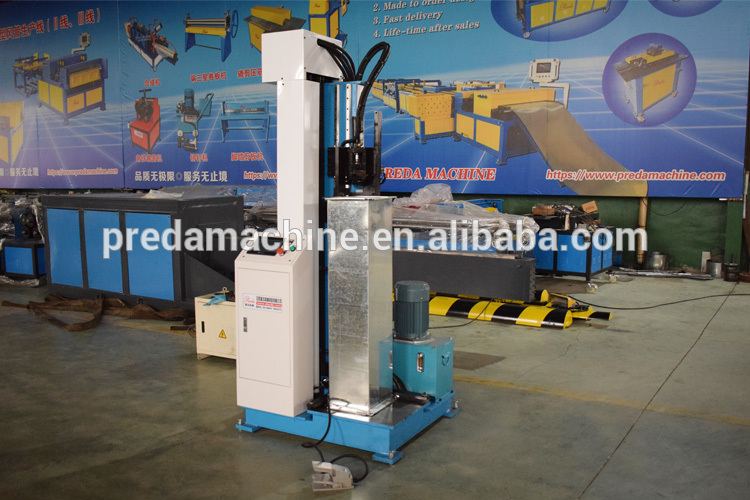
The seam closer is chosen after the profile and gauge are fixed. The HF-1550 is a CNC hydraulic vertical closer for heavier sheet and wider panels, while the L-12 is a portable electric Pittsburgh closer for lighter gauge and mobile use. Both seat a formed seam; neither forms the profile from flat metal.
| Specification | HF-1550 CNC Hydraulic Locker | L-12 Portable Electric Locker |
|---|---|---|
| Profiles | Pittsburgh / whisper lock | Pittsburgh |
| Material thickness | 0.5-1.5 mm | 0.5-1.0 mm |
| Width / reach | 1550 mm max width | Portable hand-operated closer |
| Power | 3 kW, CNC hydraulic | 0.55 kW, electric |
| Working speed | Powered roller closure under CNC control | 10 m/min |
| Control | PLC touchscreen, programmable seam parameters | Direct portable operation |
| Weight / role | Vertical shop machine, heavier gauge and wider panels | 120 kg, on-site or mobile seam closing |
| Support | CE certified, two-year warranty | CE certified, two-year warranty |
Selecting Profile and Closer Together
- Match the profile to the project spec. If the drawing calls for standard Pittsburgh, keep the lock former and closer on that profile; move to whisper only when the requirement or acoustic note asks for it.
- Set gauge before the closer class. 0.5-1.0 mm lighter work can use the portable L-12; 0.5-1.5 mm and wider panels point to the hydraulic HF-1550.
- Check upstream lock former tooling. A whisper profile needs a former that rolls that hook; the closer cannot supply a profile the former did not make.
- Separate forming and closing stations. The former produces the hook; the closer seats it. Running them as separate stations lets each work at its own pace, which is why a hydraulic closer exists alongside the lock former rather than replacing it.
- Plan width against panel size. The HF-1550 reaches 1550 mm width; confirm the widest panel on the list against that rating before choosing the machine.
Common Profile and Closer Mistakes
- Expecting the closer to form the seam. The profile comes from the lock former; a closer seats a formed hook and will not rescue an unformed edge.
- Choosing whisper for its own sake. The quieter profile suits specific acoustic or edge needs; standard commercial duct often stays on Pittsburgh.
- Using a portable closer on heavier gauge. The L-12 covers 0.5-1.0 mm; heavier 1.2-1.5 mm work needs the hydraulic closing force of the HF-1550.
- Ignoring panel width. A wider panel needs a closer that reaches across it; portable hand operation does not scale to 1550 mm shop closing.
- Mismatching former and closer profiles. A Pittsburgh closer cannot seat a whisper hook and vice versa; align roller tooling and closer setup to the same profile.
What the Closer Cannot Replace
A seam closer finishes the joint the former created. Consistent corner stiffness and shape still depend on lock former roller condition, panel squareness and fold setup; the closer only presses that prepared seam home. Edge quality after closing follows those upstream steps, so a well-matched closer cannot compensate for misformed hooks or a panel folded out of square.
Nor does it remove operator checks. The setter still verifies the profile on the first section, checks the seated seam along its length, and confirms gauge and width before running the batch. Selecting the right profile and machine makes those checks straightforward; they remain part of every production run.
Fix profile, gauge and width before picking the closer
From the drawing list, note which seam profile each section calls for, the thickest material, and the widest panel. Standard Pittsburgh in 0.5-1.0 mm with mobile work fits the L-12; 0.5-1.5 mm material up to 1550 mm on a shop floor points to the HF-1550, which handles both Pittsburgh and whisper. Confirm the upstream former rolls the chosen profile before ordering the closer.
Preda Care Service Promise
Every Preda Machine ships CE certified with a two-year warranty, backed by technical support, spare parts shipping and a global agent network. A support engineer can review your section profiles, gauge band and panel widths against the HF-1550 hydraulic closer or the portable L-12, and confirm the profile matches your existing lock former.
Match the Seam Closer to Your Duct Profiles
Share the Pittsburgh or whisper profiles your sections use, the thickness band and widest panel, and whether closing happens in the shop or on site, and we will match the HF-1550 hydraulic closer or the L-12 portable closer to that work.
Compare Seam Closers →Frequently Asked Questions
Does the HF-1550 close both Pittsburgh and whisper lock?
Yes. The HF-1550 CNC hydraulic closer lists Pittsburgh and whisper lock together, in 0.5-1.5 mm material up to 1550 mm width, under CNC hydraulic control with a PLC touchscreen.
What material band does the L-12 cover?
The portable L-12 handles 0.5-1.0 mm Pittsburgh seams at 10 m/min, 0.55 kW, 120 kg, for on-site or mobile seam closing.
Can a seam closer form the hook itself?
No. The lock former rolls the hook profile; the closer seats the already-formed seam. The two operations are separated so each can run at its own pace.
When should whisper lock be chosen over Pittsburgh?
Where the project calls for a quieter-running or lower-profile seam, and the lock former can roll that profile. Standard commercial rectangular duct commonly stays on Pittsburgh practice.