Longitudinal Seam Welder
Last updated: October 14, 2026
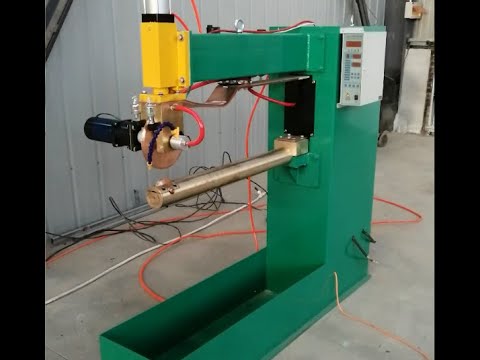
Automatic longitudinal seam welder for airtight round duct seams using TIG or plasma welding. The welded alternative to mechanical lock seams when your specification calls for a continuous airtight joint.
Technical Specifications
What is a Longitudinal Seam Welder?
A longitudinal seam welder joins the long edge of a rolled duct sheet into a continuous welded seam. Where a Pittsburgh lock seam is mechanically closed, a welded seam is fused — giving a genuinely airtight joint that meets welding specifications for stainless steel duct, clean room systems and high-pressure or exhaust applications. PREDA builds these welders in TIG and plasma configurations.
Key Features
- Automatic longitudinal seam welding for airtight round duct joints
- TIG or plasma welding process to suit your material and specification
- Continuous weld along the seam — no mechanical interlock to leak
- Automatic travel keeps weld speed and heat input consistent
- Suits stainless and galvanized steel round duct production
Lock Seams Leaking on Jobs That Spec a Welded Joint?
When the drawing calls for a welded seam, a mechanically closed lock seam is not an option — it will be rejected on inspection, and the duct has to be re-rolled and re-seamed on site at your cost.
An automatic longitudinal welder fuses the seam at line speed, with consistent travel and heat input, so every length of duct leaves your shop meeting the airtight specification.
How It Transforms Your Production Line
The Longitudinal Seam Welder works on a proven principle — here is the step-by-step workflow that makes it possible:
Rolled Duct Loading
The rolled duct section, edges prepared for welding, is loaded into the welder fixture.
Seam Tracking
The welding head tracks the butt or lap seam along the duct length automatically — no hand-guided torch.
Fused Weld
TIG or plasma arc fuses the seam continuously as the duct travels; heat input and speed stay constant for a uniform bead.
Seam Out
The welded duct section exits ready for flanging, fitting attachment or leakage testing.
Technical Specifications & Performance Data
Every specification on this machine is chosen for a reason. The table below shows not just the numbers, but what each one means for your daily production:
| Parameter | This Machine | What It Means for You |
|---|---|---|
| Control System | Automatic travel with welding process control | Consistent, repeatable operation with minimal operator training |
| Construction | Heavy-duty steel frame | Vibration-free operation, 10+ year service life |
| Certification | CE certified | Meets European safety and quality standards |
| Warranty | 2 years | Peace of mind with comprehensive factory warranty |
Problems Solved: Before vs. After
We asked HVAC fabricators about their biggest production headaches. Here is how this machine directly addresses each one:
| Without This Machine | With This Machine |
|---|---|
|
✕ Mechanical seams rejected
Welded specs refuse lock seams — rework at your cost |
✓ Fused continuous seam
Meets welded-joint specifications first time |
|
✕ Hand-guided welding
Torch speed varies, bead quality varies with it |
✓ Automatic seam travel
Constant speed and heat input, uniform bead every length |
|
✕ Leakage at seams
Lock seams leak under pressure and exhaust duty |
✓ Continuous welded joint
Genuinely airtight seam for high-spec systems |
|
✕ On-site rework
Fixing seams in the field doubles labour |
✓ Shop-welded seams
Duct arrives ready to install, inspection-ready |
Where It Fits in Your Factory
This machine is versatile enough to serve multiple production scenarios. Here are the most common configurations our customers use:
Stainless Duct Shops
Welded seams are the standard for stainless kitchen exhaust and process duct — fuse the seam in the shop, not on site.
Clean Room & Pharma
Airtight welded longitudinal joints meet the leakage classes these projects specify.
High-Pressure Systems
Exhaust, fume and dust collection duct that must hold pressure without seam leakage.
Spiral Line Add-On
Pair with your spiral tubeformer and round flange line for a complete welded round duct cell.
Frequently Asked Questions
Click each question to see the answer. These are the questions our sales engineers hear most often:
Professional Packaging & Global Shipping
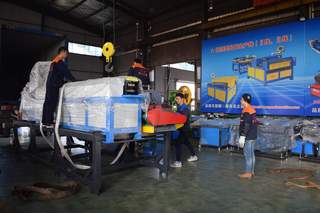
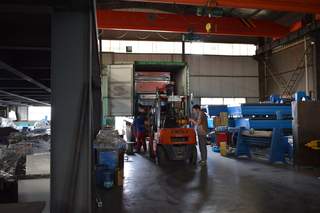
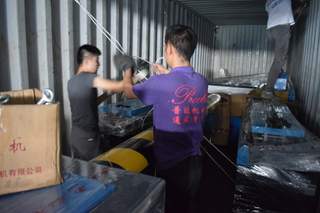
Every machine is professionally packaged and secured in a container for safe delivery to your port. We send you loading photos before the ship sails.
Calculate Your Return on Investment
Based on average industry data, here is what a typical customer saves after installing this machine:
* Figures based on average customer data for a shop producing 100-500 bends per day. Your actual results will vary based on production volume, labor rates, and current efficiency levels. Contact our engineers for a customized ROI calculation based on your specific operation.
Ready to Upgrade Your Electric Production?
Get a customized quote within 24 hours. Our engineers will help you configure the right machine for your specific production requirements.
WhatsApp / WeChat: +86-18355321923 | Email: jason@predamachine.com
Related Products
Buying Guides for This Machine Type
Before you request a quote: how this machine class compares, what it costs, and how to size it for your production volume.
Duct Welding Machine Guide: Spot vs Longitudinal vs Laser
Spot welders, longitudinal seam welders and laser welders compared — which welding technology your duct work actually needs.
Read the guide → Buying GuideSpiral Duct Machine Buying Guide
Tubeformer selection with the welding and fitting stations that complete a round duct line.
Read the guide → GuideRound Duct Fittings Guide
Fittings, flanges and joint practice for round duct systems.
Read the guide →