Most duct shops in the world started with two people, a shear and a hammer. The machines came later, one at a time, each one bought because a bottleneck made it unavoidable. That is actually the right way to build a shop - the mistake is buying machines the other way around, in the order a sales brochure suggests instead of the order your own workflow demands. This guide lays out a starter lineup of duct making machines for a small shop, with the honest volume numbers at which each machine earns its keep and the upgrade path to a full automatic line.
Start With the Work, Not the Machine
Rectangular duct production has four jobs: cut the blank, form the lock edges, close the seams, and flange the ends. A small shop can do all four by hand at small volume - that is how every shop begins. The first machines you buy should each remove a bottleneck that is costing you hours, not merely add capability you already have. The sequence below is the one that matches how the work actually flows.
The First Three Machines
1. Pittsburgh lockformer
The lockformer is the machine that makes rectangular ductwork possible without buying pre-formed sides. It rolls the Pittsburgh lock profile onto blank edges, so your sections join with the standard seam that every fitter and every code expects. Bench-fed models in the SA-12HB class handle everyday gauges; heavy models such as the SA-15HB extend capacity to 1.2 mm for commercial work. This is the first machine most small shops buy, and it stays busy from the first week.
2. Seam closer
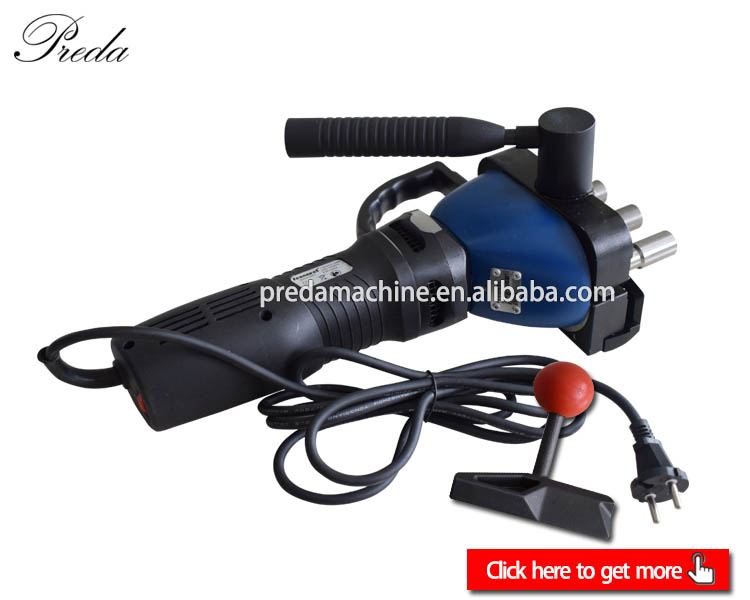
The second machine is the one that removes the slowest hand operation on the bench. Closing a Pittsburgh seam by hand takes five to ten minutes per length; a portable electric closer like the L-12 handles 0.5-1.0 mm at about 10 m/min and runs off a standard socket - no compressor, no fixed station, no air line. It is the right first closer for a small shop because it fits the bench, travels to a job when needed, and costs a fraction of a floor machine.
3. Duct beading machine and flange tools
Beads stiffen long panels so they do not drum under static pressure, and the receiving grooves for TDF or TDC flanges are a separate pass. A simple duct beading machine does both jobs in one pass for small shops. For flanging, a manual or electric TDF former plus corner tooling completes the bolted joint. Many small shops start flanging by hand and add the former when the flange becomes the queue.
Starter Lineup at a Glance
| Machine | Job in the workflow | Typical spec for a starter unit | Buy it when |
|---|---|---|---|
| Pittsburgh lockformer | Forms lock edges on blanks | Bench-fed; heavy models to 1.2 mm | Day one - the core of rectangular ductwork |
| Portable electric seam locker | Closes Pittsburgh seams | 0.5-1.0 mm, about 10 m/min, 0.55 kW | First week - replaces hand hammering |
| Duct beading machine | Stiffening beads and flange grooves | Single pass, 5-groove pattern | When long panels start drumming |
| TDF flange former | Bolted flange joints | Manual or electric, single head | When flanging becomes the queue |
| Corner tooling (molds) | Corners and cleats for TDF/TDC | Mold set for your flange profile | With the flange former |
When the Bottleneck Moves to Cutting
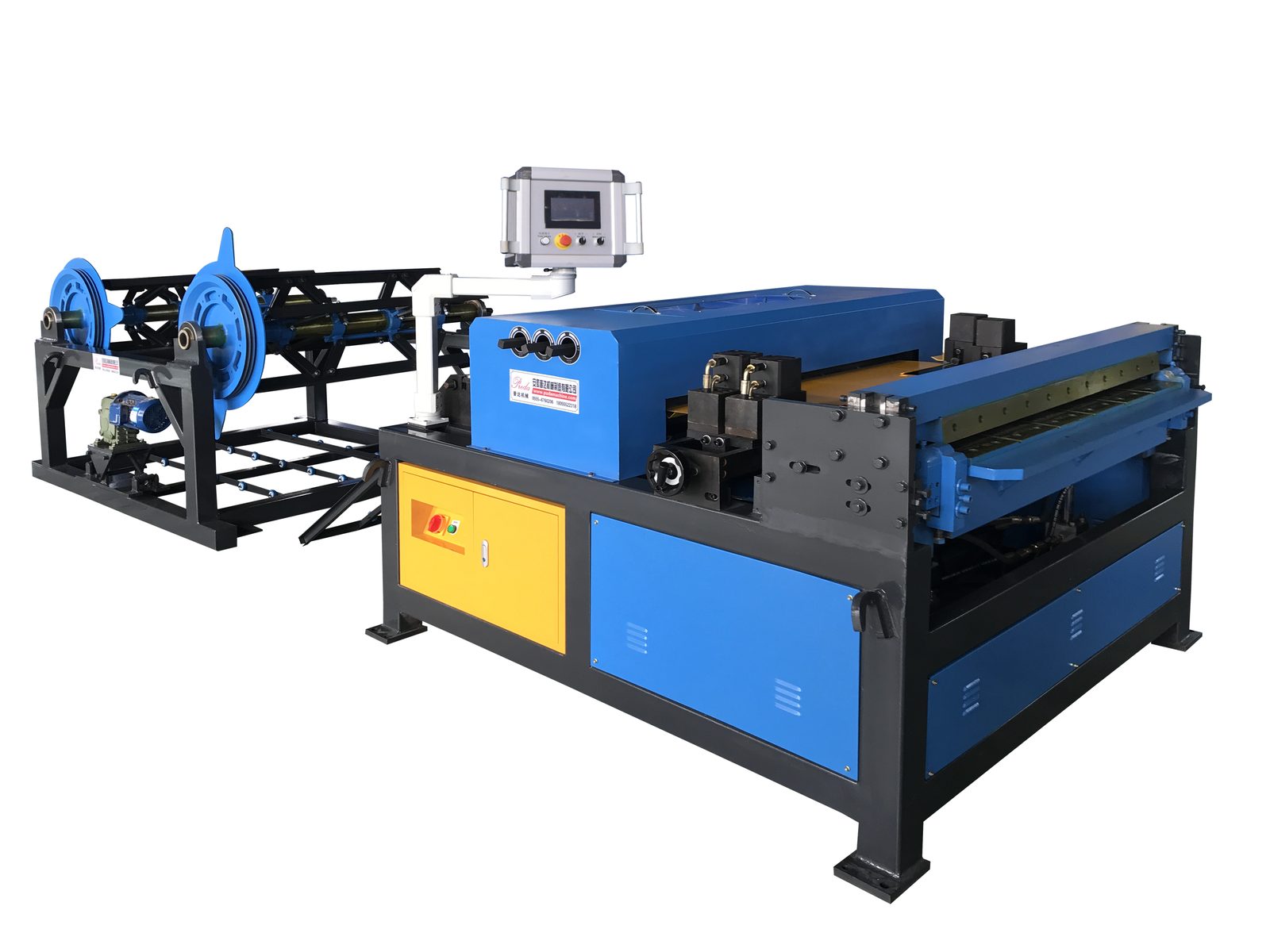
There is a point, usually between one and two thousand square metres a month, where the queue stops being the bench and becomes the shear. Blanks are hand-scribed and hand-cut, every blank is slightly different, and scrap runs at 8-12% of material - the quiet tax that hand cutting levies on every job. This is the moment to think about a coil-fed duct making machine rather than a faster shear, because a line changes the whole upstream chain at once.
The Upgrade Path by Monthly Volume
The honest planning tool for a small shop is not "what is the best machine" but "what volume am I feeding." Use the band you are in today, not the band you hope to reach:
| Monthly duct output | Recommended setup | Why this is the right size |
|---|---|---|
| Under 1,000 m2 | Lockformer + portable seam locker + beader + manual flange tools | Every machine stays busy; no capital sits idle |
| 1,000 - 5,000 m2 | Add a vertical hydraulic seam closer (HF-1550 class); consider an AML-3 line near the upper end | Seam closing and cutting become the bottlenecks; a line removes both at once |
| Above 5,000 m2 | Full auto duct line (AML-5 class), dual-head flanger, dedicated ovalizer if you run oval | Labour per square metre drops; scrap falls to 2-3% |
Phase it - do not jump
An auto duct line running at 30% utilisation loses money against a lockformer and closer running at 85%. Buy the duct making machine that matches the volume you can keep fed today, and phase the line in when the queue proves it is needed - not when a brochure proves it is impressive.
Space, Power and Budget Planning
A starter bench needs surprisingly little: about 20-30 square metres for the lockformer, closer, beader and a workbench, a single-phase socket for the portable machines, and room for coil or sheet storage. The machines themselves are the smaller part of the plan - the layout matters more, because material flow decides how much handling time each blank pays. Keep the flow straight: sheet in one end, finished sections out the other, benches along the side. When the AML-3 class line arrives, plan the coil car feed line first; it will dictate where the whole room is organised.
Common Mistakes in a Small Shop
- Buying the second machine too late. The seam closer pays for itself in the first month of regular work - hand hammering is the most expensive bench time you have.
- Buying the line too early. The reverse mistake: a line that cannot be kept fed is a warehouse ornament.
- Skipping the beader. Unbeaded panels drum, get rejected on site, and rework quietly doubles the job cost.
- Ignoring scrap. Hand cutting at 8-12% scrap is invisible until you weigh the bin. A programmed line cuts that to 2-3%.
- Forgetting the service side. Buy from a manufacturer that ships spare parts and answers the phone after the sale - in a two-person shop, downtime is the whole shop.
Preda Care Service Promise
Every Preda Machine ships CE certified with a two-year warranty, backed by 24/7 technical support, free spare parts shipping, remote PLC programming assistance and a global agent network. We support machines installed since 2008 - the support matters most when the shop is small.
Building Your First Duct Shop?
Send us your floor plan and monthly target - we will recommend the starter lineup and the phase-two upgrade, with factory video demos.
Browse Duct Making Machines →Frequently Asked Questions
What is the minimum machine set to start a duct shop?
A Pittsburgh lockformer, a portable electric seam locker, a beading machine and basic flange tools cover the four forming jobs of rectangular ductwork. Everything beyond that is driven by volume.
How much does a small duct shop cost to start?
The machine investment for a starter bench is far below a full line - the exact figure depends on lockformer class and flange tooling. Phase the purchase to match volume so capital is not idle.
When should a small shop buy an auto duct line?
When cutting and handling become the bottleneck - typically in the 2,000-5,000 m2 per month band. An AML-3 class line covers that range and upgrades toward Line 4 or 5.
Can one person run a duct shop?
Yes, at small volume. The portable closer and bench-fed lockformer are one-operator friendly; the line that changes the arithmetic is the one that replaces a crew - that is when you add people, or stop needing them.