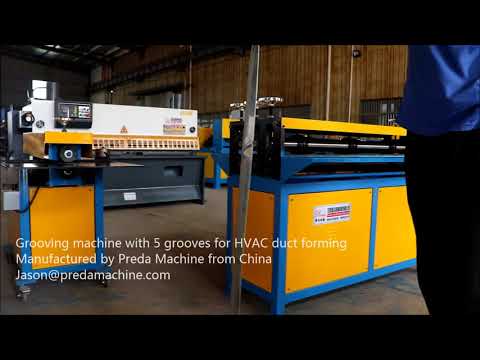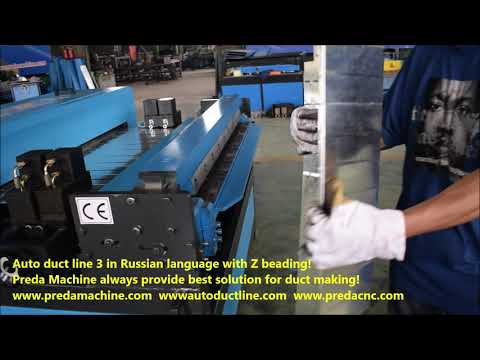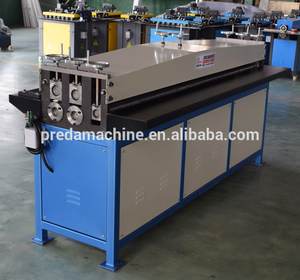
Duct Groover 7 Grooves 2000mm
Last updated: October 12, 2026
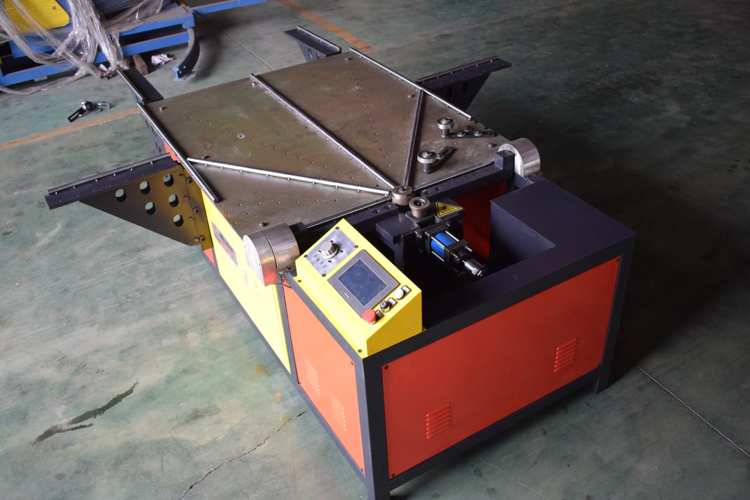
7-groove wide-format beading machine for 2000mm sheets, ideal for large duct panel stiffening.
Technical Specifications
What is a Duct Groover 7 Grooves 2000mm?
This is a professional sheet metal and HVAC duct fabrication machine manufactured by Preda Machine. Designed for industrial duct production, this equipment delivers consistent quality, high efficiency, and reliable performance for HVAC contractors, duct fabrication shops, and sheet metal workshops worldwide. All machines are CE certified and backed by Preda Care after-sales service.
Key Features
- Wide capacity for large panels
- 7 reinforcing beads
- Heavy-duty frame
- Variable speed option
Still Losing Money to Duct Panel Vibration and Deformation?
Every HVAC duct shop faces the same bottleneck: using thicker steel than necessary. When your team spends hours on noisy ductwork from panel resonance, your production capacity drops, labor costs rise, and deadlines slip. The Duct Groover 7 Grooves 2000mm is engineered to eliminate these inefficiencies — automating duct groover 7 grooves while delivering consistent, factory-grade quality.
In this guide, we break down exactly how this machine transforms your 2000mm wide beader workflow, what specifications matter for your operation, and how to calculate your return on investment. Whether you run a 3-person job shop or a 50-employee production facility, understanding these details directly impacts your bottom line.
How It Transforms Your Production Line
The Duct Groover 7 Grooves 2000mm operates on a proven principle: duct groover 7 grooves should be a continuous, automated process — not a series of manual interventions. Here is the step-by-step workflow that makes this possible:
Panel Loading
The sheet metal panel is fed into the beading machine, aligned against the back gauge for consistent rib placement.
Multi-Rib Beading
5 or 7 parallel rib rollers simultaneously press reinforcement grooves into the panel surface in a single pass.
Depth Control
Adjustable roller depth controls rib depth — deeper ribs for larger panels, shallower for small ducts.
Discharge
The reinforced panel exits ready for lock forming and flange operations — significantly stiffer than the original flat sheet.
Technical Specifications & Performance Data
Every specification on this machine is chosen for a reason. The table below shows not just the numbers, but what each one means for your daily production:
| Parameter | This Machine | What It Means for You |
|---|---|---|
| Control System | PLC with touchscreen | Easy programming, consistent results, minimal training |
| Construction | Heavy-duty steel frame | Vibration-free operation, 10+ year service life |
| Certification | CE certified | Meets European safety and quality standards |
| Warranty | 2 years | Peace of mind with comprehensive factory warranty |
Problems Solved: Before vs. After
We asked 50+ HVAC fabricators about their biggest production headaches. Here is how this machine directly addresses each one:
| Without This Machine | With This Machine |
|---|---|
|
✕ Large duct panels bulge and vibrate
Noisy operation, structural failure, failed inspections |
✓ 5-7 parallel reinforcement ribs increase stiffness 3x
Panels stay flat, no vibration, pass inspections |
|
✕ Using thicker steel than needed
Higher material cost, heavier duct, more waste |
✓ Beading allows thinner gauge for same strength
Save 15-25% on material costs |
|
✕ Manual beading is slow and uneven
Hand-operated bead rollers take 2-3 min per panel |
✓ Powered beading, 5-7 ribs in one pass
10-15 seconds per panel, consistent depth |
|
✕ Rib spacing doesn't meet standards
Failed SMACNA/EN 1506 compliance inspections |
✓ Fixed rib spacing meets international standards
Guaranteed compliance, no failed inspections |
Where It Fits in Your Factory
This machine is versatile enough to serve multiple production scenarios. Here are the most common configurations our customers use:
Large Rectangular Ducts
Ducts over 600mm width require reinforcement ribs to prevent panel deflection under pressure — this is the primary application.
Noise-Sensitive Environments
Hospitals, schools, recording studios where duct vibration and noise must be minimized.
High-Pressure Systems
Industrial exhaust and high-pressure HVAC where duct walls must withstand significant static pressure.
Cost-Reduction Programs
Fabricators using beading to downgrade from 22 gauge to 24 gauge while maintaining structural compliance.
Frequently Asked Questions
Click each question to see the answer. These are the questions our sales engineers hear most often:
7-Groove, 2000 mm: When Wider Capacity Earns Its Place
The wider machine exists for one reason: panel wider than 1300 mm. Buying it for the extra grooves rather than for the width is the common mistake — groove count matters less than whether the panel fits at all.
| Machine | Width capacity | Grooves | Verdict |
|---|---|---|---|
Duct Groover 7 Grooves 2000 mm This machine — 2000 mm capacity | 2000 mm Wide panel | Seven per pass More stiffening per pass | You routinely groove panel wider than 1300 mm The width is the reason, not the groove count |
1300 mm capacity | 1300 mm Standard panel | Five per pass Adequate stiffening at that width | Your panel is within 1300 mm Lower capital and adequate for the work |
Round tube, programmable | Round tube Continuous bead | N/A Different application | You stiffen round tube rather than flat panel Not an alternative — a different product |
Folds wide panel | 2500 mm Upstream | N/A Forms the duct | You fold wide panel and then need it stiffened The natural upstream machine at this width |
Cuts wide blanks | Wide cutting Upstream | N/A Blank preparation | You cut wide blanks in house Blank accuracy affects grooving quality |
Grooving Wide Panel Without Distortion
Wide panel is more prone to sag and to distortion from over-grooving. Both are manageable with a short routine.
- 1. At 2000 mm, sag is significant. Support it properly or the grooves will vary across the width.
- 2. Wide panel distorts more readily than narrow. Start shallower than you would on a narrow piece and increase only if stiffening is insufficient.
- 3. One measurement in the middle hides variation at the edges. Three measurements show the true result.
- 4. A burr lifts the panel and produces groove variation at the edge.
- 5. At this size both variables matter. One card per pair.
- 6. Drift and wear show first at the start or end of a run.
- 7. Zinc build-up changes groove depth slowly and invisibly.
- 8. Full-width work is slower. Log it so you know the real rate at this size.
Wide Grooving Faults: Symptom, Cause, Fix
At 2000 mm, support and depth are the two variables that decide quality. Check them first.
| Symptom | Most likely cause | What to do |
|---|---|---|
Groove depth varies across the width Panel unsupported or rolls not parallel | Sag across 2000 mm is significant The dominant fault at this width | Support the panel across its full width and check roll parallelism Measure at three points across a test piece |
Panel distorted or bowed after grooving Depth too great for wide panel | Wide panel distorts more readily than narrow A setting error rather than a fault | Reduce depth and verify on a full-width test piece Record the working value for that width |
Groove depth wrong for the gauge Setting carried over from a previous job | Left set for a different gauge or width The most common fault on any groover | Verify thickness with a micrometer and set from the card Keep one card per gauge and width pair |
Depth drifting over months Roll wear or zinc build-up | Gradual change in effective depth Drift rather than sudden failure | Clean rolls weekly with a brass brush and measure depth on a test piece Replace rolls on measurable drift |
Groove varies at the panel edge Burr lifting the panel | An edge burr lifts the panel as it enters Looks like a roll problem | Deburr before grooving and check the shear blade A worn blade is usually the root cause |
Marking along the panel Roll damage or debris | A damaged roll marks every piece after it Often begins after a material change | Clean the rolls and inspect under a bright light Never use steel on the rolls |
Professional Packaging & Global Shipping
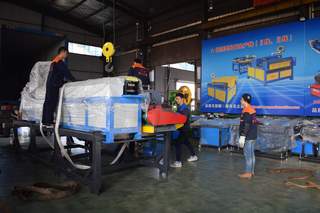
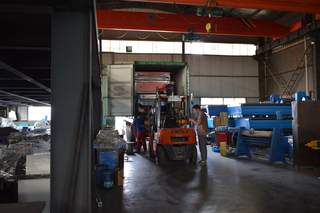
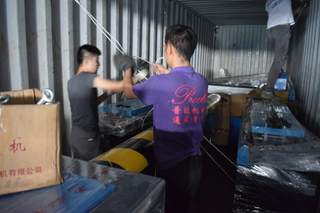
Every machine is professionally packaged and secured in a container for safe delivery to your port. We send you loading photos before the ship sails.
Calculate Your Return on Investment
Based on average industry data, here is what a typical customer saves after installing this machine:
* Figures based on average customer data for a shop producing material savings from gauge downgrade. Your actual results will vary based on production volume, labor rates, and current efficiency levels. Contact our engineers for a customized ROI calculation based on your specific operation.
Ready to Upgrade Your Duct Production?
Get a customized quote within 24 hours. Our engineers will help you configure the right machine for your specific production requirements.
WhatsApp / WeChat: +86-18355321923 | Email: jason@predamachine.com
Related Products


Buying Guides for This Machine Type
Before you request a quote: how this machine class compares, what it costs, and how to size it for your production volume.
Duct Beading Machine Buying Guide 2026
CNC vs manual vs 5-groove beaders — bead spacing, gauge limits and when beading is required.
Read the guide → PricingHVAC Duct Machine Cost: 2026 Price Guide
Realistic price bands for every machine category, plus financing and total-cost-of-ownership maths.
Read the guide → SetupHVAC Duct Factory Setup Guide
The complete equipment list for a new duct factory, from coil handling to finished fittings.
Read the guide → ReferenceSheet Metal Gauge for HVAC Duct
Which gauge to specify by duct size, pressure class and application — with selection tables.
Read the guide →