Every duct machine listing on the used market looks like a bargain until you write the second cheque. The machine itself is cheap; the freight, the downtime, the tooling that no longer matches, the spare parts that stopped being made five years ago - those are the costs nobody puts in the listing. This guide does not tell you never to buy used. It tells you which categories of duct machine survive the second hand market, which ones quietly eat their savings, and the inspection checklist that separates a genuine deal from a machine that was retired for a reason.
Why Duct Machines End Up on the Used Market
The first question to ask about any used machine is not "how much" but "why is it here." A machine leaves a shop for one of three reasons, and only one of them is good for the buyer. The good one: a shop upgraded from a manual bench to a line, or from a line to a bigger line, and the machine is genuinely surplus to a growing business. The neutral one: a shop closed - the machine may be excellent, and it may also have sat cold for a year. The dangerous one: the machine was replaced because it no longer holds tolerance, or because parts and service became impossible. Most listings will tell you the first story regardless of which one is true, which is why the inspection matters more than the price.
New vs Used: The Honest Comparison
The comparison below uses real, current specifications from machines in the Preda range so the numbers are grounded in something you can actually quote. A used machine's first-year cost is not its purchase price - it is the price plus the repairs, plus the output you lose while it is down.
| Factor | Used machine | New machine |
|---|---|---|
| Purchase price | Lower - but rarely as low as the listing suggests | Full price, fully itemised |
| First-year cost | Price + freight + repairs + downtime | Price + freight; warranty covers the rest |
| Warranty | Usually none, or a 30-day handshake | Typical 2-year warranty with parts |
| Spare parts | Depends on model age; discontinued lines are a risk | Guaranteed availability for the support window |
| Output guarantee | None - output is whatever the worn machine delivers | Rated output (e.g. AML-3: 12 m/min, 2,000-5,000 m2/month) |
| Service & support | Whoever answers the phone - if anyone | 24/7 technical support, remote PLC help |
| Technology | Generation behind; PLC/software may be obsolete | Current controls, current documentation |
Which Machines Survive the Used Market Well
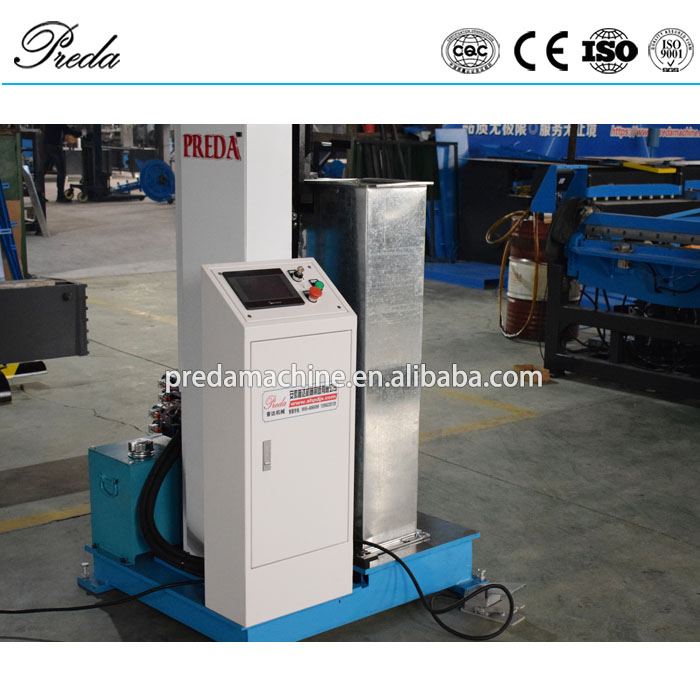
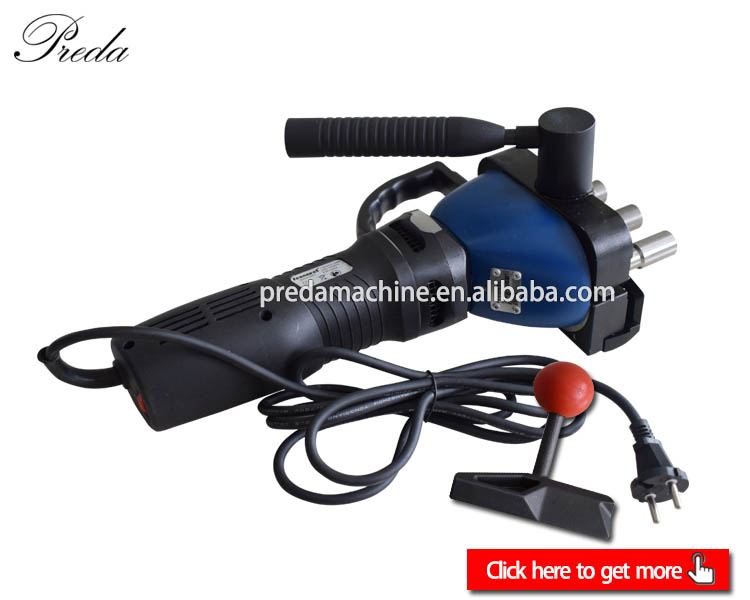
Not all duct machines age the same way. Simple, mechanically robust machines with standard motors and off-the-shelf bearings survive a decade and still do their job - a bench-fed Pittsburgh lockformer or a portable electric closer are reasonable used buys if the rollers are true and the frame is square. Complex machines are a different story. A coil-fed auto duct line couples the coil car, the leveler, the notcher, the shear and the Pittsburgh former into one sequenced system; every worn sensor, every hydraulic valve and every PLC fault shows up as a full-line stop, and the older the line, the harder it is to find the person who still knows how to set it up. The saving on a used line disappears the first week it refuses to sequence.
Pre-Purchase Inspection Checklist
If you do buy used, treat the inspection like a pressure test - because a machine that fails it will cost more than the one you saved. The table below is the checklist our engineers use when a customer asks us to evaluate a trade-in or a second hand machine:
| Check | Why it matters | How to verify |
|---|---|---|
| Run it under load | Idle speed hides worn bearings and loose tooling | Feed real material; watch the seam, not the RPM |
| Tooling wear | Worn rolls and dies are the real cost of a used machine | Measure the profile with calipers; check for pitting |
| PLC / control version | Obsolete controls mean no parts and no one to program them | Ask for the exact controller model and software revision |
| Hydraulic system | Leaks and tired seals fail under load, not at idle | Run at full pressure; look for weep, lag, and drift |
| Service history | Oil changes and roller regrinds tell you how it was treated | Ask for logs; a "no records" answer is an answer |
| Spare parts availability | Discontinued models are a debt, not an asset | Name the parts you will need in year one and price them |
| Freight and rigging | Sometimes the bargain dies in the truck | Quote door-to-door before you commit |
The Hidden Cost Math
Put concrete numbers on it. A used portable closer might save you a few thousand dollars against a new unit - and the new unit carries a two-year warranty, rated output of 10 m/min on 0.5-1.0 mm material, and guaranteed spare parts. A used hydraulic line can save more on paper, but its output is whatever the worn system delivers, its PLC is a generation behind, and when a sensor fails you are not ordering a part - you are hunting one. On a line feeding a five-thousand-square-metre month, every day of downtime is measured in hundreds of square metres of unproduced duct. That is the arithmetic the listing price never shows.
When used genuinely makes sense
Buy used when the machine is mechanically simple, the tooling is standard, and you can run and inspect it before money changes hands - a bench lockformer, a portable closer, a standard beader. Buy new when the machine is a system: an auto duct line, a hydraulic seam closer running to pressure-test tolerance, anything with a PLC and a sequence.
What a New Machine Actually Buys You
Beyond the machine itself, a new purchase buys predictability: a rated output you can put in your quote, a warranty that covers the first two years, spare parts that exist, and a manufacturer whose engineers still know the machine. For a shop that sells duct on fixed deadlines, predictability is not a luxury line in the budget - it is the difference between promising a delivery and meeting it. And when the machine does need service, the call is to someone who built it, not to whoever happens to have a number.
Preda Care Service Promise
Every new Preda Machine ships CE certified with a two-year warranty, backed by 24/7 technical support, free spare parts shipping, remote PLC programming assistance and a global agent network. We support machines installed since 2008 - and we also evaluate trade-ins honestly when a customer is deciding between used and new.
Compare New Duct Machines Before You Decide
Tell us the machine category you are weighing used against, and we will send the new machine spec, warranty terms and a factory video demo.
Browse New Duct Machines →Frequently Asked Questions
Is it worth buying a used auto duct line?
Only if you can run it under load, verify the PLC and controls, confirm spare parts, and accept that output is unguaranteed. For most shops, the risk on a sequenced line outweighs the saving - which is why we recommend new for lines and used for simple bench machines.
How long does a duct machine last?
Simple machines with proper maintenance run for decades. Complex lines depend on control and parts availability more than mechanical life - a line is retired when parts and knowledge disappear, not when the frame wears out.
What is the real cost of a used duct machine?
Purchase price plus freight, rigging, tooling inspection, any repairs in year one, and the output lost during downtime. Run that total before comparing it to the new machine price.
Do used machines come with any warranty?
Rarely, and the ones that do usually limit it to days, not years. A new machine typically carries a two-year warranty with parts - the difference matters most in year one.