A finished rectangular duct panel can only be as flat as the strip feeding the line. Coil stock arrives with internal stress from rolling, slitting and storage: it can carry camber along its length, wave across its width, or curl off the roll, and those defects carry straight into beading, notching, shearing and folding unless a leveling station works the strip out first. On an automatic duct line the leveling rolls sit early in the preparation sequence, before the panel goes to ribs, notches or folds, so the sheet feeds flat through every later station. This guide covers what the leveling station has to correct, how gauge and coil condition shape the roll setup, and what the first finished panel has to show. Figures are the verified AML-3 and AML-6 specifications; unlisted leveling depth or output figures are not claimed.
Why Coil Strip Needs Leveling Before Forming
Sheet from a coil is rolled and slit into a roll, which leaves residual stress locked across the strip. When the roll unwinds, that stress releases unevenly: the strip can curl along one edge, wave across its width, or run with a slight side bow known as camber. If that strip goes straight to the beading or notching rolls, the panel feeds unevenly, the ribs and notches do not lay straight, and the folded section comes out warped or twisted. The leveling station passes the strip through a set of opposing rolls that bend it back and forth to release the locked stress, so the sheet lays flat before any profile, notch or fold is pressed into it.
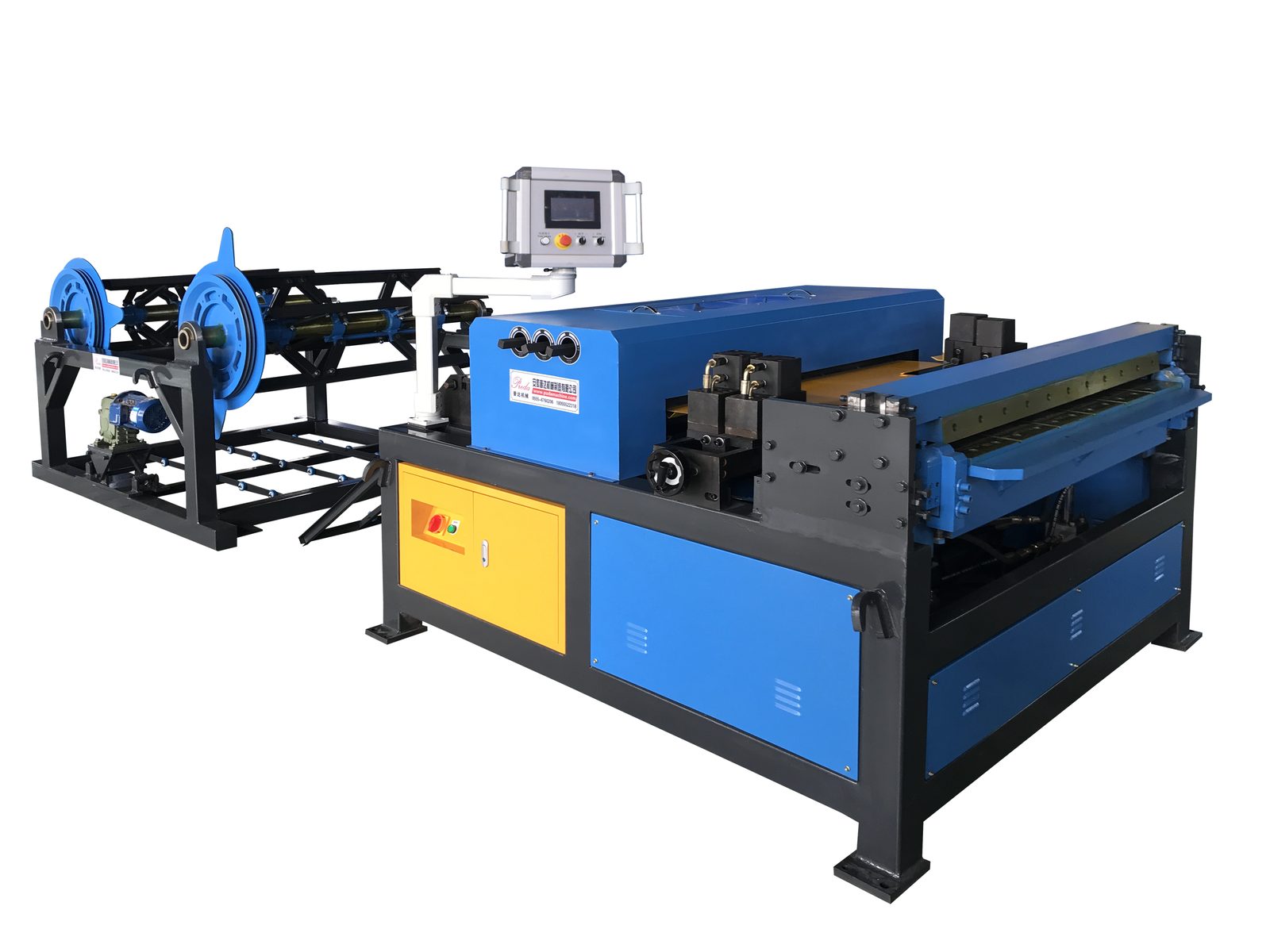
Leveling is the first conditioning step in the prep flow. The coil car feeds the roll off; the strip goes through leveling to remove wave and curl; it then moves to beading or grooving, notching and shearing before the blank goes to folding. A panel that leaves the leveling station wavy feeds the later stations poorly, so flatness is checked early rather than blamed on the folding work later.
What the Leveling Setup Checks
The leveling setup follows the strip from the roll toward the forming stations. Gauge sets how much the rolls need to open and how firmly they work the sheet; coil condition determines whether wave, curl or camber has to be corrected; feed alignment keeps the strip entering the rolls square so one edge is not pulled tighter than the other. Each check is made before the batch runs, because a wavy or skewed strip cannot be made flat at a later station.
| Leveling point | What the coil condition affects | Setup focus | First-panel check |
|---|---|---|---|
| Gauge / sheet thickness | How firmly the rolls work the strip and how open they sit | Roll opening and pressure matched to the active thickness | Sheet lays flat; light gauge not crushed, heavy gauge not left wavy |
| Wave across the width | Whether the panel face stays flat after beading | Leveling rolls working the full width evenly | No cross-wave or ripples along the panel face |
| Lengthwise camber / bow | Whether the panel runs straight along its length | Rolls aligned to the feed direction; strip centered | Panel edge straight; no side bow along the blank |
| Edge curl | Whether one edge feeds tighter than the other | Condition the curl out before the guide | Both edges feed level; no lifted edge entering the guide |
| Feed alignment | Strip enters the leveling rolls square | Guide and roll line matched to the feed centerline | Strip passes through without wandering to one side |
AML-3 and AML-6 Preparation Stations Compared
Both Preda line classes feed strip through in-line preparation and condition it before forming, but they group the stations differently. The AML-3 ties leveling and grooving into the main body, with hydraulic notching and shearing, a dual-station coil car and a Mitsubishi PLC touchscreen for gauge and width settings. The AML-6 higher-speed computer-controlled line groups beading, notching, shearing, Pittsburgh lock, duplex TDF flange forming and folding in one machine, with four electric coil cradles and four material trays holding 5-7 ton coils. The table lists the verified line figures; coil stress and panel dimensions still determine how the leveling station is set for each job.
| Specification | AML-3 Auto Duct Line | AML-6 Super Auto Duct Line |
|---|---|---|
| Panel width | 1300 / 1500 / 1600 mm | 1300 / 1500 / 1600 mm |
| Material thickness | 0.45-1.5 mm | 0.45-1.5 mm |
| Working speed | 12 m/min | 16 m/min |
| Control system | PLC with Mitsubishi touchscreen | Computer control system |
| Preparation stations | Leveling, grooving, hydraulic notching and shearing | Beading, notching, shearing, Pittsburgh, duplex TDF flange, folding |
| Coil handling | Dual-station coil car | Four electric cradles, four trays, 5-7 t per roll |
| Certification / warranty | CE certified, two-year warranty | CE certified, two-year warranty |
Reading the First Panel for Flatness
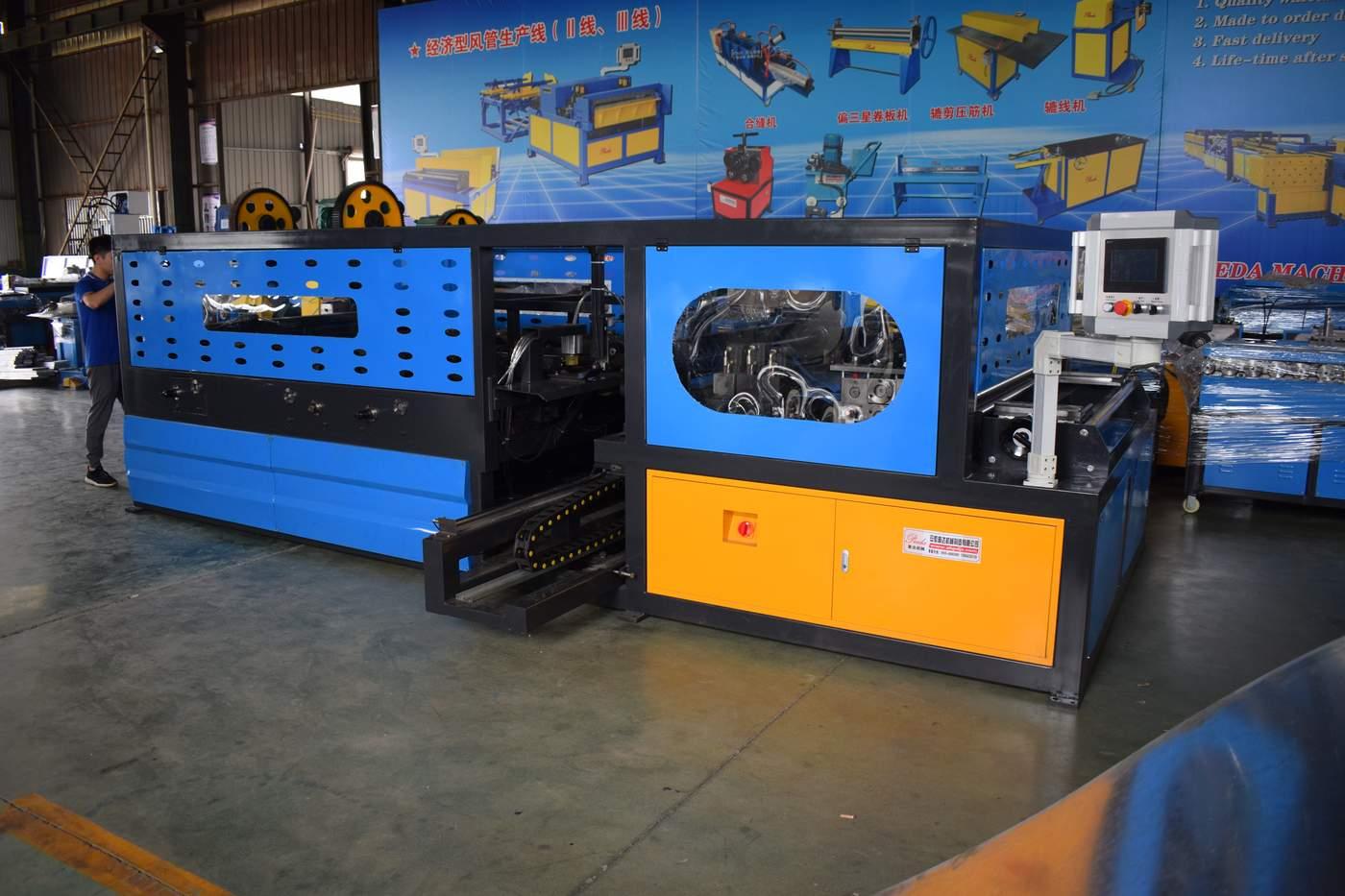
After the leveling rolls are set, one blank runs through leveling, beading or grooving, notching and shear before the batch continues. Lay the panel flat and check the face for cross-wave, the edges for lengthwise bow, and the whole sheet for curl along one side. A panel that waves across its width usually means the leveling rolls still sit for a lighter gauge; a side bow traces to roll alignment or feed guide position; a curled edge points to insufficient conditioning on that edge. Correct the condition at the leveling station before more blanks are folded, because a warped blank cannot be fixed cleanly after the box corners are notched.
Flatness also depends on the coil feeding evenly. The dual-station coil car on the AML-3 keeps the next roll queued while the current run finishes; the AML-6 four-cradle setup holds multiple coils so gauge switching does not stop the line. A poorly seated or off-center coil feeds strip to one side, which shows up as bow or wave even when the leveling rolls are set correctly, so the feed side is checked alongside the rolls.
Common Leveling and Flatness Problems
- Panel waves across its face: leveling rolls not working the active gauge, or pressure uneven across the width; re-set the rolls to the thickness and check widthwise evenness.
- Lengthwise side bow: roll alignment or feed guide off-line; realign the rolls and guide to the feed centerline.
- One edge curls or lifts: edge not conditioned at the leveling station, or strip off-center on the feed; recenter the coil and feed the curl out first.
- Panel marks or crushes along the feed: roll pressure too high for light gauge; reduce pressure to the active thickness.
- Ribs or notches drift sideways: strip entering the guide skewed; check leveling feed alignment before continuing the run.
Record the leveling roll setting per recurring gauge
Note the roll opening and pressure for each gauge and coil you run often. On the next roll change, start from that record and confirm the first panel's flatness rather than re-setting the rolls from memory.
Frequently Asked Questions
Does leveling happen before beading and folding?
Yes. On an automatic duct line the strip goes through leveling first, then beading or grooving, notching and shearing before folding. The AML-3 integrates leveling in the main body; the AML-6 conditions strip within its combined preparation stations.
What coil defects does leveling remove?
The leveling rolls release residual stress to correct cross-width wave, lengthwise camber or side bow, and edge curl that shows up when a coil unwinds. The rolls are set to the active gauge so the sheet feeds flat to the later stations.
Which line suits standard rectangular duct work?
The AML-3 covers 0.45-1.5 mm panels in 1300/1500/1600 mm widths at 12 m/min with a dual-station coil car; the AML-6 runs the same gauge and width band at 16 m/min with grouped stations and four coil cradles. The choice follows panel volume, coil load and how many stations need grouping in one machine.
What confirms the leveling setup is correct?
The first blank lies flat across its face, runs straight along its length with no side bow, and feeds level into the guide and beading rolls. Cross-wave, bow or curled edge traces back to roll pressure, alignment or coil centering.
Preda Care Service Promise
Every Preda Machine ships CE certified with a two-year warranty, backed by 24/7 technical support, free spare parts shipping, remote PLC programming assistance and a global agent network. A support engineer can review your panel widths, gauges and coil condition against the AML-3 or AML-6 and help set the leveling station for flat, consistent blanks.
Plan the Line Around Your Panel Sizes and Gauges
Share your common panel widths, gauges and coil condition, and we will recommend the AML-3 or AML-6 configuration and the leveling setup that keeps finished panels flat and ready for beading, notching and folding.
Compare Auto Duct Lines →