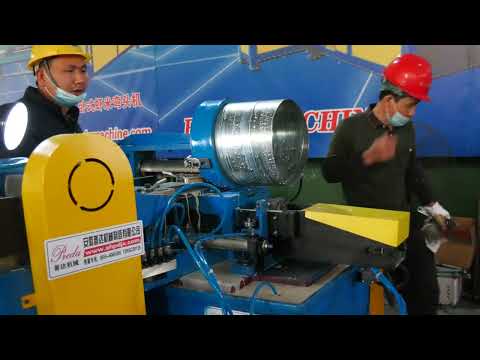
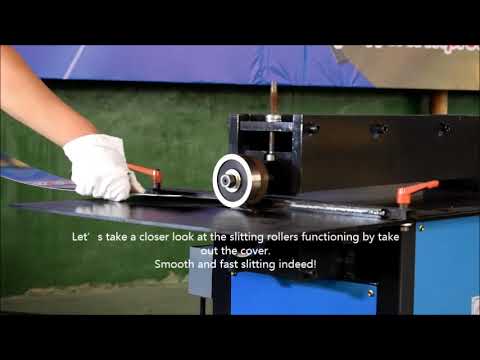
Sheet Metal Slitter LQ-15
Last updated: October 12, 2026
Power slitting machine for cutting sheet metal into narrower strips, essential for duct fabrication and metal processing.
Technical Specifications
What is a Sheet Metal Slitter LQ-15?
This is a professional sheet metal and HVAC duct fabrication machine manufactured by Preda Machine. Designed for industrial duct production, this equipment delivers consistent quality, high efficiency, and reliable performance for HVAC contractors, duct fabrication shops, and sheet metal workshops worldwide. All machines are CE certified and backed by Preda Care after-sales service.
Key Features
- Adjustable slitting width
- Multiple slitting knives
- Precision cutting
- Compact design
- Easy blade adjustment
Still Losing Money to Inaccurate Cutting and Burr Edges?
Every HVAC duct shop faces the same bottleneck: manual cutting with snips or hand shears. When your team spends hours on slow changeover between cut sizes, your production capacity drops, labor costs rise, and deadlines slip. The Sheet Metal Slitter LQ-15 is engineered to eliminate these inefficiencies — automating sheet metal slitter LQ-15 while delivering consistent, factory-grade quality.
In this guide, we break down exactly how this machine transforms your power slitting machine workflow, what specifications matter for your operation, and how to calculate your return on investment. Whether you run a 3-person job shop or a 50-employee production facility, understanding these details directly impacts your bottom line.
How It Transforms Your Production Line
The Sheet Metal Slitter LQ-15 operates on a proven principle: sheet metal slitter LQ-15 should be a continuous, automated process — not a series of manual interventions. Here is the step-by-step workflow that makes this possible:
Material Loading
The sheet is loaded onto the machine table and aligned against the back gauge or side guide.
Positioning
The back gauge positions the cut line precisely — CNC models automatically position for each cut length.
Precision Cutting
The shear blade descends with controlled force, making a clean, burr-free cut across the full width in one stroke.
Discharge & Sorting
Cut pieces are discharged to the front or rear, with optional sorting systems separating different sizes.
Technical Specifications & Performance Data
Every specification on this machine is chosen for a reason. The table below shows not just the numbers, but what each one means for your daily production:
| Parameter | This Machine | What It Means for You |
|---|---|---|
| Control System | PLC with touchscreen | Easy programming, consistent results, minimal training |
| Construction | Heavy-duty steel frame | Vibration-free operation, 10+ year service life |
| Certification | CE certified | Meets European safety and quality standards |
| Warranty | 2 years | Peace of mind with comprehensive factory warranty |
Problems Solved: Before vs. After
We asked 50+ HVAC fabricators about their biggest production headaches. Here is how this machine directly addresses each one:
| Without This Machine | With This Machine |
|---|---|
|
✕ Manual cutting is slow and tiring
Hand shears or snips take 1-2 minutes per cut |
✓ Powered shearing, 2-3 seconds per cut
30-60x faster, operator fatigue eliminated |
|
✕ Uneven cuts and burr edges
Poor fit-up, need for deburring, sharp edges |
✓ Precision-ground blades with low rake angle
Clean, square, burr-free cuts every time |
|
✕ Inaccurate cut lengths
Parts don't fit, material waste from re-cuts |
✓ CNC back gauge ±0.1mm accuracy
Perfect lengths, minimal waste |
|
✕ Can't cut complex shapes
Fittings and transitions need manual layout and cutting |
✓ CNC plasma/laser cuts any 2D shape
Complex fittings produced automatically from CAD |
Where It Fits in Your Factory
This machine is versatile enough to serve multiple production scenarios. Here are the most common configurations our customers use:
Straight Sheet Cutting
Cutting full sheets to width and length for duct production — the first step in any fabrication workflow.
Strip Slitting
Slitting coils or sheets into narrow strips for spiral duct production, edge trim, and component manufacturing.
Flat Pattern Cutting
CNC plasma or laser cutting of complex duct fitting patterns — elbows, transitions, offsets, and branches.
General Sheet Metal
Any fabrication shop needing accurate, fast cutting of sheet metal up to 4mm thickness.
Frequently Asked Questions
Click each question to see the answer. These are the questions our sales engineers hear most often:
Slitting vs Shearing: Strip for Spiral and Cleat Work
A slitter cuts coil into strip continuously; a shear cuts sheet into blanks. If you feed a tubeformer or a cleat machine, you need strip, and the slitter's width accuracy determines whether the tube diameter and the cleat fit are correct downstream.
| Machine | Output | Feeds | Best fit |
|---|---|---|---|
Sheet Metal Slitter LQ-15 This machine — continuous strip from coil | Strip at a set width Continuous, from coil | Spiral tubeformers and cleat machines Downstream | You run a tubeformer or make cleats from coil Width accuracy is the whole point |
Cut blanks | Discrete blanks Programmed | Folding and seaming operations Downstream | You cut sheet into rectangular blanks A different output from strip |
Consumes strip | N/A Downstream | Round tube Consumes the strip | You are specifying a spiral line Strip width accuracy determines tube diameter |
Consumes strip | N/A Downstream | Cleats Consumes the strip | You make cleats from coil Strip width determines cleat fit |
Shapes and holes | Profiles Complementary | N/A Reference | You need shapes rather than strip Complementary rather than an alternative |
Setting Up a Slitter for Strip That Feeds Cleanly
Strip width accuracy is the variable that determines downstream quality. Everything below protects it.
- 1. A wrong gap produces a burred or cambered strip edge, and both cause problems on the tubeformer. Set from the table and inspect the edge.
- 2. Width that is correct at the setting can still be wrong on the material. Measure the actual strip.
- 3. A cambered strip feeds badly and produces tube that varies in diameter. Sight along the first few metres.
- 4. Most width variation on a slitter traces back to tension, not to the blades.
- 5. Blade wear is gradual. Log cuts so sharpening is scheduled before quality is affected.
- 6. Spiral tubeformers are sensitive to edge condition. Make deburring a defined step if your machine needs it.
- 7. Both variables matter. One card per pair, at the machine.
- 8. Two numbers that show when blades need attention before quality drops.
Slitting Faults: Symptom, Cause, Fix
Slitter faults are blade gap, blade condition, tension and width setting. Check in that order.
| Symptom | Most likely cause | What to do |
|---|---|---|
Burr on the strip edge Blade gap wrong or blades worn | Gap set for a different gauge, or blades dulled The most consequential fault because it affects the tubeformer | Set the gap from the table for the gauge and inspect blade condition Schedule sharpening on logged cut length |
Strip width varies Tension unstable or the coil wandering | Tension variation is the dominant cause Far more common than a width setting error | Stabilise tension and guide the coil, then measure again Measure the first metre of every coil |
Strip cambered — curves along its length Blade gap uneven across the strip | Uneven gap or uneven blade wear Feeds badly downstream | Check the gap at both blades and replace or rotate blades Sight along the first few metres after any change |
Strip edge wavy Tension too low or material too thin for the setting | Thin material at low tension waves at the edge A setting issue | Increase tension moderately and confirm the material is inside the specified range Log the working setting |
Tube diameter varying downstream Strip width out of tolerance | The tubeformer is usually blamed for a slitting fault A very common misdiagnosis | Measure strip width before adjusting the tubeformer Fix width first, then re-set the tubeformer |
Machine strains on thick material At the capacity limit | Slitters are rated for a thickness range A specification boundary rather than a fault | Verify thickness with a micrometer and compare with the specification Do not force thicker material through |
Professional Packaging & Global Shipping
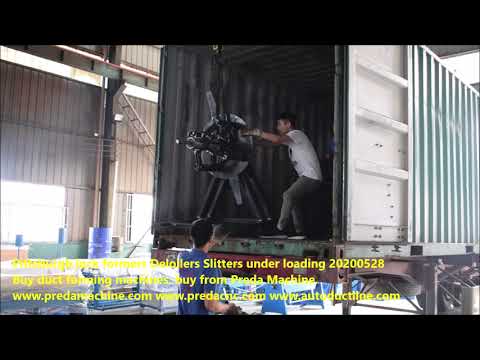
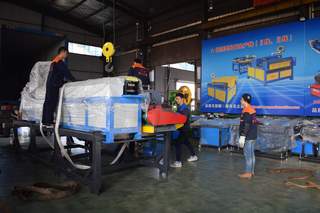
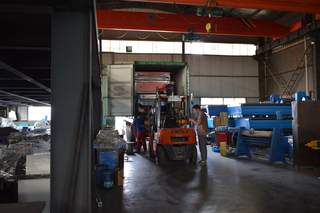
Every machine is professionally packaged and secured in a container for safe delivery to your port. We send you loading photos before the ship sails.

Calculate Your Return on Investment
Based on average industry data, here is what a typical customer saves after installing this machine:
* Figures based on average customer data for a shop producing 50-200 cuts per day. Your actual results will vary based on production volume, labor rates, and current efficiency levels. Contact our engineers for a customized ROI calculation based on your specific operation.
Ready to Upgrade Your Sheet Production?
Get a customized quote within 24 hours. Our engineers will help you configure the right machine for your specific production requirements.
WhatsApp / WeChat: +86-18355321923 | Email: jason@predamachine.com
Related Products

Buying Guides for This Machine Type
Before you request a quote: how this machine class compares, what it costs, and how to size it for your production volume.
Sheet Metal Cutting Guide 2026
Shear vs plasma vs laser for duct blanks: cut quality, speed and true cost per metre.
Read the guide → ROICNC Plasma Cutter for HVAC Duct
Whether a plasma table pays off in a duct shop, and what gauge range it realistically handles.
Read the guide → ProcessSheet Metal Shearing Machine Guide
Blade geometry, rake angle and capacity selection — how to choose and run a guillotine shear.
Read the guide → PricingHVAC Duct Machine Cost: 2026 Price Guide
Realistic price bands for every machine category, plus financing and total-cost-of-ownership maths.
Read the guide →