This guide covers everything you need to know about HVAC Duct Cleaning Equipment. Key takeaways: detailed specifications, cost comparisons, pros and cons, maintenance requirements, and expert recommendations from Preda Machine — a leading HVAC duct machinery manufacturer since 2008, serving 60+ countries.
In This Guide
Market Opportunity
The HVAC duct cleaning market is valued at approximately $4 billion USD globally and growing at 5-7% annually. Key drivers include:
🎬 Watch Related Product Videos
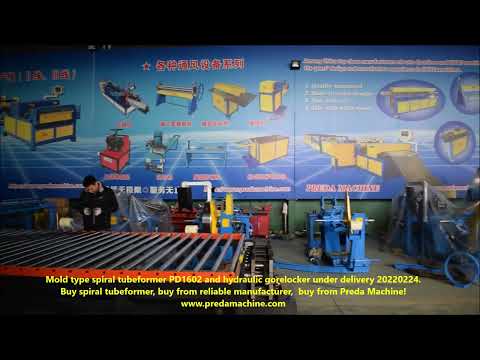
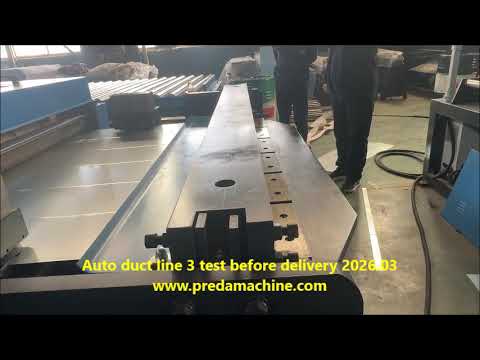
See our machines running in real factory tests

- Increasing awareness of indoor air quality (IAQ) and health concerns
- Commercial building maintenance requirements
- Post-construction cleanup for new buildings
- Mold and water damage remediation
- Energy efficiency improvements (clean ducts reduce energy use 5-15%)
| Segment | Market Size | Growth Rate | Average Job Price |
|---|---|---|---|
| Residential | $1.8B | 4% | $300-$600 |
| Commercial | $1.5B | 6% | $1,000-$5,000 |
| Industrial | $0.7B | 8% | $3,000-$15,000 |
Business Opportunity
For existing HVAC contractors and sheet metal shops, adding duct cleaning requires minimal additional investment ($5,000-$15,000) and can generate $50,000-$150,000 in annual revenue with 60-70% gross margins. It also creates cross-selling opportunities for duct repair, sealing, and equipment replacement.
Cleaning Methods Compared
| Method | How It Works | Best For | Effectiveness |
|---|---|---|---|
| Contact (rotary brush) | Brush agitates debris, vacuum removes | Residential, light commercial | Excellent |
| Air whipping | Compressed air dislodges debris | Commercial, flexible duct | Good |
| Negative air | HEPA vacuum creates negative pressure | All types, mold remediation | Excellent |
| Steam cleaning | Hot steam sanitizes surfaces | Grease, biological contamination | Good (specialized) |
| Chemical treatment | Antimicrobial coating applied | Mold prevention | Supplemental |
The source removal method (rotary brush + negative air) is the industry standard recommended by NADCA (National Air Duct Cleaners Association). It physically removes debris rather than just redistributing it.
Essential Equipment
| Equipment | Function | Price Range | Required? |
|---|---|---|---|
| Negative air machine (HEPA) | Create negative pressure, filter exhaust | $2,000-$5,000 | Essential |
| Rotary brush system | Agitate debris from duct walls | $1,500-$4,000 | Essential |
| Air compressor (10+ CFM) | Power air whips and tools | $1,000-$3,000 | Essential |
| Air whip tools | Disburse debris in hard-to-reach areas | $300-$800 | Recommended |
| Video inspection camera | Inspect and document duct condition | $1,000-$3,500 | Recommended |
| HEPA vacuum (portable) | Spot cleaning, debris removal | $500-$1,500 | Recommended |
| Duct access tools | Cut and seal access panels | $200-$500 | Essential |
| PPE (respirators, gloves) | Worker protection | $100-$300 | Essential |
Starter package: Negative air machine + rotary brush + compressor + basic tools = approximately $5,000-$8,000. Professional package: Add video inspection, air whips, HEPA vacuum, and truck mounting = $12,000-$20,000.
Investment and ROI
| Business Level | Equipment Investment | Jobs/Month | Monthly Revenue | Payback Period |
|---|---|---|---|---|
| Part-time | $5,000 | 4-8 | $1,500-$4,000 | 2-4 months |
| Full-time (1 truck) | $15,000 | 15-25 | $6,000-$15,000 | 1-3 months |
| Multi-truck | $40,000+ | 40-80 | $18,000-$45,000 | 2-4 months |
Gross margins typically range from 60-75% after labor and consumables. The main costs are labor (2 technicians per job, 2-4 hours per residential job), fuel, and consumables (brush replacements, filters, sealant).
Step-by-Step Duct Cleaning Process
- Inspection — Use video camera to assess duct condition, identify problem areas, and document before/after
- System setup — Cut access holes, connect negative air machine, seal all registers
- Agitation — Run rotary brush through each duct run, starting from farthest register
- Air washing — Use compressed air whips to dislodge remaining debris from corners and joints
- Vacuum extraction — Negative air machine removes all dislodged debris through HEPA filtration
- Component cleaning — Clean supply/return boots, grilles, registers, and air handler components
- Sanitization (optional) — Apply antimicrobial treatment if mold or biological growth is present
- Sealing — Seal access panels with code-compliant covers, verify system is airtight
- Final inspection — Video inspection to verify cleanliness, provide before/after report to customer
Starting a Duct Cleaning Business
Certifications
- NADCA certification — Industry standard, requires passing exam and continuing education
- EPA certification — Required for work in schools and commercial buildings
- OSHA training — For workers handling potentially hazardous materials
Marketing Tips
- Partner with HVAC contractors for referral business
- Offer free video inspections as a sales tool
- Target property managers and facility directors for commercial contracts
- Use before/after photos and video in marketing materials
- Bundle duct cleaning with HVAC maintenance agreements
Industry Warning
Avoid "blow-and-go" companies that use only compressed air without negative pressure. This method redistributes debris rather than removing it and can damage ductwork. Always use the source removal method with HEPA-filtered negative air equipment, as recommended by NADCA and EPA.
Frequently Asked Questions
Preda Care: After-Sales That Never Expires
When you invest in HVAC duct manufacturing equipment, downtime costs money. With Preda Care, you get lifetime technical support — not just during warranty, but for the entire life of your machine. Our global agent network provides local service in 40+ countries.
- 24-hour response time
- Free spare parts shipping
- Remote PLC program support
- Global agent network
- Video call troubleshooting
- On-site installation
Equipment Specification by Duct Type
The right cleaning tool depends on whether you are working in round spiral tube, rectangular duct, or flexible duct — and on whether the duct is lined.
| Duct type | Primary tool | Vacuum requirement | Special caution |
|---|---|---|---|
| Round spiral, unlined | Rotary brush, air whip | 2,500 – 4,000 CFM | Spiral seam can catch a stiff brush |
| Round spiral, lined | Soft brush or air whip only | Low velocity at the head | Never use a stiff brush — it tears the liner |
| Rectangular, unlined | Rotary brush plus skipper nozzle | 3,500 – 6,000 CFM | Work from the farthest register back |
| Rectangular, lined | Air whip, low-pressure agitation | Controlled, gentle | Liner damage is the most common claim |
| Flexible duct | Soft whip only, or replace | Low | Often cheaper to replace than clean |
| Grease-laden (kitchen) | Scraper then hot-water wash | Plus containment | Fire risk; requires certified cleaning |
Vacuum Sizing Is the Specification That Gets Under-Bought
A brush that loosens debris into a vacuum that cannot capture it just moves the dirt downstream. Match the vacuum to the largest duct cross-section you will clean, not to the average. Undersized vacuum is the number one reason a cleaning job fails a post-clean inspection.
Verifying a Clean: What the Standards Require
Cleaning without verification is a claim, not a result. Three methods are accepted, in increasing order of rigour.
| Method | Procedure | Pass criterion | Cost | When used |
|---|---|---|---|---|
| Visual inspection | Borescope before and after | No visible debris | Low | Every job, minimum |
| Surface dust test | Wipe a defined area, weigh or compare against a standard | Below the threshold for the standard used | Medium | Contracted commercial work |
| Vacuum test | Collect debris from a measured area under standard vacuum | Below the specified mass per area | Higher | Healthcare, dispute resolution |
| Photographic record | Dated, location-tagged images | Complete set | Low | Always — this is your defence |
Take the "before" image every time. Without it you cannot demonstrate that the condition improved, and the client has no reason to believe it did.
Pricing Cleaning Work
| Job type | Unit | Typical price band | Crew | Time |
|---|---|---|---|---|
| Residential, single system | Per system | $300 – $600 | 1 – 2 | 3 – 5 h |
| Small commercial | Per m² of duct | $3 – $7 | 2 | 1 – 2 days |
| Large commercial | Per m² of duct | $2 – $5 | 3 – 4 | 1 – 2 weeks |
| Kitchen extract (grease) | Per linear metre | $15 – $40 | 2 – 3 | Overnight |
| Healthcare / cleanroom | Per project | Quoted, high margin | 2 – 4 | Off-hours |
| Coil and AHU cleaning | Per unit | $250 – $900 | 1 – 2 | 2 – 6 h |
Kitchen extract and healthcare carry far higher margin than general commercial work, but both require certification and documentation. Those two certifications are usually the fastest route out of competing on price.
Need Equipment Recommendations?
Tell us your duct specifications, daily production volume, and workshop size — our engineers recommend the perfect equipment configuration within 24 hours.
Get Free ConsultationContinue Reading: Related Guides
Go deeper on this topic, then compare the machines that do the work.
Fire Damper Production Line Guide
Building fire dampers in-house: blade forming, frame assembly, testing and certification steps.
Read the guide → SetupHVAC Duct Factory Setup Guide
The complete equipment list for a new duct factory, from coil handling to finished fittings.
Read the guide → PricingHVAC Duct Machine Cost: 2026 Price Guide
Realistic price bands for every machine category, plus financing and total-cost-of-ownership maths.
Read the guide → SetupHVAC Duct Fabrication Shop Setup
Equipment list and floor layout for a rectangular and round duct workshop.
Read the guide →Machines covered in this topic
Compare specifications, gauge range and output for the machines discussed above.
Flexible Spiral Duct Making Machine PD-1200
Φ80–1200 mm, 0.4–1.2 mm gauge, flexible mould head
View specs → MachineStraight Auto Duct Line 5 AML-5
Full straight-type automatic rectangular duct line
View specs → MachineTDF Flange Former T-12
Single-head TDF flange forming machine
View specs → MachinePittsburgh Machine SA-15HB
Pittsburgh lock forming up to 1.2 mm
View specs →